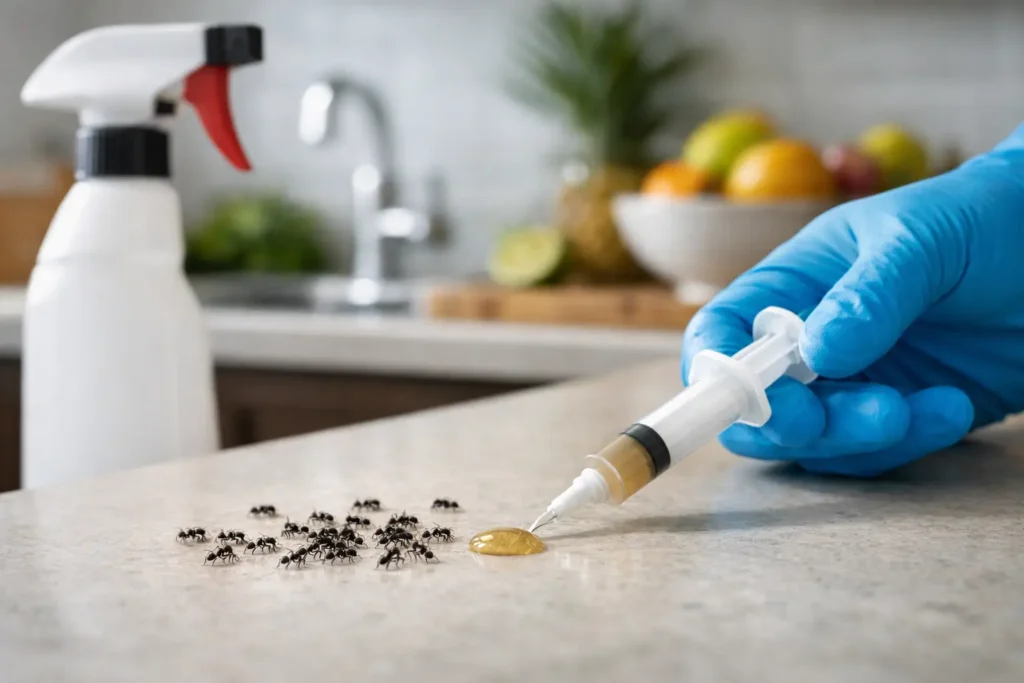
You wipe the counters, take out the trash, and still find a line of ants running straight to the coffee maker by morning. That is what makes ant control for Florida kitchens so frustrating. In this climate, ants do not need much to settle in. A few crumbs, a damp cabinet, or a tiny gap around plumbing can be enough to turn a clean kitchen into a repeat problem.
Florida kitchens are especially vulnerable because heat, humidity, and frequent rain keep ant colonies active for much of the year. When outdoor conditions shift, ants move inside looking for food and moisture. Kitchens give them both. The result is not just a nuisance. In homes, ants can contaminate food prep areas. In rentals, restaurants, break rooms, and other commercial settings, they can quickly become a sanitation and reputation issue.
Why ants keep showing up in Florida kitchens
Most kitchen ant problems are not caused by a dirty home or facility. They are caused by access. Ants are excellent at finding small openings around windows, baseboards, utility lines, and door thresholds. Once a few workers locate a food or water source, they leave a scent trail for the rest of the colony to follow.
In Florida, this gets more complicated because several ant species behave differently. Some are drawn hard to sugar. Others prefer grease or proteins. Some nest outside and forage indoors. Others set up shop inside wall voids, under appliances, or behind cabinets where moisture stays trapped. That is why a one-size-fits-all fix often disappoints. If you do not know what kind of ant you are dealing with or where it is nesting, treatment can miss the real source.
Ant control for Florida kitchens starts with moisture
People usually focus on crumbs first, and that matters, but water is often the bigger driver. A slow leak under the sink, condensation around a dishwasher line, wet sponges, pet bowls, and even a damp garbage can area can support ongoing ant activity.
Florida homes and commercial buildings fight moisture all year. Air conditioning creates condensation. Afternoon storms push humidity up fast. Older properties may have small plumbing gaps or worn caulking that let moisture collect in hidden spaces. If ants are repeatedly showing up in the same part of the kitchen, there is a good chance water is part of the pattern.
Start by checking under sinks, behind the refrigerator, around dishwashers, and near windows. If cabinet bottoms feel soft, smell musty, or stay damp, ants may be nesting nearby. Drying the area will not remove the colony, but it does make the kitchen less attractive and helps treatment work better.
The kitchen habits that make a real difference
Good sanitation is not about perfection. It is about consistency. Ants can survive on tiny food residues most people would not notice, especially around small appliances and storage areas.
Countertops should be wiped with attention to corners, backsplash edges, and seams where syrup, juice, and cooking residue collect. Sweep and mop under the table and along cabinet kick plates, not just open floor space. Keep ripe fruit in the refrigerator if ants are active. Store sugar, cereal, flour, snacks, and pet food in sealed containers instead of folded bags or cardboard.
Trash matters too, but not only the kitchen can. Recycling bins often attract ants because of soda and food residue. If the kitchen looks clean but ants keep returning, the recycling area may be the real draw.
These steps help, but there is a trade-off. Over-cleaning with strong sprays along visible ant trails can actually make control harder in some situations. If ants are using bait, killing the workers too quickly on the surface may keep the treatment from reaching the colony. That is one reason store-bought products can produce mixed results.
Why DIY ant control often falls short
Many people start with sprays, foggers, vinegar, or ant traps from a hardware store. Sometimes those products reduce activity for a few days. Sometimes they scatter the ants and create the impression that the problem is gone. Then the trail comes back from a different cabinet or a different wall.
The problem is that visible ants are only part of the issue. If the colony survives, the kitchen remains vulnerable. Some ant species split and spread when disturbed, which means the wrong treatment can turn one active area into several. Baits can be effective, but only if the bait matches the species and the colony is willing to feed on it at that time. A sugar-based bait may be ignored if that ant species is hunting proteins or grease.
That is where experience matters. Effective ant control depends on identifying the species, tracking where they are entering, finding likely nesting sites, and choosing a treatment method that fits the behavior of that ant. Fast relief matters, but long-term prevention is what keeps the kitchen usable.
What professional ant control looks like in a kitchen
A proper service call should do more than treat the trail you can see. It should identify why the ants are there and what conditions are helping them stay.
In a home kitchen, that often means inspecting plumbing penetrations, wall seams, window frames, appliance areas, and exterior entry points just outside the kitchen. In a commercial kitchen or break room, it can also include floor drains, storage practices, waste handling, mop areas, and delivery access points. The goal is not simply to knock down activity. It is to interrupt the colony’s route, remove active pressure, and reduce the chance of a quick return.
Treatment may involve targeted baiting, crack-and-crevice applications, exterior perimeter work, and recommendations for sealing or moisture correction. The exact approach depends on the species, the layout, and whether the site is residential or commercial. A restaurant kitchen, for example, has different sanitation demands and treatment constraints than a family kitchen in Tampa or Miami.
Safe application is a major part of this process. Kitchens require care because food prep surfaces, utensils, children, and pets may all be part of the environment. The best results come from precise treatment in the right places, not from overapplying products everywhere.
How to prevent ants from coming back
Prevention is where many kitchen ant problems are won or lost. Once active ants are gone, a few practical changes can reduce the odds of another invasion.
Seal gaps around plumbing where pipes enter walls. Replace worn weather stripping on back doors and sliding doors near kitchens. Repair torn window screens. Re-caulk where counters meet backsplashes if cracks are forming. Keep tree branches and heavy vegetation from touching the home if they create easy pathways to the structure.
Inside, avoid leaving standing water in the sink overnight. Run and empty the dishwasher if dishes are sitting for long periods. Clean behind countertop appliances where crumbs build up unnoticed. In commercial settings, train staff to handle spills quickly and rotate stock so leaking containers do not sit in storage areas.
It also helps to pay attention to timing. In Florida, ant activity often spikes after heavy rain, during drought stress, and during seasonal changes that disturb outdoor nesting areas. If you tend to see ants during the same part of the year, preventive service before that peak can save time and frustration.
When a kitchen ant problem needs fast help
If you are seeing ants every day, finding them in multiple areas, spotting winged ants indoors, or noticing them around outlets, walls, and appliances, the problem is likely beyond a simple wipe-down and trap. The same is true if you manage a food-related business, healthcare space, school, or rental property where pest activity can create bigger sanitation and compliance concerns.
At that point, speed matters. The longer ants stay active, the more established the trails become and the more likely they are to spread into adjoining rooms. A responsive pest professional can usually tell fairly quickly whether this is an isolated kitchen trail or a larger structural issue.
For Florida property owners and managers, the biggest advantage is not just treatment. It is having a clear plan. You should know what kind of ant pressure you are facing, what is being done to stop it, and what changes will help prevent the next round. That kind of clarity saves money, reduces disruption, and gets the kitchen back to normal faster.
Ants are persistent in Florida, but they are not unbeatable. The right approach combines cleanup, moisture control, exclusion, and targeted treatment based on the way ants actually behave. When those pieces line up, your kitchen stops being an easy target and starts staying that way.