A bed bug problem rarely announces itself with a visible trail of insects. More often, it starts with unexplained bites, tiny dark marks on bedding, or a guest who wakes up itchy after staying overnight. This bed bug inspection guide helps Florida homeowners, renters, property managers, and business operators check the right places before a small issue becomes a larger disruption.
The goal is not to tear a room apart or spread insects from one area to another. It is to inspect methodically, recognize credible evidence, and act quickly when the signs point to bed bugs. Early identification can limit treatment costs, protect visitors, and reduce the chance of carrying bed bugs into another room, vehicle, or property.
Start With the Signs That Matter
Bed bugs feed on blood, usually at night, and hide close to where people rest. They are small, flat, reddish-brown insects about the size and shape of an apple seed when fully grown. Young bed bugs are smaller and lighter in color, which makes them harder to see.
Bites can raise suspicion, but they do not confirm an infestation. Mosquitoes, fleas, skin sensitivities, and other causes can create similar marks. Some people also have no visible reaction at all. Treat bites as a reason to inspect, not as proof on their own.
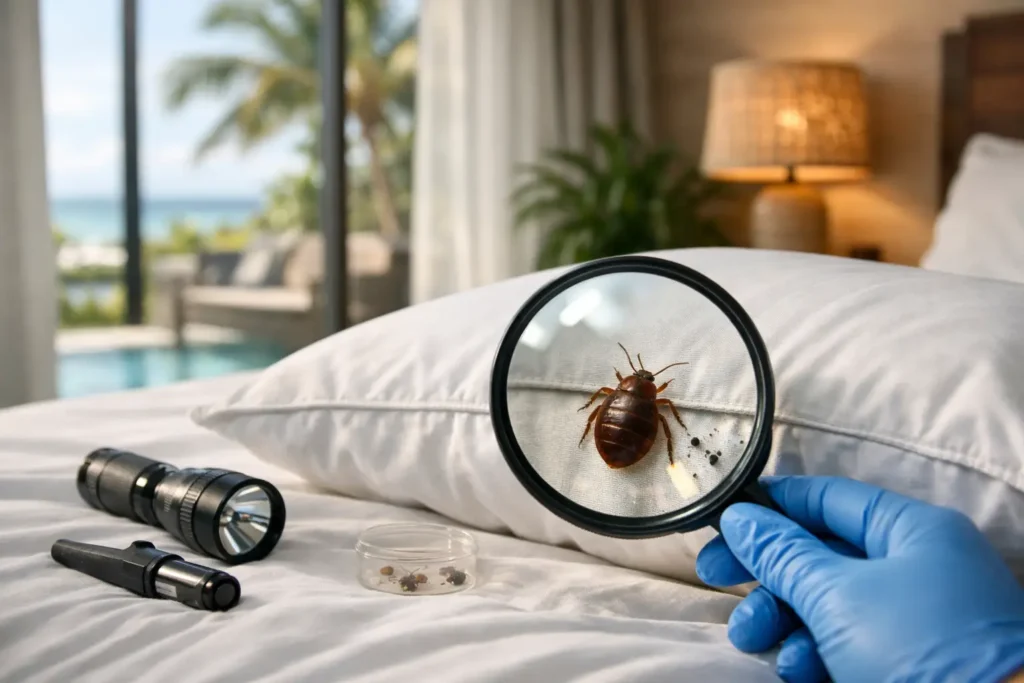
The strongest signs are physical evidence around sleeping or sitting areas. Look for live insects, pale shed skins, tiny pearly-white eggs, reddish smears from crushed bugs, and small black or brown spots. Those dark spots are often dried waste and may appear in seams, corners, and cracks where bed bugs hide.
A musty, sweet odor can occur with a larger infestation, but smell is not a reliable early-warning sign. Trust what you can see and document.
Bed Bug Inspection Guide: Check the Bed First
Begin at the bed, because it is usually the closest feeding and hiding area. Put on disposable gloves if available, use a flashlight, and keep a clear plastic bag or small sealed container nearby in case you find a suspected insect. Avoid moving bedding, furniture, or personal belongings into another room during the inspection.
Strip the bed carefully. Check sheets, pillowcases, blankets, and mattress covers for dark spotting, shed skins, or small blood marks. Place any potentially affected linens directly into a sealed bag for laundering rather than setting them on a chair, couch, or clean floor.
Inspect mattress seams and labels
Run the flashlight slowly along mattress piping, seams, tufts, handles, and labels. Bed bugs prefer tight, protected spaces, so use a credit card or similar flat object to gently open seams as you inspect. Do not use a sharp tool that could damage the mattress or push insects deeper into a crack.
Pay close attention to the head area of the mattress. Bed bugs often cluster near where a person’s head and shoulders rest, although they can be found anywhere on the bed.
Examine the box spring and bed frame
If the mattress is clear or you need more evidence, inspect the box spring. Focus on the fabric edge, staples, folds, corner guards, and underside. A flashlight is essential here. If there is a thin fabric dust cover on the bottom, check the edges and any tears without ripping it open unless directed by a pest professional.
Then inspect the frame, headboard, footboard, joints, screw holes, slats, and wall connection points. Wooden frames, upholstered headboards, and beds with many joints offer more hiding places than simple metal frames, but any bed can harbor bed bugs.
If you find a bug, capture it without crushing it if possible. A clear photo next to a coin can also help with identification, but a specimen is more useful. Seal it in a container or bag and arrange a professional inspection.
Expand the Search in a Careful Circle
Bed bugs can travel beyond the bed, particularly when an infestation has been present for a while. Work outward from the sleeping area in a deliberate pattern rather than checking random spots.
Inspect nightstands by removing one drawer at a time and checking drawer joints, undersides, tracks, handles, and the back panel. Look behind pictures, mirrors, wall-mounted headboards, outlet covers, baseboards, curtains, and loose wallpaper near the bed. Check luggage racks, clothing hampers, and stored bags as well.
In living rooms, inspect upholstered chairs, recliners, sofas, and pet beds where people regularly rest. Check seam lines, cushion zippers, fabric folds, and the underside of furniture. Bed bugs do not live on people or pets like some pests do, but they can hitchhike on belongings and settle near a reliable resting place.
For apartments, condos, hotels, assisted living communities, and other multi-unit settings, note the exact rooms where evidence appears. Nearby units or adjoining rooms may require inspection too. Bed bugs can move through wall voids, utility openings, hallways, and shared furnishings, so a single-room approach may not be enough.
What Not to Do During an Inspection
A rushed response can make bed bugs harder to eliminate. Do not sleep in another room after you suspect bed bugs. This can encourage them to follow you and establish a second hiding area. Continue using the usual bed until a treatment plan is in place, unless a pest professional instructs otherwise.
Do not throw out mattresses, furniture, or clothing immediately. Many items can be treated or managed, and moving them through the home can spread insects. If an item must be discarded, it should be clearly marked and handled according to local guidance so no one unknowingly brings it indoors.
Avoid using foggers, alcohol sprays, or large amounts of store-bought pesticide. These products may not reach hidden bed bugs, can scatter them into new areas, and may create health or fire hazards when used improperly. Bed bug control depends on targeted inspection, proper preparation, and treatment methods that reach where the insects actually hide.
When a Professional Inspection Is the Right Move
Call for professional help when you find a suspected bed bug, see multiple types of evidence, have recurring unexplained bites, or manage a property where guests, tenants, patients, or employees could be affected. A trained inspection can confirm whether the issue is bed bugs or another pest, identify the extent of activity, and prevent unnecessary treatments.
Professional service is especially valuable in hospitality, healthcare, retail, student housing, and rental properties. In these settings, speed matters, but so does discretion, documentation, and a plan that minimizes disruption. A qualified technician can inspect neighboring spaces, recommend preparation steps, and tailor treatment to the building and level of activity.
Florida Bug Control provides safe, fast, and guaranteed bed bug service for residential and commercial properties. If pests come back, so do we, with return visits until the issue is resolved. A prompt inspection gives you a clear answer and a practical next step instead of leaving you guessing.
Prepare for a More Accurate Inspection
You do not need to deep-clean your home before an inspection. In fact, excessive cleaning or moving belongings can remove evidence or spread bed bugs. Instead, leave suspected areas as undisturbed as possible and make a short record of what you have noticed: when bites started, where they occur, which rooms are involved, and whether anyone recently traveled, hosted overnight guests, bought used furniture, or stayed in a hotel.
If you have photos or a captured specimen, keep them available. Let the technician know about any pesticides already used. Honest details help determine the most effective next step and reduce delays.
A calm, focused inspection is one of the best ways to protect your home or facility. Check closely, avoid spreading items between rooms, and get a professional opinion as soon as the evidence suggests bed bugs may be present. Fast action is not panic – it is how you keep a manageable problem from taking over the places where people need to rest.