A few pigeons on a roofline can become a serious facility problem faster than most property managers expect. Bird control for commercial buildings is not just about keeping entrances clean. It protects sanitation, equipment, inventory, employee safety, and the customer experience that your business has worked hard to build.
In Florida, birds find plenty of reasons to stay. Covered loading docks offer shelter, outdoor dining areas offer food, signage provides convenient perches, and HVAC equipment creates warm, protected nesting spots. Once a location becomes a reliable source of food and shelter, birds often return day after day – and bring more birds with them.
Why Birds Become a Commercial Property Risk
Bird activity may look harmless at first, especially when it is limited to a few birds resting on ledges or rooftops. The real issues begin when droppings build up, nests block drains or vents, and birds establish regular roosting sites near people, products, or sensitive equipment.
Droppings can create slip hazards on sidewalks, entryways, and loading areas. They can stain building surfaces, damage finishes, and corrode metal components over time. On rooftops, debris from nests and feathers can contribute to clogged drains, standing water, and avoidable maintenance issues.
For restaurants, grocery stores, food manufacturing facilities, healthcare properties, and hospitality businesses, bird activity can also raise sanitation concerns. Birds near receiving doors, dumpsters, outdoor seating, and ventilation systems can affect inspections, staff confidence, and customer perception. A guest who sees droppings around an entrance may never learn how clean the rest of the facility is.
The goal is not simply to move birds from one corner of the property to another. Effective commercial bird management identifies why the birds are there, blocks access to key roosting areas, and keeps conditions from inviting them back.
Start With a Site-Specific Bird Inspection
Every commercial property has a different bird pressure point. A retail plaza may struggle with pigeons gathering under awnings. A warehouse may have birds entering through open dock doors. A hotel may need to protect pool decks, balconies, and outdoor dining areas. Treating all of these situations the same can waste time and money.
A professional inspection should identify the bird species involved, where birds are feeding, where they are nesting or roosting, and how they are getting onto or into the building. It should also look beyond the most visible problem area. Birds may be landing on signs, parapet walls, rooftop units, canopies, beams, rafters, and nearby utility structures.
Timing matters as well. Some locations are busiest early in the morning, while others see bird activity around trash pickup, shift changes, deliveries, or outdoor meal periods. Understanding that pattern helps determine the right control method and where it will have the greatest impact.
Look for the Conditions That Keep Birds Coming Back
Commercial bird problems are usually supported by a few predictable conditions: available food, accessible water, sheltered roosting spaces, and easy entry points. Small maintenance issues can create a large bird problem when they go unchecked.
Overflowing dumpsters, uncovered waste containers, spilled grain or food debris, and employees feeding birds all make a site more attractive. So can standing water around drains, leaking fixtures, and condensation near equipment. In other cases, the main attraction is shelter, such as the protected underside of a canopy or an open gap along a roofline.
Removing these attractants does not always solve the issue by itself, but it makes exclusion and deterrent measures far more effective.
Bird Control for Commercial Buildings Requires the Right Tools
The best solution depends on the bird species, the building design, the level of activity, and how visible the treatment area is to customers. A method that works on a warehouse roof may not be appropriate for a storefront entrance or a restaurant patio.
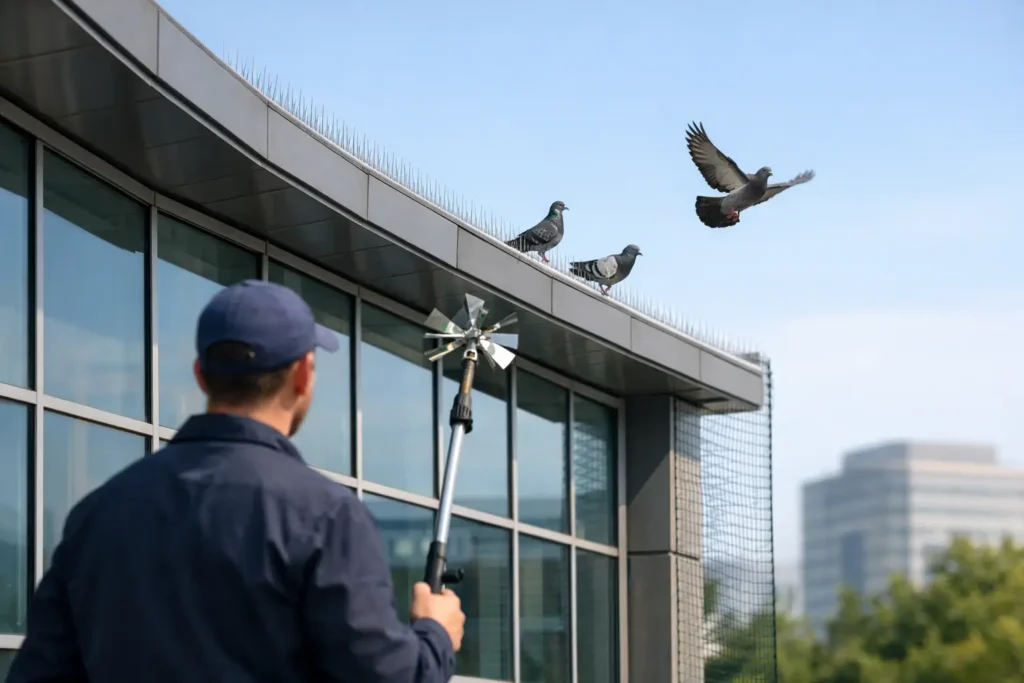
Physical exclusion is often the most dependable long-term option. Bird netting can prevent access to loading areas, open bays, rafters, and other large protected spaces. Screening and sealing can close gaps where birds enter structures or nest behind signs and equipment. These methods address the problem at its source by denying access rather than relying on repeated disruption.
For ledges, signs, beams, and roof edges, professionally installed perch deterrents may be appropriate. These systems discourage birds from landing without damaging the building’s appearance or creating a hazard for employees and visitors. Placement is critical. A poorly installed device can leave enough room for birds to continue roosting or simply shift them a few feet away.
Visual devices, sound-based products, and occasional repellents can have limited uses, but they are rarely a complete answer on a busy commercial site. Birds adapt quickly when a deterrent is predictable or does not address food, shelter, and nesting access. These options may support a broader program, but they should not be the whole plan.
Cleanup Is Part of the Treatment
Cleaning affected areas is not just an appearance issue. Old droppings, feathers, nesting material, and food debris can signal that a location is safe for birds to return. Proper cleanup also reduces slip risks and helps facility teams see whether fresh activity is continuing after control measures are installed.
Cleanup should be handled carefully, particularly in areas with heavy accumulation. Disturbing dried droppings or nests without the proper process can create unnecessary exposure for maintenance staff. A commercial bird service plan should account for sanitation, safe removal of debris, and disposal methods that fit the site.
If birds have been nesting near equipment, drains, vents, or electrical components, coordinate with building maintenance before work begins. The control plan should protect the structure and avoid interrupting essential operations.
Protecting Operations Without Creating New Problems
Commercial properties cannot afford a one-size-fits-all fix. A food facility may need work scheduled around production requirements. A hospital must protect patient access and sensitive areas. A retail center may need discreet solutions that preserve the property’s appearance. Industrial sites often require careful coordination around equipment, elevated work areas, and employee traffic.
There are also legal and ethical considerations. Some bird species, nests, and eggs are protected, and removal activity may be restricted depending on the species and nesting status. That is why identification comes first. The right provider evaluates the situation before recommending removal or exclusion work, rather than treating every bird issue as identical.
A responsible program uses humane, site-appropriate methods and focuses on prevention. The most reliable outcome is a property that no longer offers easy food, shelter, and access – not a temporary reduction in visible birds.
Build Bird Prevention Into Routine Facility Care
Once control measures are in place, regular monitoring keeps small issues from becoming expensive repairs. Facility managers should include bird-prone areas in routine exterior checks, particularly after storms, construction work, roof maintenance, or changes to waste handling.
Pay close attention to loading docks, dumpster enclosures, roof drains, outdoor dining areas, signage, awnings, and HVAC platforms. Staff should know to report nesting material, recurring droppings, damaged screening, and birds entering the building. Quick reporting makes it easier to correct the issue before birds establish a long-term roost.
For properties with ongoing pressure, scheduled service is often more cost-effective than waiting for buildup to become visible. Monitoring allows a technician to check exclusion systems, remove new nesting material when permitted, spot sanitation issues, and adjust the plan as bird behavior changes through the year.
When to Call a Commercial Bird Control Professional
Call for professional help when birds are entering the building, nesting in equipment areas, contaminating food-related spaces, creating slip hazards, or returning despite cleanup efforts. You should also act quickly if droppings are accumulating on customer walkways, outdoor seating, receiving areas, or near air-handling equipment.
Florida Bug Control helps commercial decision-makers address bird activity with practical, property-specific solutions. The focus is on fast assessment, safe service, and prevention that holds up after the immediate problem is gone. There is no reason to wait until a few birds become a sanitation complaint, a maintenance bill, or a poor first impression.
A clean entryway, protected roofline, and bird-free work area do more than improve appearances. They show customers, employees, and inspectors that your facility is being actively cared for – every day.