A rodent problem rarely begins with a dramatic sighting. More often, it starts with a faint scratching sound after dark, a torn food package in the pantry, or a few small droppings behind equipment. Knowing the five signs of rodent activity helps you act while the issue is still contained – before rodents contaminate food, damage wiring, or establish a larger nesting area.
For Florida homes and businesses, warm weather and frequent rain can make shelter, water, and food sources available nearly year-round. Mice and rats do not need much space to enter a structure, and they tend to stay hidden where people do not routinely look. A careful inspection can reveal the problem early.
Five Signs of Rodent Activity to Watch For
1. Droppings in protected areas
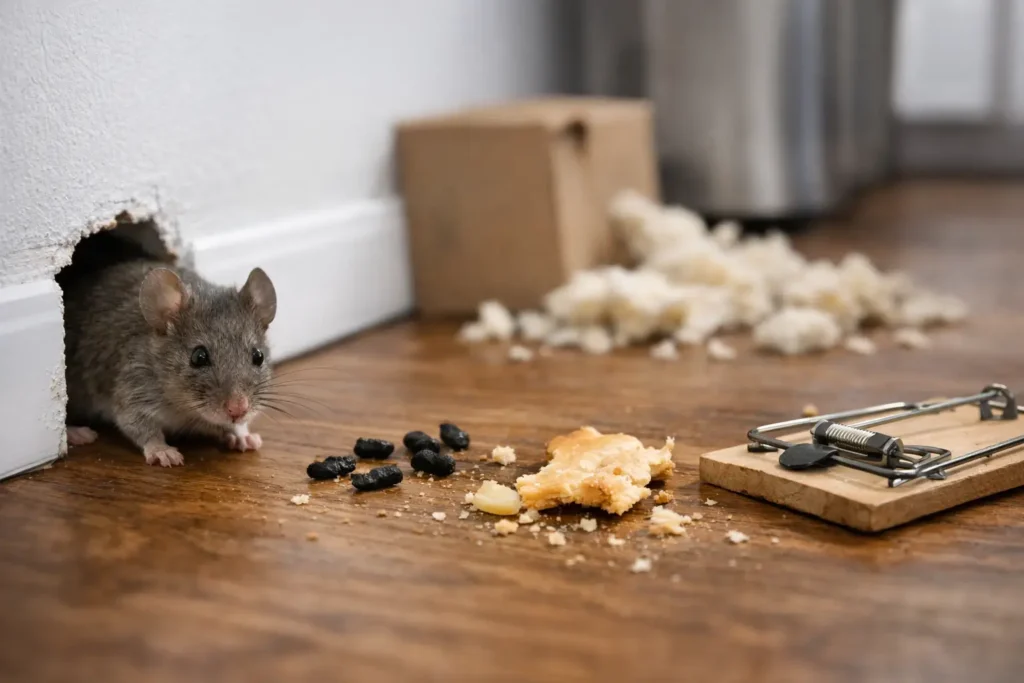
Droppings are one of the clearest signs of active rodent activity. You may find them along baseboards, behind refrigerators, under sinks, inside cabinets, in attics, near stored food, or around utility rooms. Rodents usually travel close to walls and in low-traffic areas, so check the edges of rooms rather than only open floor space.
Fresh droppings are generally dark and may look slightly moist. Older droppings become dry, dull, and crumbly. That difference can provide a clue about whether activity is current, but it does not tell the whole story. A property may have both old evidence and a new infestation, especially if the same entry point has been used over time.
Do not sweep or vacuum dry droppings without precautions. Disturbing them can send contaminated particles into the air. Keep children and pets away from the area, wear appropriate protective gear if cleaning a small affected space, and disinfect before removal. If droppings are widespread, in a food-handling area, or located in insulation and wall voids, professional service is the safer choice.
2. Scratching, squeaking, or movement after dark
Rodents are most active when a building is quiet. Hearing scratching in the ceiling, walls, attic, crawl space, or behind cabinets can indicate that rodents are traveling, nesting, or chewing. Light scurrying may be heard in the early morning or late evening, particularly near areas with plumbing lines or stored items.
Not every sound in a wall is a rodent. Pipes can expand, air handlers can cycle, and tree branches can brush against a roofline. The pattern matters. Repeated sounds at night, especially combined with droppings or gnaw marks, deserve attention.
In commercial settings, these noises may be easy to miss during busy operating hours. Restaurant managers, property managers, and facility teams should pay attention to reports from overnight staff, cleaning crews, and maintenance personnel. Their observations often identify an issue before it reaches customer-facing spaces.
3. Gnaw marks and unexplained damage
Rodents chew constantly to wear down their teeth. Look for rough, fresh-looking gnaw marks on food packaging, cardboard boxes, wood trim, plastic storage bins, pipes, and cables. Damage near electrical wiring should be treated seriously. Chewed wires can interrupt equipment, create repair costs, and increase fire risk.
Pantries, garages, storage rooms, attics, and utility closets are common places to find this evidence. In businesses, inspect stock rooms, loading areas, employee break rooms, vending locations, and spaces around machinery. Food manufacturers and healthcare facilities have additional sanitation concerns, but any property can be affected by contamination and damage.
A single damaged package may result from another cause, so look for a pattern: torn packaging, scattered food, tooth marks, and droppings in the same area point more strongly to rodents. Avoid relying on a trap alone as your diagnosis. Catching one rodent does not confirm that it was the only one present or reveal how it entered.
4. Grease marks, tracks, and worn travel paths
Rats and mice often use the same routes night after night. As they move along walls, beams, pipes, and narrow openings, oils and dirt from their fur can leave dark smudges known as grease marks. These marks are often found near baseboards, along garage walls, around holes in cabinets, and beside utility penetrations.
You may also notice tiny footprints or tail marks in dust, flour, soil, or debris. In an attic or storage room, a narrow path through dust or insulation can signal regular movement. Outdoor evidence matters, too. Burrows near foundations, gaps below doors, and activity around dumpsters or exterior storage areas can reveal where rodents are approaching the building.
Fresh tracks and marks help identify active routes, but they are not always easy to interpret. Older marks can remain long after an infestation has ended. An experienced inspection looks at the condition of the evidence, nearby entry points, food sources, and the layout of the property to determine what is happening now.
5. Nests, odors, or a sudden pet reaction
Rodents build nests from whatever is readily available: shredded paper, insulation, fabric, plant material, cardboard, or packing materials. Nests are commonly hidden in attics, wall voids, behind appliances, inside stored boxes, under clutter, and near warm equipment. Finding one is a strong indication that rodents have identified the property as a reliable shelter.
A persistent musty or ammonia-like odor may also develop in enclosed areas where rodents are nesting or urinating. The odor can be especially noticeable in cabinets, crawl spaces, garages, or vacant units. It may become stronger over time, but odor alone is not enough for a firm diagnosis because moisture problems and other animals can create similar smells.
Dogs and cats can offer an early warning. A pet that repeatedly stares at a wall, paws near an appliance, or becomes unusually focused on one cabinet may be hearing or smelling rodent activity. Take the behavior seriously, but do not let pets investigate. Rodents can carry contaminants, and a cornered animal may bite.
What to Do When You Find Evidence
Start by limiting the resources rodents need. Store pantry goods, pet food, and birdseed in hard-sided containers with tight lids. Clean crumbs, grease, and spills promptly, including behind appliances and under shelving. Repair dripping faucets, address standing water, and keep indoor and outdoor trash containers closed.
Next, reduce hiding places. Break down unused cardboard, organize storage off the floor where possible, and keep vegetation from touching exterior walls or rooflines. Check door sweeps, screens, vents, pipe openings, roof edges, and gaps around utility lines. A small opening can be enough for a mouse, while rats can exploit larger gaps around foundations, doors, and service areas.
Sealing entry points is essential, but timing matters. Closing a hole without understanding where rodents are inside can trap them in wall voids or drive them to another part of the building. This is one reason a professional inspection is valuable. Effective rodent control combines identification, removal, exclusion, sanitation guidance, and follow-up monitoring rather than depending on one quick fix.
For a home, a few fresh droppings or a single nighttime sound may be the right time to call. For a business, the threshold should be even lower. Any evidence around food, guest areas, patient spaces, inventory, or production equipment needs a prompt response that protects operations as well as the building.
Why Fast Action Pays Off
Rodents reproduce quickly when food, water, and shelter are available. Waiting for repeated sightings can turn a manageable issue into damaged insulation, contaminated storage, persistent odors, and costly repairs. The goal is not simply to remove what you see. It is to find the activity, stop the entry route, and make the property less attractive going forward.
Florida Bug Control provides practical rodent inspections and treatment plans designed around the conditions at your property. Whether you manage a busy facility or need help protecting your household, the right response should be safe, fast, and followed through until the issue is resolved.
If something in your home or business feels off – a new scratching sound, a trail of droppings, or food packages that keep turning up damaged – trust that early signal. A timely inspection can protect the spaces, people, and operations that matter most.