One rainy week, one shaded corner, and one pet that likes to nap near the fence can turn a yard into a flea and tick problem faster than most Florida property owners expect. That is why flea and tick treatment Florida yard planning needs to be proactive, not reactive. In this climate, pests do not wait for a neat seasonal window. They stay active longer, reproduce faster, and keep finding cool, protected places to hide.
For homeowners, that means itchy pets, bites around the ankles, and the nagging feeling that the yard is no longer comfortable to use. For property managers and commercial sites, it can mean complaints, health concerns, and a problem that spreads beyond one patch of grass. The good news is that outdoor flea and tick control works well when the treatment matches the way Florida yards actually behave.
Why Florida yards are different
Florida gives fleas and ticks exactly what they want – warmth, humidity, wildlife traffic, and plenty of shelter. Even a well-kept yard can have the right conditions. Dense shrubs, leaf litter, mulch beds, damp soil, and shaded areas under decks or along fences all help pests survive.
Ticks are especially good at waiting in transition zones where lawn meets ornamentals or wooded edges. Fleas tend to build up where pets rest, where stray animals pass through, or where organic debris holds moisture. In other words, the problem is rarely just the lawn itself. It is the whole environment around it.
This is one reason store-bought products often disappoint people. Many are applied too lightly, in the wrong places, or at the wrong time. Others may knock down visible activity without addressing the hidden areas where eggs, larvae, and newly emerging pests are developing.
What a flea and tick treatment Florida yard plan should target
A strong yard treatment plan is not just a spray-and-leave service. It should focus on where pests live, where they travel, and how they keep coming back.
Hot spots that matter most
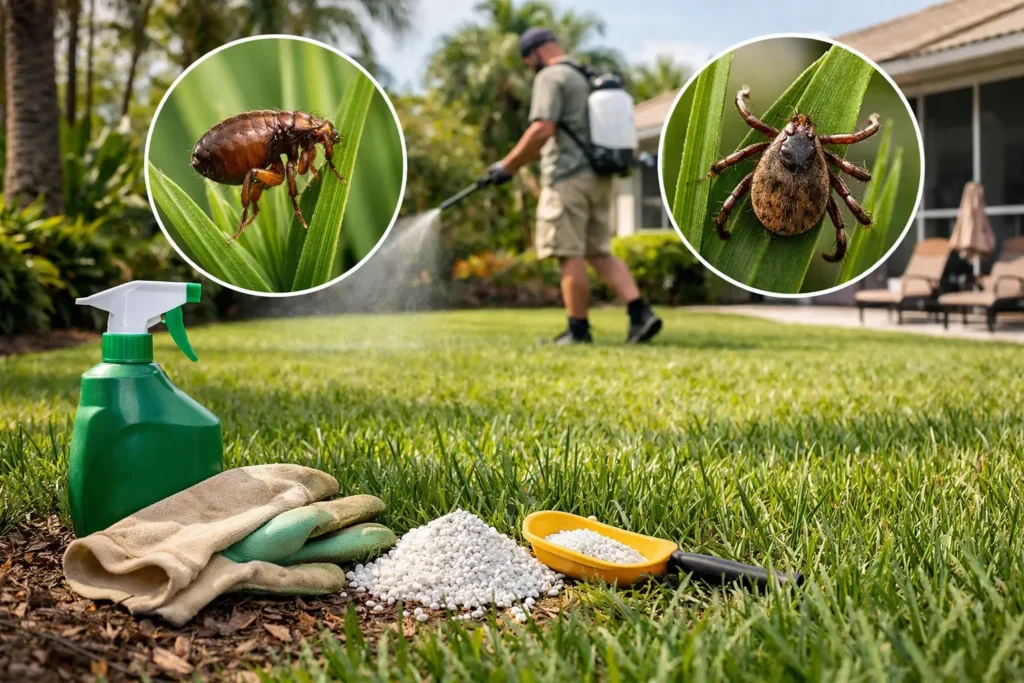
The most common flea and tick hot spots are shaded perimeter edges, under bushes, around crawlspace access points, along fence lines, near patios, pet rest areas, and any place that stays damp after rain or irrigation. If wildlife such as raccoons, opossums, or stray cats move through the property, those routes matter too.
This is where expert inspection makes a difference. A technician who understands Florida pest pressure is not just looking for insects. They are reading the yard like a map – moisture, coverage, traffic, shade, and nesting or resting patterns.
Life cycle control matters
Adult fleas and ticks are only part of the issue. If treatment only targets what is currently biting, the problem often returns. Effective service usually accounts for multiple life stages and may require follow-up timing based on activity level, weather, and yard conditions.
That is where there is some nuance. A light preventive application in a tidy yard with little wildlife traffic may need a different schedule than a heavily shaded property with pets, frequent rain, and recurring activity. There is no single formula that fits every lot.
Signs your yard may need treatment now
Some signs are obvious, and some are easy to dismiss until the issue grows. If pets come inside scratching after time outdoors, if people notice bites on lower legs, or if ticks are found on clothing after walking the yard, action should happen quickly.
There are also quieter warning signs. Wildlife sightings near the property, overgrown edges, recurring flea issues indoors, or a lawn that stays damp and shaded for long periods can all point to outdoor pressure. In many cases, the indoor problem keeps returning because the yard remains the source.
For multi-unit housing, hospitality spaces, and other shared environments, waiting is risky. One untreated exterior area can keep feeding complaints and create a larger service challenge.
What professional treatment usually includes
Professional yard service should begin with inspection and identification, followed by targeted treatment of the areas most likely to hold or spread fleas and ticks. This often includes perimeter zones, landscape beds, pet areas, shaded harborage points, and transitions between maintained lawn and denser vegetation.
The best approach balances speed with safety. That means using products and application methods appropriate for the site, the level of activity, and the presence of pets or people. It also means giving clear guidance on reentry timing and what to do before and after service.
A reliable provider should be straightforward about expectations. Some properties improve quickly after the first visit. Others need repeat service because weather, irrigation, wildlife activity, or a heavy existing population makes control more complicated. Fast relief matters, but long-term prevention is what keeps the problem from circling back.
Yard conditions that keep fleas and ticks around
Treatment is more effective when the environment supports it. If the property keeps offering shelter and moisture, pests will keep trying to reestablish.
Start with the basics. Keep grass cut to a practical height, trim dense vegetation, and reduce leaf litter in corners and beds. Pet resting areas should stay clean and dry as much as possible. If irrigation is running too often, especially in shaded sections, dialing it back may help reduce favorable conditions.
There is a trade-off here. Florida landscapes often rely on mulch, groundcover, and dense plantings for curb appeal and heat control. You do not need to strip the yard bare. You do need to pay attention to the zones where beauty overlaps with pest harborage. A well-maintained yard can still look full and attractive without giving fleas and ticks endless protection.
Pets, wildlife, and reinfestation
Outdoor treatment works best when it is part of a broader prevention plan. If pets are not on appropriate veterinary flea and tick protection, they can continue bringing pests back into the home or business-adjacent space. If wildlife is moving freely through the property, new activity can appear even after a good treatment.
That does not mean the yard service failed. It means pressure remains high. In Florida, reinfestation pressure is real, especially near wooded areas, canals, unmanaged lots, or neighborhoods with a lot of animal movement.
This is also why recurring service can make sense. One-time treatment may help with an active flare-up, but ongoing prevention gives better control in properties that deal with persistent environmental pressure. For many families and property managers, that predictability is worth it.
Residential and commercial needs are not exactly the same
A homeowner usually wants a yard that feels safe for kids and pets again. A property manager may be focused on resident complaints, common-area exposure, and keeping problems from spreading building to building. A hospitality or healthcare property has an even narrower margin for error because pest sightings can affect reputation and confidence immediately.
The treatment principles are similar, but the service plan may differ. A backyard with a dog run has a different use pattern than a landscaped perimeter around a retail site or apartment complex. That is why cookie-cutter scheduling can miss the mark. The property use matters just as much as the pest.
In places like Tampa, Miami, and other humid Florida markets, the challenge can stay active nearly year-round. That makes fast response important, but so is having a provider who can adjust based on conditions instead of forcing every property into the same routine.
When to call for expert help
If you have tried over-the-counter yard products and the problem keeps returning, that is usually the sign to stop guessing. The same goes for recurring indoor flea issues tied to outdoor activity, visible ticks on pets or people, or any property where customer, tenant, or staff complaints are involved.
This is not just about convenience. Misapplied products waste time and money, and partial control often lets the life cycle continue. Professional service should give you a clear assessment, a treatment plan that fits the property, and the confidence that if pests come back, the response will too.
Florida Bug Control approaches flea and tick issues the same way it handles other serious pest pressures – with fast service, practical treatment, and follow-through until the issue is under control. That matters in Florida, where pest problems rarely solve themselves.
How to get better results after treatment
After yard treatment, small steps can make the outcome stronger. Follow post-service instructions carefully, keep pets on their preventive plan, and continue basic landscape maintenance. If the provider identifies a specific pressure point, such as wildlife access or a damp shaded corner, treat that recommendation as part of the solution, not an extra suggestion.
The biggest mistake is assuming one visit fixes every cause. Sometimes it does. Sometimes the better result comes from treatment plus a few environmental changes plus consistent monitoring. That is not overkill. It is realistic pest control.
A yard in Florida can stay comfortable and usable, even in heavy pest season. The key is acting early, treating the right areas, and using a plan built for the way fleas and ticks actually survive here.