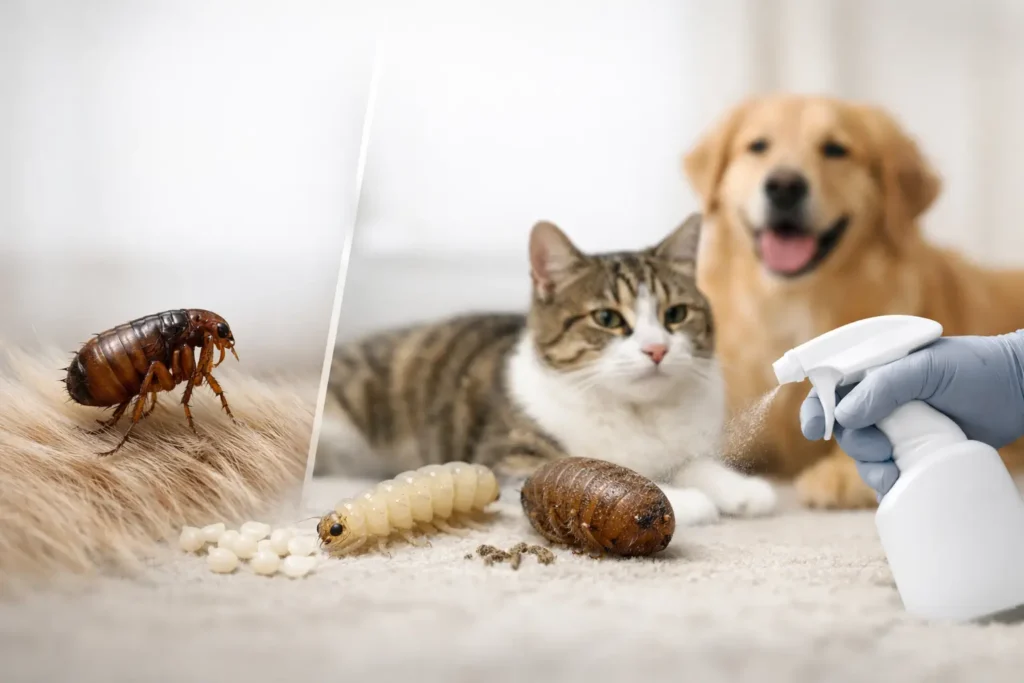
A few fleas on a pet can become a house-wide problem faster than most people expect. In Florida’s warm, humid conditions, flea control cannot focus only on the adult fleas you can see. The real solution has to interrupt the entire life cycle, including eggs, larvae, and pupae hiding in carpets, pet bedding, furniture, cracks, and shaded outdoor areas.
That is why a single spray, one deep clean, or one pet treatment may reduce activity without fully ending it. Effective control is a coordinated process: protect the animal, treat the environment, remove developing fleas, and follow up at the right time.
Why Fleas Keep Coming Back in Florida
Adult fleas are only a small part of an active infestation. A female flea can lay eggs shortly after feeding, and those eggs drop wherever a pet rests, sleeps, scratches, or travels. They can land in rugs, along baseboards, on upholstered furniture, inside pet carriers, and in the seams of vehicle seats.
The eggs hatch into larvae that avoid light and feed on organic debris, including the dried blood left behind by adult fleas. Larvae then form pupae inside protective cocoons. This stage causes many flea problems to feel never-ending because pupae can remain protected from many treatments until conditions are right for adults to emerge.
Heat, humidity, vibration, movement, and carbon dioxide can trigger adults to emerge. That means vacuuming, walking through a room, or bringing a pet back into a treated area may seem to cause a sudden new wave of fleas. In reality, those fleas were often already present in the pupal stage.
Florida properties also have an outdoor factor. Fleas thrive in shaded, moist areas where wildlife, stray animals, or pets spend time. Under decks, around shrubs, beneath porches, in crawl spaces, and along fence lines can all become breeding areas. Treating only indoors leaves a pathway for fleas to return.
Flea Control Requires More Than One Treatment Step
A reliable flea plan begins with identifying where the activity is happening. If bites occur mainly after sitting on a sofa, the problem may be concentrated in upholstery or nearby flooring. If pets pick up fleas shortly after going outside, the yard, patio, or a shaded pet resting area deserves close attention. If several units in an apartment building report fleas, property-wide conditions may need to be addressed.
Start With Every Pet in the Home
Every dog and cat in the household should be on a veterinarian-approved flea prevention or treatment program, even if only one animal appears to be scratching. Untreated pets can keep feeding adult fleas and restarting the cycle after the home has been cleaned or professionally treated.
Use products exactly as directed for the pet’s species, age, size, and health status. Never assume a product intended for one animal is safe for another. Some ingredients and dosages can be dangerous when used incorrectly, particularly for cats. A veterinarian is the right source for guidance when a pet is very young, elderly, pregnant, sick, or already taking medication.
Flea baths and grooming can help remove adult fleas, but they are rarely enough on their own. They do not resolve eggs and developing stages in the home or outdoor environment. Think of pet care as one essential part of the plan, not the whole plan.
Clean Where Fleas Actually Develop
Vacuuming is one of the most useful steps homeowners can take because it removes flea eggs, larvae, debris, and some pupae from carpet fibers and floor edges. Focus on the places pets use most: rugs, carpet, furniture cushions, underneath furniture, closets, baseboards, and cracks along hard flooring.
Vacuum slowly and repeatedly, especially during the first few weeks of treatment. Empty the canister into a sealed bag and place it in an outdoor trash container right away. Wash pet bedding, blankets, throw covers, and washable cushion covers in hot water when fabric instructions allow, then dry them thoroughly.
Do not overlook vehicles. If a pet rides in the car, flea eggs may be present in floor mats, seat seams, cargo areas, or pet travel crates. A thorough vacuum and laundering of removable pet bedding can prevent the car from becoming a source of reinfestation.
Address Outdoor Hot Spots, Not the Entire Lawn
Outdoor flea control is most effective when it targets the places fleas and animal hosts favor. Broad treatment of an open, sunny lawn is usually less useful than focusing on shaded, protected areas. Look beneath shrubs, around patios, under decks, near kennels, along fences, and in areas where pets nap or wildlife passes through.
Keep grass trimmed, remove leaf buildup, and limit clutter that creates cool, damp shelter. If feral animals, rodents, or wildlife are regularly entering the property, they can continue introducing fleas. Excluding animals from crawl spaces, sheds, and other sheltered areas is often part of lasting control.
What to Expect After Flea Treatment
Seeing a few fleas after treatment does not automatically mean the treatment failed. Adults may continue to emerge from protected pupae for days or weeks, depending on the level of infestation and environmental conditions. The key is whether the number of fleas declines over time while pets remain protected and cleaning continues.
This is where timing matters. A professional flea treatment may include products designed to control adult fleas and disrupt development, but no treatment can always reach every cocoon immediately. Follow-up service is often needed to target newly emerged adults before they can reproduce.
Avoid introducing new flea sources during this period. Keep pets on their recommended prevention schedule, limit access to known flea-heavy areas, and continue vacuuming. Skipping these steps can make it difficult to tell whether lingering fleas are emerging from the original problem or being brought in again.
When Professional Flea Control Is the Better Choice
A small, early problem may respond to consistent pet treatment and cleaning. But professional help is the practical choice when bites continue, multiple rooms are affected, pets are heavily infested, or fleas return after repeated do-it-yourself efforts.
Professional service is also especially valuable for rental homes, multifamily properties, hotels, veterinary-adjacent spaces, offices, and other commercial settings. In these environments, flea activity may involve shared walls, common areas, frequent foot traffic, animal access, or multiple parties responsible for cleaning and pet care. A complete plan needs clear inspection, targeted treatment, and coordinated follow-up.
Florida Bug Control approaches flea problems with the urgency they deserve. The goal is not to chase visible adult fleas from one room to another. It is to identify the pressure points, treat the active population safely, and help prevent the next generation from taking over. If fleas come back, so do we until the issue is resolved.
Preventing Another Flea Problem
Once activity is under control, prevention becomes much easier. Keep pets on year-round veterinary-recommended flea prevention, not only during the months when fleas seem most noticeable. Florida’s climate gives fleas opportunities well beyond a short seasonal window.
Maintain a regular vacuuming routine in pet areas, wash bedding often, and inspect pets after boarding, grooming, dog parks, visits with other animals, or time in tall grass and shaded yards. If a pet begins scratching more than usual, check promptly rather than waiting for visible fleas to multiply.
For property managers and business owners, prevention also means responding quickly to reports. A single flea complaint can be isolated, but repeated reports from guests, residents, or staff deserve inspection before the issue spreads. Fast action protects people, pets, and your reputation.
Fleas are small, but they are not a problem to underestimate. A focused plan, consistent follow-through, and timely professional support can turn an exhausting cycle of scratching and bites into a resolved problem and a more comfortable space for everyone who uses it.