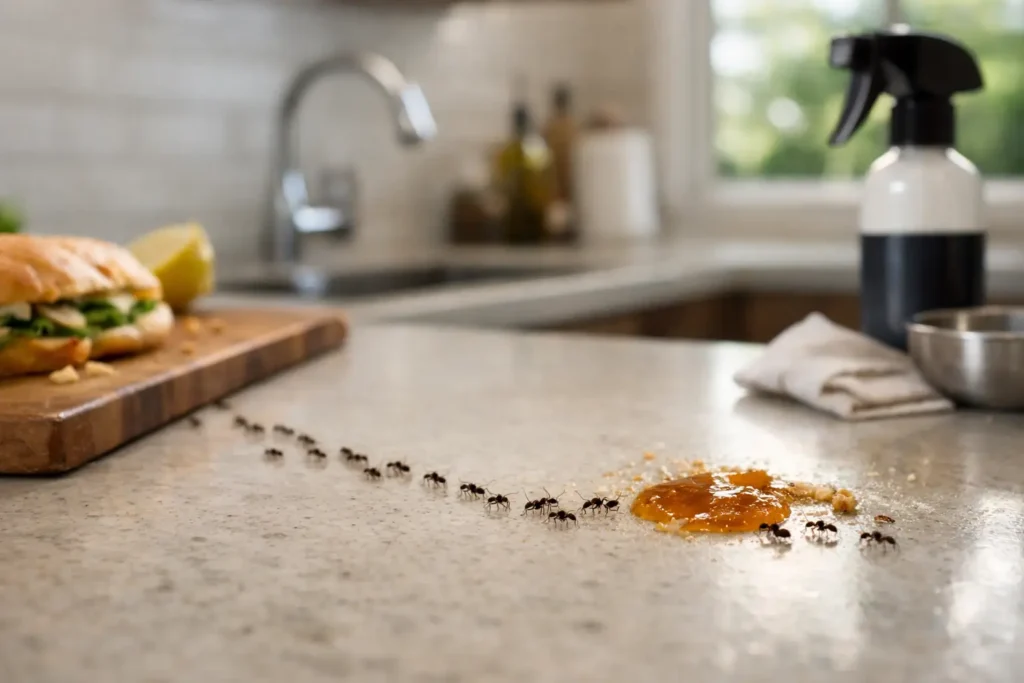
A few ants near the sink can become a steady kitchen trail by the next morning. To prevent ants in Tampa kitchens, you have to remove what draws them in and address the routes they use to get there. In Florida’s heat and humidity, crumbs are only part of the problem. Moisture, pet food, recycling, and tiny gaps around plumbing can keep a colony coming back.
Why Tampa Kitchens Attract Ants
Ants are efficient foragers. When one finds a reliable food or water source, it leaves a scent trail that guides other workers to the same spot. That is why a few ants along a counter, baseboard, or windowsill can quickly turn into a visible line.
Tampa homes offer the conditions ants prefer for much of the year: warm temperatures, frequent rain, humid air, and plenty of protected spaces around kitchens. A kitchen does not have to be dirty to have an ant problem. A sticky spot under a toaster, a leaky pipe beneath the sink, or an open bag of dry pet food may be enough to attract them.
The goal is not just to wipe away the ants you can see. It is to make the kitchen less rewarding for the colony and stop workers from repeatedly finding their way indoors.
How to Prevent Ants in Tampa Kitchens
Keep food sources off the menu
Start with the places food collects without much notice. Wipe counters after cooking, sweep beneath the table, and clean up spills promptly, especially juice, soda, syrup, grease, and fruit residue. Give special attention to the areas around the coffee maker, toaster, microwave, and stove. Those appliances often hold crumbs or sticky buildup that ants can find before you do.
Store cereal, flour, sugar, snacks, and baking ingredients in sealed containers rather than folded bags or cardboard boxes. Fruit is fine on the counter for a short time, but move very ripe fruit to the refrigerator or discard it before it becomes a strong attractant. If you feed pets in the kitchen, pick up the bowl after meals when practical and keep dry food in a tightly sealed bin.
Take out trash regularly, and rinse cans, bottles, and food containers before they go into the recycling. A recycling bin with a little soda or food residue can create a dependable feeding station.
Remove moisture that ants can use
In Tampa, ants are often looking for water as much as food. Check under the kitchen sink for slow leaks, damp cabinet bottoms, worn supply lines, or condensation around pipes. Repair leaks promptly and dry the cabinet thoroughly afterward.
Do not leave wet sponges, dishcloths, or standing water around the sink overnight. Run the dishwasher according to its cleaning cycle and check for pooling water near the door or beneath the unit. If a refrigerator water line or ice maker is leaking, that moisture can support ant activity even when the rest of the kitchen is clean.
Humidity is harder to eliminate in Florida, but good ventilation helps. Use the range hood when cooking, address persistent dampness, and make sure water is not entering through damaged seals around windows or exterior doors.
Block the routes ants use
Ants can fit through surprisingly small openings. Look closely at the areas where utility lines and plumbing pipes enter the kitchen, particularly beneath the sink and behind appliances. Gaps around baseboards, window frames, cabinet edges, and door thresholds can also become travel routes.
Seal small openings with the appropriate caulk or sealant once you have cleaned the area and confirmed it is dry. Replace worn door sweeps and weatherstripping when daylight or outside air is coming through. Outdoors, keep tree branches, shrubs, and mulch from creating easy bridges to the home. Vegetation touching the exterior can give ants a protected path toward windows, soffits, and wall gaps.
Sealing is valuable, but it works best alongside sanitation and moisture control. If food and water remain available inside, ants may simply find a different route.
Clean trails instead of just scattering ants
When you see a line of ants, wipe it up with soapy water or a household cleaner. This removes the ants and helps disrupt the scent trail they are following. Then inspect where the trail begins and ends. It may lead to a spill behind an appliance, a pet bowl, a cabinet with a plumbing leak, or a gap near a window.
Spraying individual ants may provide a quick visual result, but it does not always solve the source of the activity. In some cases, disturbing workers without addressing the colony can lead to new trails appearing elsewhere. The better approach is to clean the trail, remove the attraction, and monitor the area over the next few days.
Use Ant Baits Carefully
Ant baits can be useful because workers carry food back to the colony. They are not instant, and that is normal. You may see increased activity around a bait at first as workers feed and recruit others.
Place baits only where ants are actively traveling and where children and pets cannot reach them. Avoid spraying repellent products directly around a bait, since that can discourage ants from taking it. The right bait and placement depend on the ant species, the food it is seeking, and where it is nesting. If a bait is ignored or the activity keeps shifting, professional identification and treatment can save time and reduce guesswork.
When Kitchen Ants Need Professional Help
A recurring trail is a sign that the colony still has access to your home or that another colony is nearby. Call for professional pest control when ants return after cleaning and sealing, appear in multiple rooms, show up around electrical outlets or appliances, or become more active after heavy rain.
Professional service is also a smart choice for property managers, restaurants, and other commercial kitchens. Food-handling areas need a targeted plan that protects sanitation standards without relying on broad, unnecessary treatment. The right approach includes inspection, species identification, strategic treatment, exclusion recommendations, and follow-up monitoring.
Florida Bug Control provides responsive ant control built around Florida-specific pest pressure. With no long-term contract requirement and return visits available until the issue is resolved, homeowners and businesses can get help without being left to manage a recurring problem alone.
A Simple Weekly Routine That Makes a Difference
Prevention works best when it becomes a routine rather than a one-time deep clean. Once a week, wipe down small appliances, check beneath the sink for moisture, sweep behind accessible areas, empty the recycling, and inspect door and window seals. After storms, take a quick look around the kitchen for damp spots or new activity near exterior-facing walls.
If ants do show up, act while the trail is small. Clean the path, remove the food or water source, and watch for where they return. A kitchen that stays dry, sealed, and free of easy food rewards is far less likely to become a regular stop for ants.