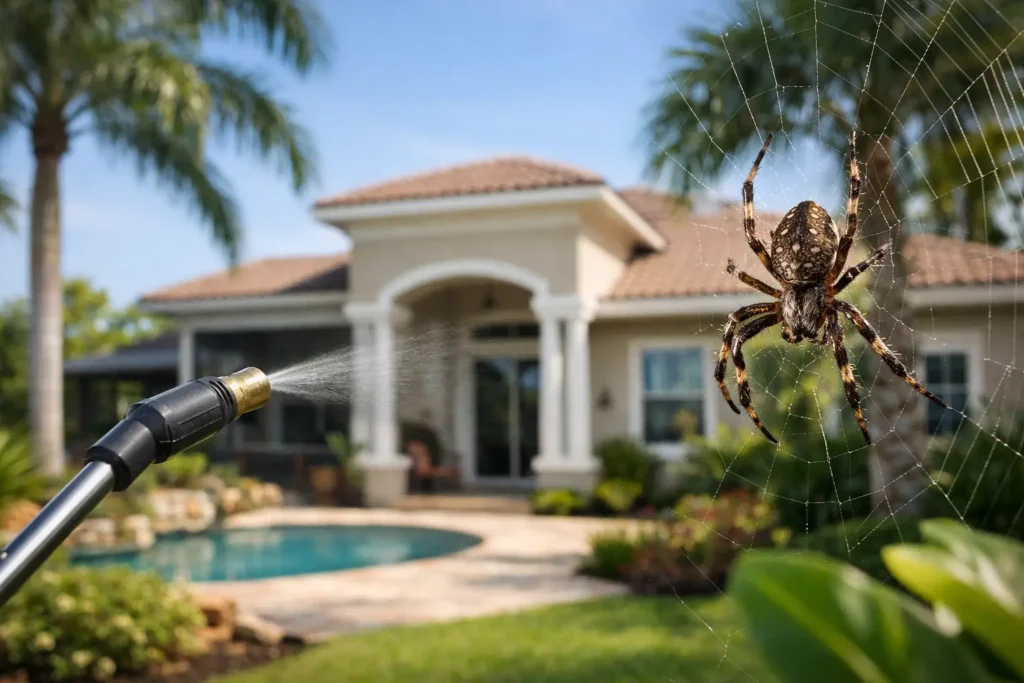
A fresh web stretched across the porch light can make a Florida home feel less welcoming overnight. One spider is usually not an emergency, but recurring webs, egg sacs, or spiders appearing inside can signal that your property is providing food, shelter, and easy access. Effective spider control around house Florida homeowners can count on starts with changing those conditions – not simply knocking down the next web.
Florida’s warmth, humidity, dense landscaping, and year-round insect activity give spiders plenty of opportunities to settle in. The goal is not to make your yard completely insect-free. It is to keep spiders from choosing the exterior walls, entryways, garage, attic, and living spaces as their regular habitat.
Why spiders gather around Florida homes
Spiders go where the food is. Most species found around homes feed on insects, so a spider issue often begins with an insect issue. Porch lights attract flying insects after dark. Damp mulch, stacked materials, dense shrubs, and cluttered storage areas give both insects and spiders a place to hide.
Exterior lighting is a frequent hotspot. If webs keep returning around light fixtures, soffits, pool enclosures, or covered patios, spiders are likely taking advantage of the steady supply of small flying pests drawn there at night. Cleaning away a web helps the area look better, but it does not remove the reason the spider selected that spot.
Spiders may also move indoors when weather changes, outdoor prey becomes less available, or gaps around the structure make entry easy. In Florida, this can happen in any season. Garages, laundry rooms, closets, under-sink cabinets, and quiet corners behind stored boxes are common places to find them.
Spider control around your Florida house starts outside
The exterior is where prevention pays off. Begin by removing visible webs from eaves, window frames, porch ceilings, railings, outdoor furniture, and around doors. Use a long-handled duster or broom so you can reach high areas safely. Dispose of any egg sacs you find rather than leaving them behind. A single sac can lead to a noticeable increase in spider activity later.
Next, look closely at the areas nearest the home. Trim shrubs, vines, and tree branches so they do not touch siding, rooflines, or window screens. Plants pressing against the house create a sheltered bridge for pests and make it harder to inspect the foundation. Keep mulch, leaf litter, firewood, planters, and stored items away from exterior walls when possible.
Outdoor storage needs attention, too. Spiders often hide in rarely moved items such as patio cushions, garden tools, grills, stacked pots, sports equipment, and boxes in a shed or garage. Wear gloves when moving stored materials, especially if they have been untouched for a while. Give equipment a quick inspection before bringing it indoors.
Lighting can make a meaningful difference. Consider turning off unnecessary exterior lights when they are not needed or using fixtures designed to limit how much light spills outward. This will not solve every spider problem, but reducing flying insect activity near doors and windows gives spiders less reason to build there.
Seal the routes spiders use to get inside
A spider can fit through surprisingly small openings. Check the weatherstripping around exterior doors, especially doors leading to garages, patios, and utility areas. A visible gap under a door is an open invitation not only for spiders but also for the insects they hunt.
Inspect window screens for tears, make sure screens fit securely, and repair damaged caulk around windows and utility penetrations. Pay attention to where pipes, cables, and air-conditioning lines enter the home. These gaps are easy to overlook and can lead directly into walls, cabinets, or storage spaces.
Garage doors deserve special attention because they are opened frequently and often have worn bottom seals. If you see daylight around the edges when the door is closed, pests can likely get in. Keeping the garage tidy and reducing cardboard storage also makes it less appealing once they enter.
Reduce the insects that keep spiders fed
Web-building spiders are a clue that flying insects are active around the structure. Ground-hunting spiders may be responding to insects hiding in mulch, clutter, cracks, or damp areas. Either way, addressing the food source is more effective than treating spiders as a stand-alone problem.
Keep trash containers closed and clean up food or drink spills around patios, outdoor kitchens, and pool areas. Avoid letting standing water linger in plant saucers, tarps, or containers. Maintain screens, clear debris from gutters where practical, and correct moisture issues around the home that may support insect activity.
Inside, vacuum along baseboards, behind furniture, in closets, and around storage areas. This removes stray webs, egg sacs, and insects that may be attracting spiders. Store seasonal items in sealed plastic bins rather than loose cardboard boxes when you can. Cardboard offers protected crevices and is harder to inspect thoroughly.
There is a trade-off with heavy landscaping near the house. Lush plantings can look great and provide shade, but when branches, ground cover, or decorative materials sit directly against the structure, they can create a protected pest corridor. You do not have to strip your landscape bare. A clear inspection zone near the exterior makes a real difference.
Know when a spider problem needs professional help
Seeing an occasional spider is normal in Florida. Repeated webs in the same areas, frequent indoor sightings, multiple egg sacs, or spiders appearing in bedrooms and living areas call for a closer look. So does spider activity at a business entrance, loading area, storage room, or customer-facing patio, where webs can affect cleanliness and first impressions.
Do not try to identify or handle an unfamiliar spider at close range. Keep children and pets away from it, and use caution around shoes, gloves, pool equipment, firewood, and stored items. If someone experiences a concerning reaction after a suspected bite, seek medical guidance promptly.
Professional spider control is especially useful when the issue keeps returning after cleaning and sealing obvious gaps. A trained technician can identify likely harborage areas, assess insect pressure around the property, treat appropriate locations, and recommend practical changes that fit the layout of your home or facility. The right plan should account for where spiders are active, how the property is used, and whether children, pets, customers, or sensitive work areas are present.
For homeowners and businesses, the best results usually come from an integrated approach: remove webs and egg sacs, reduce insect activity, improve exclusion, and treat active problem areas when needed. A quick spray alone may reduce what you see for a short time, but it may not address the conditions that brought spiders there.
Keep the property from becoming a repeat web site
A simple monthly exterior check can prevent a small issue from turning into a frustrating routine. Walk the perimeter in the evening or early morning, when webs are easier to spot. Look at door frames, lighting, eaves, shrub lines, pool cages, garage corners, and any spot that stays quiet or cluttered.
If spider activity persists, Florida Bug Control provides safe, fast, and guaranteed service without locking customers into a contract. The focus is not just on removing the spiders you see. It is on finding the pressure points around your property so you can get back to using your home, patio, garage, or business space with confidence.