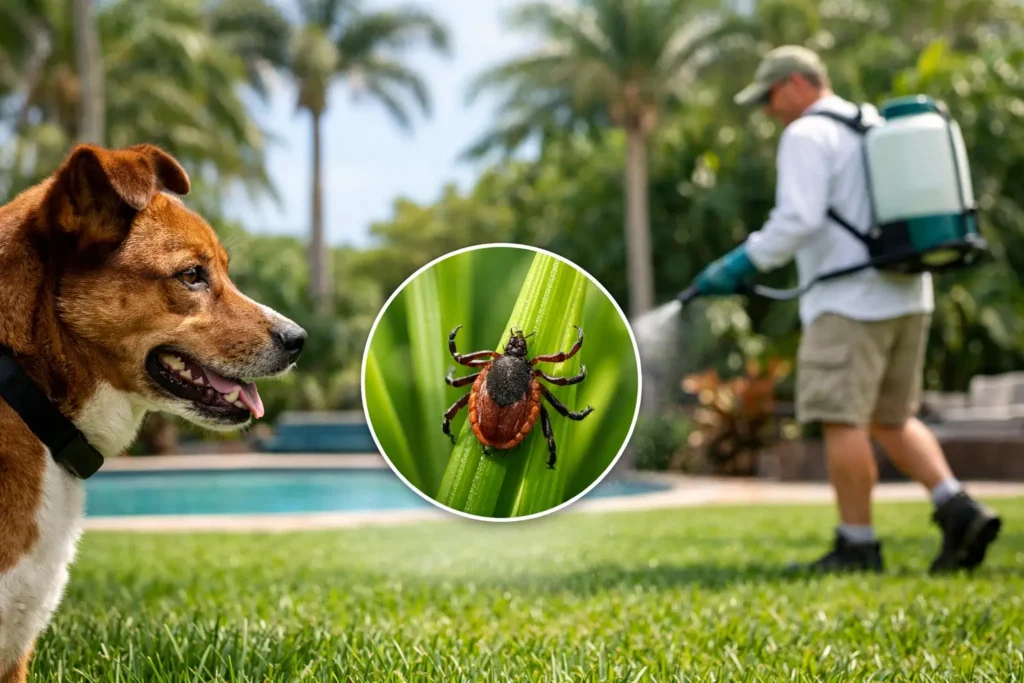
A tick does not need a large, wooded property to become a problem. It can wait in the edge of a lawn, beneath ornamental shrubs, near a pet run, or along the path from a parking area to a building entrance. Effective tick control is about reducing those hiding places, limiting the animals that carry ticks onto a property, and responding quickly when people or pets are being bitten.
Florida’s long warm season gives ticks more opportunities to stay active. That makes prevention especially valuable for households with dogs, outdoor play areas, and frequently used patios. It also matters for businesses where guests, employees, patients, or customers spend time outside.
Why Tick Control Takes More Than One Treatment
Ticks are not like insects that stay close to a single food source. They move through a property by attaching to wildlife, pets, and sometimes people. A clean-looking lawn can still have tick activity if it borders brush, a wooded area, unmanaged vegetation, or an area visited by stray animals.
That is why a spray alone is not always the full answer. Professional service can reduce active tick populations in the areas where ticks rest and wait, but lasting results also depend on how the property is maintained. The goal is to interrupt the conditions that help ticks arrive, hide, and find a host.
A technician should begin with an inspection of the property rather than treating every inch the same way. Shady edges, leaf litter, dense groundcover, woodpiles, fence lines, pet areas, and transition zones between lawn and landscaping often deserve the closest attention. Targeted treatment is more practical than guessing, and it helps keep the focus on the places where exposure is most likely.
Where Ticks Commonly Hide Around Florida Properties
Ticks do not jump or fly. They typically wait on grass, low plants, and brush, then climb onto a passing animal or person. This behavior is one reason they are often concentrated at the margins of a yard instead of in the middle of a sunny, closely cut lawn.
At home, inspect the areas your family and pets use most. Walkways to the mailbox, playground borders, dog runs, outdoor furniture areas, and garden paths can all create regular contact points. If your pet repeatedly comes indoors with ticks, focus first on the route it takes through the yard and the places where it rests outside.
For commercial properties, the risk may be less obvious. Hotels and multifamily communities may have landscaped walkways and pet relief areas. Schools and childcare facilities may have grassy play spaces. Healthcare campuses, retail centers, and offices may have wooded borders or employee break areas. Tick prevention should account for how people actually move through the site, not just what the landscaping looks like from the road.
Landscaping Changes That Make a Difference
You do not need to strip your property bare to make it less inviting to ticks. Consistent maintenance goes a long way. Keep grass trimmed, remove heavy leaf buildup, prune dense vegetation away from frequently used paths, and avoid letting groundcover grow into a thick corridor between brush and recreation areas.
Create a clearer separation between wooded or overgrown edges and the spaces where people and pets spend time. This may mean relocating a pet bed, trimming back a hedge, or keeping children’s play equipment away from dense vegetation. Small changes can lower routine exposure without changing the way you enjoy your property.
Wildlife also deserves attention. Ticks can arrive on animals that travel through yards, including rodents and other wildlife. Secure trash, avoid leaving pet food outdoors, and reduce protected nesting spots around sheds, debris piles, and clutter. These steps will not eliminate wildlife activity entirely, but they can make the property less appealing as a regular stop.
Protecting Pets From Tick Exposure
Pets often encounter ticks before anyone else in the household notices a problem. Dogs that explore brushy edges, lie under shrubs, or walk through tall grass can bring ticks inside. Ask your veterinarian about a tick prevention option that fits your pet’s age, health, and lifestyle, then use it consistently as directed.
Check pets after walks and outdoor time, especially around the ears, neck, collar area, between toes, under the legs, and near the tail. A quick check is easier than discovering an attached tick later. If you find one, remove it promptly with fine-tipped tweezers, grasping close to the skin and pulling steadily without twisting or crushing the tick.
Do not assume a pet product replaces property-level tick control. Pet prevention protects the animal, while yard treatment and habitat management address the environment where repeated exposure begins. The best approach uses both, particularly when ticks have already been found indoors or on multiple pets.
What Professional Tick Treatment Should Address
A professional tick service should be specific to the property and the level of activity found. On a residential property, treatment may focus on landscape borders, shaded areas, pet zones, and likely travel routes from brush into the yard. On a commercial site, the service plan may also account for public access, operating hours, documentation needs, and sensitive areas.
Safety matters. A qualified pest professional can explain where treatment will be applied, what preparation is needed, and when people and pets can safely return to treated outdoor areas. Follow those instructions carefully. More product is not better, and applying consumer products in the wrong place can leave the tick problem untouched while creating unnecessary concerns for your family, staff, or customers.
It also helps to set realistic expectations. Treatment can reduce tick activity, but new ticks may be carried onto a property by animals after service. Properties next to unmanaged land may require ongoing attention during active periods. If activity continues, the right response is not simply repeating the same guesswork. It is reassessing the hot spots, the landscape conditions, and the source of the problem.
When It Is Time to Call for Tick Control
Call for professional help when ticks are being found repeatedly on pets or people, when you see ticks near high-use outdoor areas, or when a property has dense vegetation that is difficult to manage safely. Fast action is particularly wise for homes with young children, households with pets, and facilities responsible for the public.
You should also seek help if do-it-yourself products have produced only short-lived results. That often means the visible tick is only part of the problem. An experienced technician can identify the areas most likely to support tick activity and recommend a treatment plan that matches the property instead of relying on a one-size-fits-all approach.
Florida Bug Control provides safe, fast, and guaranteed pest service, with return visits available if the problem persists. For property owners who need answers without a long-term contract, an inspection and free estimate can turn a frustrating tick concern into a clear plan.
After any outdoor time, make tick checks part of the routine, just like washing up or bringing in the dog. That small habit, paired with a maintained property and responsive professional care when needed, gives ticks far fewer chances to become your next problem.