A rodent sighting rarely stays a one-rodent problem for long. In Florida, warm weather, heavy rain, dense landscaping, and easy access to food and shelter can keep rodents active through much of the year. The choice between professional versus DIY rodent control comes down to more than cost: it is about finding the source, protecting people and pets, and making sure the activity does not return after the first trap is removed.
DIY methods can be a sensible first response to a limited, clearly identified issue. But when droppings are appearing, scratching is coming from walls or ceilings, food packaging has been damaged, or rodents are seen in daylight, professional help is usually the faster path to a lasting solution.
When DIY Rodent Control Can Make Sense
A homeowner who spots one mouse in a garage or finds a single entry point under a door may be able to handle the situation with basic exclusion and carefully placed traps. The key is acting quickly and checking the area often. Rodents are cautious, reproduce quickly, and are good at finding alternate routes once they sense a change.
DIY control works best when the issue is small, the location is accessible, and there are no signs that rodents have spread into walls, attics, crawl spaces, or shared areas of a building. It also requires consistency. Setting a few traps and forgetting them for a week is not a control plan.
Start by removing the conditions that make the property attractive. Store dry goods and pet food in hard-sided sealed containers, clean crumbs and spills promptly, keep outdoor trash lids closed, and reduce clutter in garages and storage rooms. Inspect around doors, utility lines, vents, and foundations for gaps. A small opening can be enough for a mouse, while rats can exploit larger breaks in screening, soffits, or exterior construction.
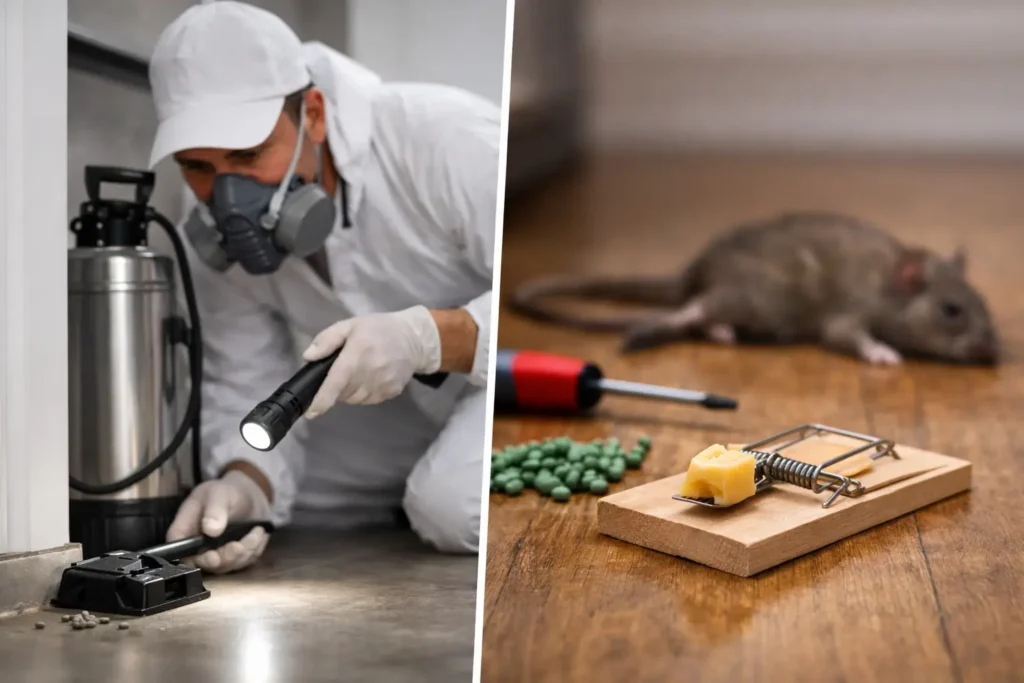
Snap traps can be effective when they are placed correctly along walls, behind appliances, or near active runways. They should be set where children and pets cannot reach them. Live traps may sound gentler, but they still require frequent monitoring and do not solve the reason the rodent entered in the first place.
The Limits of DIY Rodent Control
The hard part is not buying a trap. It is accurately understanding the full scope of the activity. A rodent may be seen in the kitchen while nesting in an attic, utility chase, wall void, or crawl space. Trapping the visible animal without closing access points can leave the property open to the next one.
DIY treatment also carries safety concerns. Rodent droppings, urine, nesting material, and contaminated food can create sanitation risks. Dry sweeping or vacuuming droppings can disturb contaminated material. Wear gloves, ventilate the space, and use an appropriate disinfecting approach before cleanup. If the contamination is widespread or located in a difficult-to-reach area, it is safer to bring in trained help.
Store-bought bait is another area where caution matters. Incorrect placement can put children, pets, and non-target wildlife at risk. If bait is used where a rodent later dies inside a wall or inaccessible void, the odor and insect activity that follow can create a second problem. A professional can determine whether bait, trapping, exclusion, or a combination is appropriate for the site.
For renters, there is an added complication. Sealing exterior openings or treating a broader building issue may be the property owner’s responsibility. Document what you are seeing, notify management promptly, and avoid making alterations that could create a maintenance or safety issue.
Professional Versus DIY Rodent Control: The Real Difference
The biggest difference is the level of inspection and follow-through. Professional rodent control is not simply putting out more traps. It starts with identifying the rodent, locating evidence of activity, tracing likely travel paths, and finding the conditions that allow the problem to continue.
A trained technician looks beyond the room where the rodent was seen. They may inspect exterior gaps, rooflines, plumbing penetrations, attic insulation, garage corners, storage areas, landscaping near the structure, and food or waste handling practices. In commercial settings, the assessment can also include receiving areas, dumpsters, break rooms, equipment rooms, inventory storage, and other sensitive areas.
That matters because rodent behavior is highly site-specific. A restaurant may have a delivery-door issue. A healthcare facility may need careful sanitation and documentation. A homeowner may have roofline access after storm damage. The treatment plan should fit the building, the level of activity, and the people who use the space.
Professional service also provides accountability. Florida Bug Control offers safe, fast, and guaranteed service, with return visits until the issue is resolved. That ongoing attention is especially valuable when rodent activity involves hidden spaces or recurring exterior pressure rather than one easily trapped animal.
Exclusion Is What Makes Results Last
Trapping reduces the current population. Exclusion helps prevent the next population from coming in. This is where professional work often creates the most value.
A careful exclusion plan can address gaps around pipes and cables, damaged screens, poorly sealed doors, attic vents, openings at roof edges, and other access points. The materials and method matter. A quick patch that a rodent can chew through or push aside is not a lasting repair.
Not every opening should be sealed immediately, however. If active rodents are already inside, closing all routes without a removal plan can push them deeper into the building. A professional can sequence removal and exclusion to avoid trapping rodents in wall voids or forcing them into occupied spaces.
Commercial Properties Need a Higher Standard
For business owners and facility managers, DIY rodent control can create operational risk. One sighting in a hospitality property, school, retail store, food facility, or medical setting can affect customer confidence, employee comfort, sanitation practices, and internal compliance requirements.
Commercial rodent management needs regular monitoring, clear documentation, responsive service, and recommendations that fit the facility’s schedule and safety procedures. It also has to account for the scale of the property. A trap placed in a break room will not address activity near loading docks, roof access points, waste areas, or utility corridors.
In these settings, professional service is less about reacting to one rodent and more about protecting the operation from repeated disruption.
Cost: What Are You Actually Paying For?
DIY control usually has the lower upfront cost. A few traps, sealed containers, and basic exclusion supplies may be enough for a simple issue. If you catch the problem early and solve it quickly, that can be money well spent.
The cost changes when the first attempt fails. Repeated purchases, damaged food, chewed wiring, contaminated storage areas, odor problems, and time spent resetting traps can make an unresolved rodent issue more expensive than expected. For businesses, the cost of a complaint, lost inventory, or interrupted operations can be much higher.
Professional service costs more at the start because it includes expertise, inspection time, targeted treatment, and follow-up. But it can reduce the chance that a hidden problem continues unnoticed. A free estimate helps clarify what the issue requires before you commit to a plan.
Signs It Is Time to Call a Professional
Do not wait for a larger infestation if you are finding fresh droppings repeatedly, hearing movement in walls or ceilings, noticing gnaw marks, smelling a persistent musty or urine-like odor, or seeing rodents during the day. Daytime sightings can indicate competition for food or a more established population.
Call for help promptly if you have children or pets, suspect activity in an attic or wall void, manage a multi-unit property, or operate a business where sanitation standards are critical. The same applies if you have tried traps and activity continues after several days.
A Better Way to Decide
Choose DIY when the evidence points to a single, accessible problem and you can commit to cleanup, trapping, inspection, and exclusion. Choose professional service when the source is unclear, the activity is recurring, the infestation may be hidden, or the stakes are higher for your household or business.
Rodents do not need much space, food, or time to become established. A fast response paired with the right level of expertise can protect your property now and make it much less inviting tomorrow.