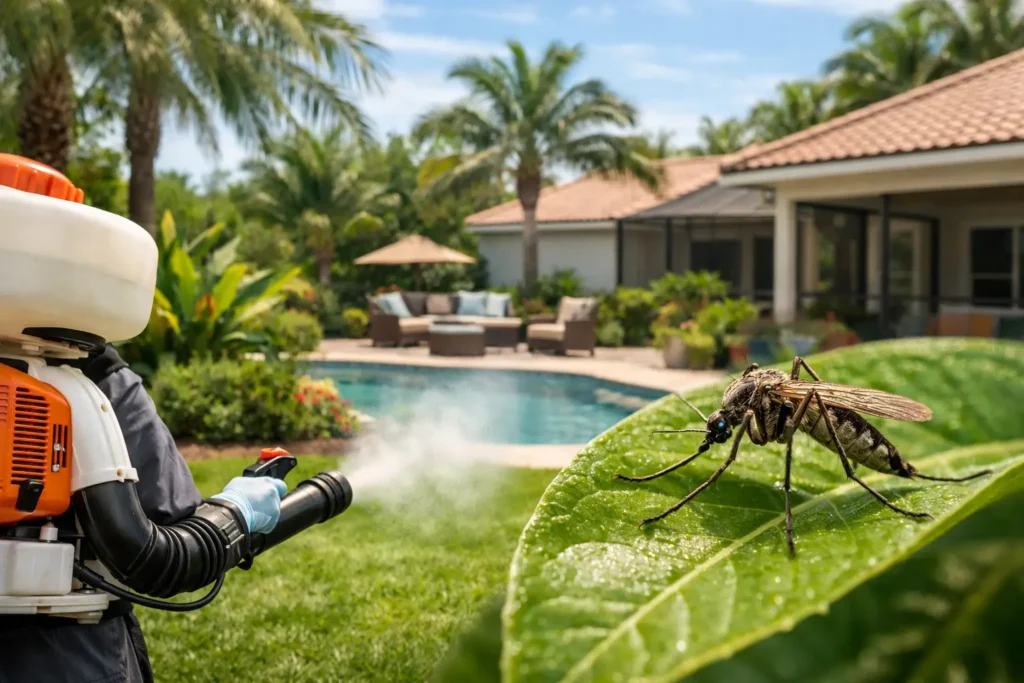
A mosquito problem can turn a shaded patio, pool deck, or backyard birthday party into a place everyone avoids before sunset. The best mosquito yard treatments do more than knock down the mosquitoes you see. They reduce breeding sites, target the areas where adults rest, and keep pressure down through Florida’s long mosquito season.
For many Florida homes, a single spray is not enough. Afternoon rain, dense landscaping, standing water, and year-round warmth can create a constant cycle of new mosquitoes. The right treatment depends on what is happening in your yard, how quickly you need relief, and whether you need a one-time service or ongoing protection.
What Makes a Mosquito Treatment Work
Mosquito control works best when it addresses two different stages of the problem. Adult mosquitoes rest in cool, protected places such as shrubs, under decks, around dense ground cover, and along fence lines. Their larvae develop in water, sometimes in places as small as a bottle cap or a clogged gutter.
Treating only adult mosquitoes may provide fast relief, especially before an outdoor event. But if nearby water sources are still producing larvae, the yard can become active again quickly. Treating breeding areas without addressing adult resting zones can also leave you dealing with biting mosquitoes for longer than you should.
The most effective plans combine source reduction, targeted larval control when appropriate, and professionally applied barrier treatment for adult mosquitoes. This approach is practical because it focuses on the actual conditions that allow mosquitoes to keep returning.
Best Mosquito Yard Treatments by Situation
There is no single best option for every property. A compact yard with one neglected birdbath needs a different response than a heavily landscaped property near drainage areas or a commercial patio that must stay comfortable for guests.
1. Remove Standing Water for Lasting Prevention
The first treatment is not a chemical product. It is removing the water mosquitoes need to reproduce. Walk the property after rain and look closely at anything that can collect water. Empty flowerpot saucers, toys, buckets, tarps, wheelbarrows, pet bowls left outdoors, and pool covers. Clean gutters and make sure downspouts move water away from the structure.
Change water in birdbaths and outdoor pet bowls at least once a week. Keep rain barrels properly screened. If you have a pond, drainage feature, or another water source that cannot be emptied, it may need a more specific management approach.
This step is essential, but it has limits. In Florida, mosquitoes can breed beyond your property line in drainage areas, neighboring yards, and natural wet spaces. Removing water at home still reduces the number developing in your immediate outdoor living area.
2. Use Larval Control Where Water Cannot Be Removed
Larval treatments are designed for standing water that cannot be dumped or drained. Depending on the site, these may include products that prevent larvae from maturing or biological options that target mosquito larvae in water.
Placement matters. A treatment belongs in water that remains long enough for mosquito development, not in every puddle after a storm. It also should be selected carefully around ponds, water gardens, livestock areas, and places accessible to children or pets. Always follow the product label exactly, and do not add treatments to water unless they are intended for that use.
Larval control is a strong preventive tool, particularly for properties with recurring water collection. It will not provide immediate relief from adult mosquitoes already hiding in the landscape, so it is usually part of a broader plan.
3. Get a Targeted Barrier Treatment for Active Mosquitoes
Professional barrier treatments are often the best mosquito yard treatment when mosquitoes are already keeping people indoors. A trained technician applies treatment to the shaded, protected vegetation and structural areas where adult mosquitoes rest during the day. The goal is targeted coverage, not indiscriminate spraying across the entire yard.
A quality treatment starts with inspection. Technicians should identify dense vegetation, areas of poor drainage, under-deck shade, outdoor seating spaces, and other conditions contributing to mosquito activity. They should also explain what treatment can reasonably accomplish and how long results may last under current conditions.
Rain, irrigation, rapid plant growth, and heavy mosquito pressure can affect how long a barrier treatment performs. That is why recurring service is often more dependable than waiting until every outdoor gathering is disrupted. For a party, wedding, open house, or backyard event, a one-time treatment may be the right choice. For regular patio use, pool time, or a property with persistent pressure, scheduled service usually makes more sense.
4. Maintain the Landscaping Mosquitoes Prefer
Mosquitoes do not need tall grass alone to become a problem. They prefer humid, shaded places protected from wind and sun. Overgrown hedges, thick shrubs near patios, heavy ground cover, and clutter beneath decks can give adults a reliable daytime hiding spot.
Keep shrubs trimmed enough to improve airflow, clear leaf piles and yard debris, and avoid letting vegetation press tightly against seating areas. You do not need to strip your yard bare. The goal is to reduce the dark, damp pockets that make the property comfortable for mosquitoes.
For homes with outdoor kitchens, play areas, or pool seating, create a bit of separation between dense landscaping and the places people gather. It can make professional treatments more effective while also making the space more pleasant to use.
5. Add Personal Protection for High-Activity Times
Yard treatment reduces the mosquito population around your property, but it cannot create a perfect force field. During dawn, dusk, and humid evenings after rain, personal protection still has value.
Use an EPA-registered repellent as directed when you will be outside for extended periods. Lightweight long sleeves and pants can help in areas with high activity. Fans are also useful on patios because mosquitoes are weak fliers, although a fan works best as an added comfort measure rather than the main solution.
Citronella candles, torches, and similar products may create a small area of short-term comfort under ideal conditions. They are not a dependable answer for a Florida yard with an established mosquito problem. If bites are happening every time you step outside, it is time to focus on breeding sources and resting areas instead.
What to Avoid When Treating Your Yard
Do not rely on widespread fogging as your only strategy. It may temporarily reduce adult activity, but it does not solve the conditions producing new mosquitoes. Avoid applying products right before rain, during windy conditions, or to blooming plants when pollinators are actively foraging. Product labels and local guidance matter.
It is also wise to be skeptical of treatments that promise permanent results. Mosquitoes can fly in from nearby properties and natural areas, and Florida weather constantly changes the conditions in your yard. Honest mosquito control is about reducing activity to a manageable level and maintaining that result with the right schedule.
If you have children, pets, vegetable gardens, ponds, or beehives, tell your pest control provider before service begins. A professional should account for these conditions, explain preparation steps, and provide clear direction about when treated areas can be used again.
When Professional Mosquito Service Is Worth It
Professional treatment is especially valuable when mosquitoes are interfering with daily life, when the property has complex landscaping or recurring water issues, or when you need dependable protection for guests, tenants, or customers. Restaurants, hospitality properties, schools, and multifamily communities often need a documented, consistent plan rather than occasional DIY attempts.
For homeowners, professional service can save time and reduce guesswork. Florida Bug Control evaluates the areas where mosquitoes breed and rest, then builds a treatment approach around the property instead of applying a one-size-fits-all fix. Fast response, clear communication, and return visits when needed matter because mosquito pressure rarely follows a convenient schedule.
The best time to act is before your yard becomes unusable. Check for standing water after the next rain, clear the shaded clutter mosquitoes favor, and get expert help if bites continue. A backyard should be a place to relax after sunset, not a place to retreat from it.