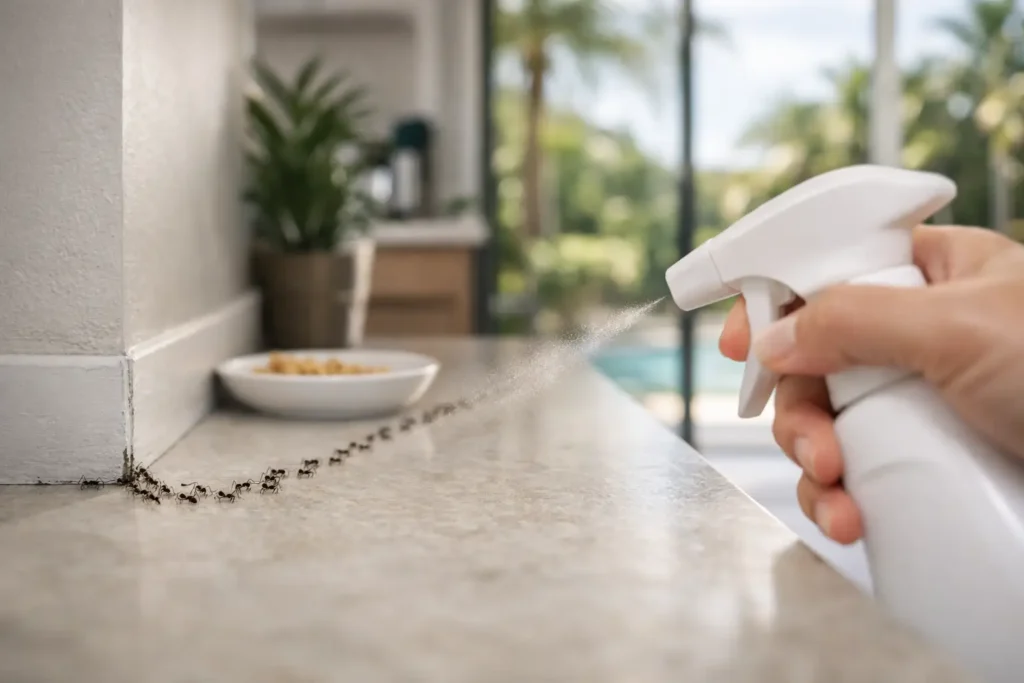
A line of ants crossing the counter is not random. It is a marked route leading other workers straight to food, water, or shelter. Knowing how to stop ant trails starts with breaking that route, but lasting control means addressing the colony that created it. In Florida, where heat, humidity, and frequent rain keep ants active much of the year, a quick wipe-down may clear the visible line without solving the reason it appeared.
The good news is that most ant trails can be stopped with a focused response. Clean the trail, remove the attractant, block easy access, and use the right treatment for the activity you are seeing. If ants keep returning, move fast. Repeated trails usually point to a nearby nesting area or a colony that needs professional treatment.
Why Ant Trails Keep Coming Back
Ants communicate with scent trails called pheromones. When one worker finds a reliable source of sugar, grease, pet food, moisture, or crumbs, it leaves a chemical path as it returns to the colony. Other ants follow that path and reinforce it.
That is why killing the ants you can see often does not end the problem. It removes a few workers, not the colony or the scent route. A trail may also shift to a new area after being disturbed, especially if food or water is still easy to find.
Florida homes commonly see activity around kitchen counters, pantries, pet bowls, bathroom sinks, windows, doors, laundry rooms, and the edges of exterior walls. Outside, ants may travel along mulch beds, tree branches, utility lines, pavers, and cracks in concrete before finding a way indoors.
How to Stop Ant Trails Step by Step
1. Remove the active trail completely
Start by wiping down the full route, not just the cluster of ants near the food source. Use warm soapy water or a household cleaner on counters, floors, baseboards, windowsills, and other hard surfaces where ants are traveling. Follow up with a clean, damp cloth so cleaner residue does not attract dirt or interfere with food-prep areas.
Pay attention to where the line begins and ends. The end near a crumb, sticky spill, recycling bin, or pet dish identifies the attractant. The other end may reveal an entry point at a window frame, cabinet gap, pipe opening, or baseboard crack.
Vacuuming can quickly remove a heavy concentration of ants from dry surfaces. Empty the vacuum container or discard the bag outside afterward. This gives you immediate relief, but it should be paired with cleaning and colony control.
2. Take away the food and moisture source
A spotless-looking kitchen can still offer plenty of food for ants. A small syrup drip on a bottle, crumbs under a toaster, residue in a recycling bin, or a pet-food bowl left out overnight can support a steady trail.
Wipe counters and tables after meals, sweep or vacuum beneath appliances, and rinse cans and bottles before placing them in recycling. Store pantry items in sealed containers, including cereal, flour, snacks, sugar, and pet food. Keep trash covered and take it out regularly, especially in warm weather.
Water matters just as much. Repair dripping faucets, check beneath sinks for slow leaks, and avoid leaving standing water in trays, buckets, or near indoor plants. If ants are gathering in a bathroom or laundry room, moisture is often the main reason they are there.
3. Use bait strategically instead of spraying the trail
When ants are actively foraging, properly placed bait can be more effective than spraying the line. Workers carry bait back to the colony and share it, giving the treatment a chance to reach ants you cannot see.
Choose a bait labeled for ants and use it exactly as directed. Some ants prefer sweet foods, while others are drawn to protein or grease-based foods. If one bait is ignored after a day or two, a different formulation may be needed. Avoid placing bait directly on freshly cleaned surfaces or where children and pets can reach it.
Do not spray repellent insecticides near bait stations. Repellent products can scatter foraging ants or keep them from taking the bait, making the colony harder to eliminate. You may see more activity around bait at first. That is often a sign that workers are feeding and carrying it back.
4. Seal the routes ants use to enter
Once activity has slowed, inspect the places where ants commonly get inside. Look closely around windows, exterior doors, plumbing penetrations, cable lines, dryer vents, and cracks where siding or masonry meets the foundation.
Replace worn weatherstripping, repair damaged screens, and seal small gaps with an appropriate caulk or exterior sealant. Trim shrubs, vines, and tree branches that touch the building. Those plant bridges can give ants a direct path from the yard to windows, rooflines, and wall openings.
Sealing helps, but it is not a stand-alone fix when a colony is already established nearby. Ants can enter through extremely small openings, and Florida properties often have multiple possible routes. Think of exclusion as a way to reduce future access after the existing pressure is under control.
5. Reduce outdoor conditions that support colonies
Ant control around the home starts outside. Keep mulch and leaf litter from piling against the foundation, and move stacked firewood, stored materials, and dense ground cover away from exterior walls when possible. These areas can hold moisture and provide protected nesting space.
Make sure gutters drain properly and water does not collect near the foundation. Correct irrigation that regularly wets one area of the lawn or landscape. If outdoor trash containers are close to the building, keep lids closed and clean spills around them.
For apartments, condos, restaurants, offices, and other shared properties, outdoor conditions may extend beyond one unit or suite. Property-wide sanitation, landscape maintenance, and coordinated treatment are often necessary when ants travel between connected spaces.
When DIY Ant Control Is Not Enough
A few ants after a spill may be manageable. Daily trails, ants appearing in several rooms, or activity that returns immediately after cleaning are different. These signs suggest the colony is close by, there may be multiple entry points, or the ant type requires a more targeted treatment plan.
Call for professional help if you see ants around electrical equipment, inside wall voids, near food-storage areas, or throughout a commercial facility. Food-service, healthcare, hospitality, and retail environments need a fast response because even a small trail can become a sanitation concern and affect customer confidence.
Professional service also makes sense when you have tried baiting without results. Ant species vary in nesting habits and food preferences. A treatment that works for one type may do very little for another. A trained technician can identify the likely source, inspect indoor and outdoor pressure points, and apply a plan designed to eliminate active colonies while preventing repeat activity.
Florida Bug Control provides safe, fast, and guaranteed ant control for homes and businesses. If pests come back, so do we, with return visits until the issue is resolved.
Preventing New Ant Trails After Treatment
After a trail disappears, keep an eye on the area for the next one to two weeks. Continue cleaning food residues, keeping dry goods sealed, and checking for moisture under sinks and around appliances. Early action is much easier than waiting for a trail to become a daily routine.
A practical weekly check can make a real difference: inspect pet-feeding areas, wipe cabinet shelves, empty indoor trash, and walk the exterior for wet spots, vegetation touching the structure, or new gaps around doors and utility lines. During heavy Florida rain, check again afterward. Changing moisture conditions can push ants toward the shelter of a building.
The most effective way to stop an ant trail is to treat it as a message, not just a mess. Follow the line, remove what is attracting it, and address the colony before a small route turns into a recurring problem.