A single gap around a pipe, a loose garage-door seal, or an open pet-food container can be enough to turn a Florida property into a rodent stopover. Warm weather, frequent rain, dense landscaping, and year-round food sources give rats and mice plenty of reasons to stay active. Knowing how to keep rodents out starts with making your home or business harder to enter, harder to feed in, and less appealing to nest around.
Rodent prevention is not one task. It is a practical system of exclusion, sanitation, moisture control, and monitoring. The sooner you address the conditions attracting them, the less likely a small sighting becomes a larger problem behind walls, above ceilings, or around stored inventory.
How to Keep Rodents Out by Closing Their Entry Points
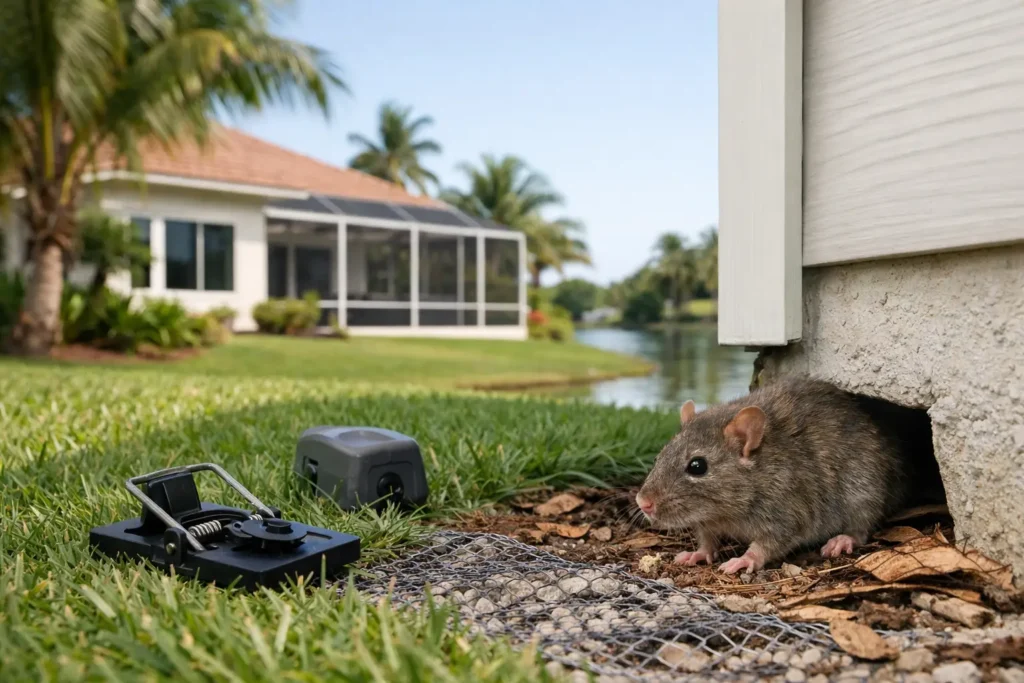
Rodents do not need an open door to get inside. Mice can squeeze through openings about the width of a pencil, while rats can exploit gaps that look too small to matter. Start outside and inspect the full perimeter of the structure, especially at ground level and where utilities enter the building.
Check around plumbing pipes, HVAC lines, cable penetrations, attic vents, crawl-space vents, doors, windows, soffits, roof edges, and the garage. Pay close attention to areas hidden by shrubs, mulch, stored equipment, or exterior clutter. These are easy to overlook and often provide protected travel routes.
Seal small cracks with durable exterior-grade materials. For larger openings, use properly fitted metal flashing, hardware cloth, or another chew-resistant barrier before sealing the edges. Expanding foam may help fill a void, but it should not be your only line of defense because rodents can chew through it. Vents need airflow, so cover them with securely installed screening rather than closing them completely.
Doors deserve special attention. Replace worn sweeps and weatherstripping, especially on garage, utility, and storage-room doors. If daylight is visible beneath or around a door, a rodent may have a route inside. For commercial facilities, inspect loading areas and service entrances at the end of every shift. A door left open during deliveries can undo otherwise strong exclusion work.
Do Not Forget the Roofline
Not every rodent enters at ground level. Roof rats are strong climbers and may use tree branches, vines, fences, utility lines, or stacked materials to reach eaves and attic openings. Trim branches back from the roof and remove climbing vegetation from exterior walls where practical.
Then inspect the roofline for separated soffits, damaged fascia, unprotected vents, and gaps around pipes. These repairs are often best handled promptly, before an animal can establish a nesting area in the attic.
Remove the Food and Water That Keep Rodents Around
A sealed building is far more effective when rodents have no reason to linger nearby. Food, water, and shelter are the three things they seek. Remove one, and you reduce the pressure on your property. Remove all three, and prevention becomes much stronger.
Inside homes, store cereal, flour, rice, snacks, dry pet food, and birdseed in tightly sealed containers. Wipe counters after meals, clean under appliances regularly, and avoid leaving pet bowls out overnight. Take kitchen trash out frequently and use a can with a tight-fitting lid.
In restaurants, break rooms, schools, healthcare settings, and other commercial spaces, sanitation standards need to be consistent across every shift. Food crumbs under equipment, poorly managed dumpsters, open ingredient storage, and overflowing trash are all invitation points. A cleaning schedule only works when staff can follow it during busy periods, so focus on the high-risk areas first: food storage, dishwashing stations, employee eating areas, receiving zones, and waste areas.
Water matters just as much in Florida. Repair dripping faucets and leaking pipes, empty standing water in trays and containers, and make sure condensation from air-conditioning equipment drains correctly. A rodent can stay close to a property with surprisingly little water available.
Make the Yard Less Comfortable for Rodents
Your yard can either serve as a barrier or become the staging area for an indoor infestation. Dense vegetation against the foundation provides cover, while clutter creates nesting spots and hides potential entry points from view.
Keep grass maintained and pull mulch, ground cover, and shrubs away from exterior walls where possible. Store firewood, lumber, cardboard, and outdoor supplies off the ground and away from the building. If you use bird feeders, place them thoughtfully and clean spilled seed beneath them. Fallen fruit should also be picked up regularly.
Garbage storage needs a closer look. Keep outdoor bins closed, clean up spills around them, and position them away from doors and walls when the property layout allows. For multifamily and commercial properties, dumpster areas should be cleaned routinely and monitored for burrowing, droppings, gnaw marks, or activity along nearby walls.
There is a trade-off with landscaping: Florida properties need shade and plant coverage, but plants should not create a hidden highway directly to the building. A clean inspection zone around the foundation makes future pest activity easier to spot and address.
Watch for Early Signs Before the Problem Grows
You may not see a rodent during the day, particularly when activity is still limited. Instead, look for evidence. Fresh droppings, gnaw marks, shredded paper or insulation, oily rub marks along walls, and scratching sounds in ceilings or walls all deserve attention.
A stale or musky odor in a pantry, garage, attic, or storage area may also point to ongoing activity. In commercial spaces, inspect behind stored products, beneath shelving, and around utility rooms. Inventory that sits untouched for long periods creates protected nesting areas.
Set a routine for inspections rather than waiting for a sighting. Homeowners may check monthly and after storms or exterior repairs. Property managers and businesses often need more frequent checks, particularly around food storage, trash areas, receiving bays, and units with recent vacancies.
Use Traps Carefully and Avoid Shortcuts
Traps can help confirm activity and reduce a small, contained problem, but placement matters more than quantity. Rodents usually travel along walls and behind objects, not through the center of an open room. Place traps where signs are present and keep them inaccessible to children and pets.
Avoid relying on poison as a first response inside occupied structures. An animal may die in a wall, ceiling, or inaccessible void, creating odor and cleanup challenges. There are also safety concerns for children, pets, and wildlife when products are not used correctly. If activity is widespread, recurring, or located in hard-to-reach areas, professional assessment is the safer choice.
Repellents, ultrasonic devices, and strong-smelling home remedies may sound convenient, but they rarely solve an established rodent issue. They do not close entry points, remove food sources, or eliminate nesting conditions. Prevention works when the approach addresses the cause, not just the occasional animal you see.
When Professional Rodent Control Is the Right Next Step
Call for professional help when you find repeated droppings, hear regular nighttime activity, see damaged wiring or insulation, find a nest, or cannot identify how rodents are getting in. The same applies when activity affects a restaurant, rental property, medical facility, warehouse, or any site where sanitation and operations are at risk.
A trained technician can identify the likely species, locate active entry points, assess the level of activity, and recommend a control plan based on the property. Effective service should combine targeted removal with exclusion recommendations and follow-up monitoring. Treating without correcting access points can lead to repeat activity, especially in Florida’s year-round climate.
Florida Bug Control provides safe, fast, and guaranteed rodent service for homeowners and businesses that need clear answers and dependable follow-through. If pests come back, so should the service team until the issue is resolved.
The best time to protect a property is before the first scratching sound in the wall. Walk the exterior, close the gaps, remove what attracts rodents, and act quickly on the first sign of activity. Small repairs and consistent habits now can protect your space from a much larger problem later.