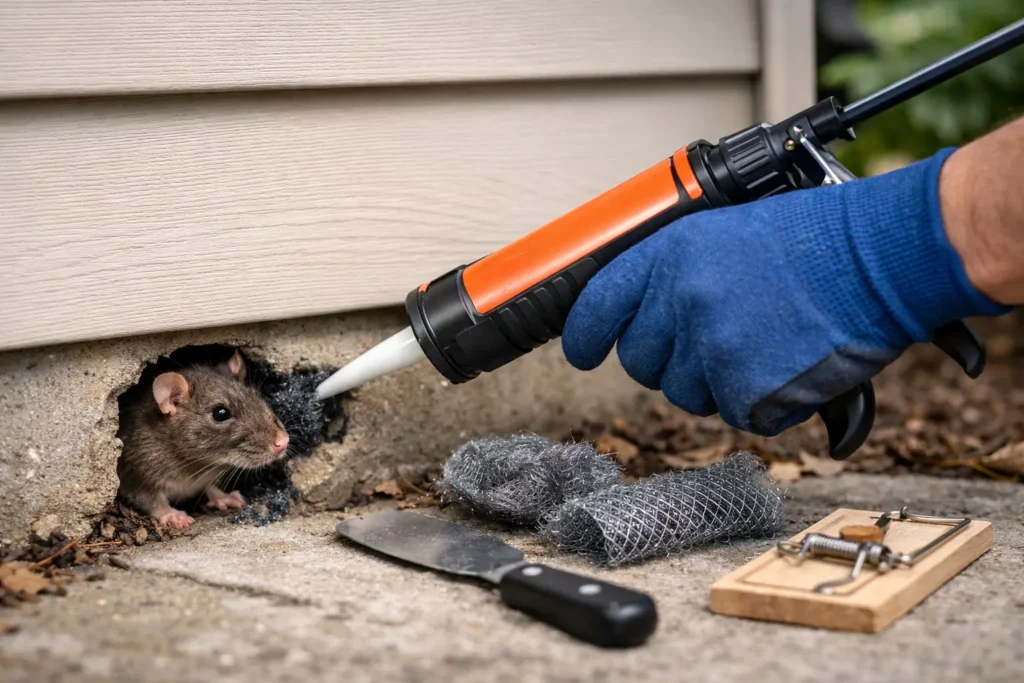
A mouse can enter through an opening about the size of a dime, while a rat needs only a gap roughly the width of a quarter. That is why knowing how to seal rodent entryways means looking beyond obvious holes in walls. The weak point may be a gap beneath a door, an unprotected vent, or a small opening where a pipe enters the building.
Rodent-proofing works best when it is part inspection, part repair, and part prevention. Closing one visible hole may slow activity, but lasting control requires finding the routes rodents use repeatedly and sealing them with materials they cannot easily chew, pull apart, or push through.
Start With a Careful Exterior Inspection
Begin outside and work around the entire structure slowly. Rodents usually travel along walls, fences, utility lines, landscaping edges, and shaded areas that give them cover. Inspect the foundation, roofline, porch, garage, exterior doors, windows, and every place a cable, pipe, drain, or air-conditioning line passes through a wall.
Pay special attention to gaps at ground level. Look behind shrubs, mulch, stored items, grills, trash containers, and outdoor equipment. A gap can be hidden from view and still provide a direct route into a crawl space, wall void, attic, or storage area.
Inside, check for droppings, gnaw marks, shredded nesting material, greasy rub marks along baseboards, and unusual sounds in walls or ceilings. These clues help identify the active travel path. Sealing an unrelated crack while leaving the main route open will not solve the problem.
If you see fresh signs of activity, do not immediately close every opening. You need to be confident rodents are not already trapped inside. An animal sealed into a wall, attic, or ceiling may cause odor problems, damage more material while trying to escape, or find a new route into occupied spaces.
How to Seal Rodent Entryways With the Right Materials
The right repair depends on the opening’s size, location, and the surface around it. Foam alone is rarely enough. Rodents can chew through many expanding foams, especially when the foam is used as the only barrier. Use a chew-resistant material first, then seal and finish the area as needed for weather protection and appearance.
For most homes and commercial buildings, these materials handle common entry points well:
- Copper mesh or stainless steel wool for small, irregular gaps around pipes and utility lines
- Hardware cloth with a 1/4-inch mesh for vents, larger openings, crawl-space access points, and foundation gaps
- Sheet metal or metal flashing for chewed corners, damaged siding, and larger holes
- Exterior-grade caulk or mortar to secure edges and close small cracks after reinforcing the opening
Pack copper mesh tightly into narrow openings, but do not compress it so deeply that it falls into a wall void. Cover it with a durable exterior sealant where appropriate. For larger openings, fasten hardware cloth or sheet metal securely to solid framing, masonry, or siding. A patch that flexes or has loose edges is an invitation for rodents to work their way back in.
Door sweeps deserve special attention. If daylight is visible under an exterior door, rodents may be able to use that gap. Install a heavy-duty sweep or weatherstrip that meets the threshold evenly. Also inspect garage doors, especially along the bottom corners where the seal can curl, crack, or pull away.
Protect Vents, Rooflines, and Utility Openings
Vents are necessary, but they must be protected without blocking airflow. Cover attic, soffit, crawl-space, and dryer vents with properly fitted metal screens or guards designed for that use. Avoid using flimsy plastic mesh, which can deteriorate in Florida heat and humidity or be chewed through.
Roof-related entry points are easy to miss. Check fascia boards, soffits, roof vents, chimney openings, and areas where tree branches touch or overhang the roof. Rodents can climb remarkably well and may reach upper-level access points by using branches, vines, stacked materials, or utility lines.
Around utility penetrations, look for gaps caused by settling, aging caulk, or oversized holes from past installations. Air-conditioning lines, plumbing pipes, gas lines, cable wires, and electrical conduits often leave small openings that lead directly into walls. Seal these carefully, but never cover electrical equipment, block drainage, or interfere with required ventilation.
Do Not Seal an Active Infestation Inside
Exclusion is the long-term answer, but timing matters. If you hear movement in the attic, find fresh droppings daily, or see rodents entering and leaving through a specific opening, the building may need active removal before final sealing.
A professional may use a one-way exclusion device on an active exterior route. This allows rodents to leave but prevents them from returning, after which the opening can be permanently repaired. The approach depends on the species, the building layout, the season, and whether young animals may be present. It is not a job for guesswork when activity is heavy or the access point is high on the structure.
Avoid relying on poison as a substitute for exclusion. Rodent control is most effective when the food, shelter, and entry routes are addressed together. If rodents can still enter freely, new activity can replace the animals that were removed.
Remove the Reasons Rodents Stay
Sealing holes is much more effective when the property is less attractive to rodents. Store pantry goods, pet food, birdseed, and bulk supplies in hard-sided containers with tight-fitting lids. Clean crumbs, grease, and spills from kitchens, break rooms, storage areas, and appliances.
Outside, keep trash lids closed and avoid allowing bags to sit beside containers. Pick up fallen fruit, reduce clutter near exterior walls, and store firewood or building materials off the ground and away from the structure. Trim shrubs so they do not press against walls, and cut back branches that create a bridge to the roof.
For restaurants, healthcare facilities, retail spaces, and other commercial properties, routine sanitation and receiving-area checks are especially important. A single damaged dock seal, open utility gap, or accessible waste area can create a recurring rodent issue even when the interior is kept clean.
Check Your Repairs and Keep Watching
After sealing, inspect the repaired areas over the next several weeks. Look for fresh gnawing, disturbed mesh, new droppings, or changes in sounds after dark. Rodents are persistent, and when one route is closed, they may test another vulnerable location.
A simple way to monitor questionable areas is to look for fresh tracks in dusty spaces or signs of movement along walls and near stored items. Do not ignore a small amount of evidence. Early action is usually faster, safer, and less expensive than dealing with established nesting activity in an attic, wall, or commercial storage area.
Some repairs are straightforward, but extensive gaps, roofline access, recurring activity, or signs in multiple areas call for a full exclusion inspection. Florida Bug Control can identify active entry points, address the rodent issue safely, and help protect the property from repeat access.
A properly sealed building is not one that looks patched from the street. It is one where doors close tightly, vents stay protected, utility openings are reinforced, and rodents no longer have an easy path inside.