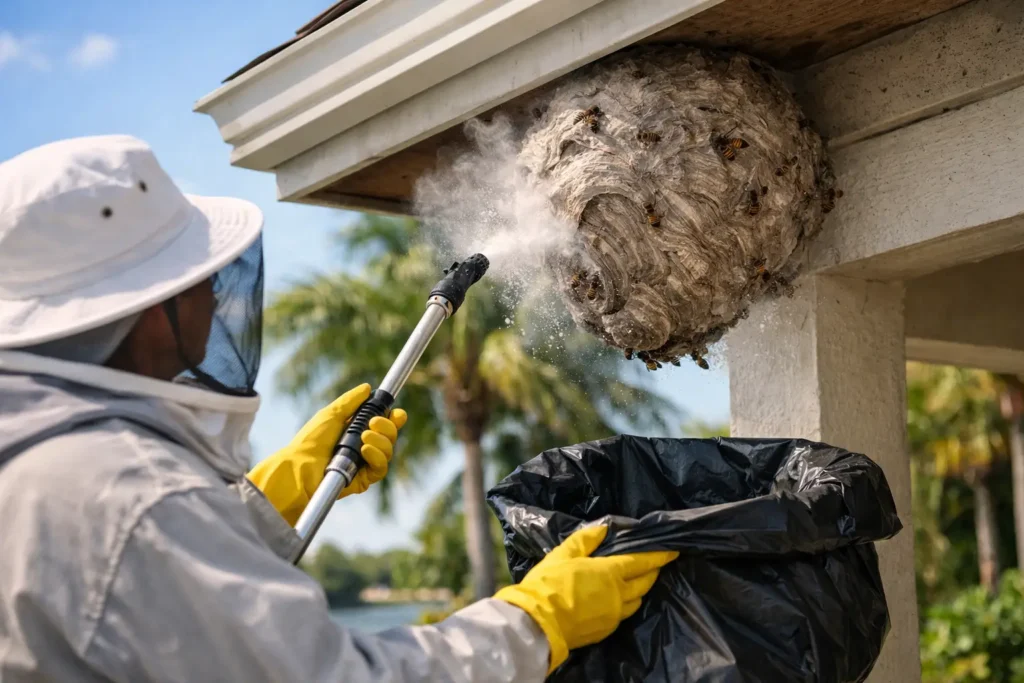
A wasp nest over the garage, near a pool gate, or above a business entrance can turn an ordinary walkway into a sting risk fast. Knowing how to remove wasp nests starts with knowing when not to get close. In Florida, warm temperatures can keep wasp activity going for much of the year, and a nest that looks small from the ground may hold far more defensive insects than expected.
The safest choice is usually professional removal, especially when people, pets, customers, or employees pass near the nest. Still, understanding the nest type, location, and warning signs helps you make a confident decision instead of taking an unnecessary risk.
Identify the Nest Before You Act
Not every flying insect around your property is a wasp, and not every wasp nest needs the same response. Paper wasps often build open, umbrella-shaped combs under eaves, porch ceilings, shutters, and outdoor fixtures. Yellowjackets may use enclosed, papery nests in shrubs, wall voids, attics, or the ground. Hornet-like wasps can build larger enclosed paper nests in trees and protected exterior areas.
Watch from a safe distance for a few minutes. Note where insects enter and leave, how many are active, and whether the nest is exposed or hidden inside a structure. Never tap the nest, spray it from close range, or shine a flashlight into an opening to investigate. Vibrations and sudden light can trigger a defensive response.
If the insects are fuzzy and moving in and out of a waxy hive, they may be bees rather than wasps. That calls for a different approach. Accurate identification matters because the wrong treatment can increase activity without solving the problem.
When You Should Not Remove a Wasp Nest Yourself
DIY removal is not a good fit for every nest. Call a trained pest control professional when the nest is large, busy, difficult to reach, or close to daily activity. A nest inside a wall, attic, soffit, crawl space, or ground opening should also be handled professionally. You may be able to eliminate visible insects while leaving the colony, entry point, and nesting material behind.
Do not attempt removal if anyone nearby has a known sting allergy, if you cannot use a stable ladder-free position, or if children or pets cannot be kept away from the work area. Commercial properties should take an especially cautious approach. A nest near a restaurant patio, apartment breezeway, school entrance, loading area, pool deck, or healthcare facility can create a preventable liability and safety issue.
A professional is also the right call if you see repeated wasp traffic entering a crack in siding, a roofline, or a utility penetration. Spraying the opening and sealing it immediately can trap agitated wasps inside, causing them to find another route into the building.
How to Remove Wasp Nests: A Safer DIY Approach
A small, exposed paper-wasp nest in an area with no regular foot traffic may be manageable for a capable adult. “Small” means early-stage, roughly golf-ball to tennis-ball size, with limited visible activity. Even then, there is no zero-risk method. If you feel unsure at any point, step away and arrange service.
Before doing anything, read the full label on a product specifically labeled for wasps and hornets. Follow its application distance, protective-equipment instructions, weather limitations, and reentry guidance. General insect sprays, household cleaners, gasoline, fire, and homemade mixtures are not safe solutions. They can harm people, damage property, create fire hazards, or fail to control the nest.
Choose a time when activity is lowest, typically near dusk or before sunrise. Florida weather can change quickly, so pick a dry, calm period. Wind can blow treatment back toward you, while rain may reduce its effectiveness.
Wear closed-toe shoes, long pants, a long-sleeve shirt, gloves, and eye protection. Keep your face and neck covered as much as possible without limiting vision or movement. Have an unobstructed route back indoors or into a vehicle. Do not use a ladder, and do not ask someone to stand below the nest to hold one.
Keep children, pets, and bystanders well away from the area. Alert household members or staff not to open nearby doors or walk through the treatment zone. Then, from the labeled distance, apply the product directly to the nest and its entrance according to label directions. Avoid standing directly beneath it.
After treatment, leave the area immediately and give the product time to work. Check from a distance the next day. If you still see regular activity, do not keep approaching the nest or repeatedly spraying it. The nest may be larger than it appeared, hidden behind a surface, or connected to a protected void. That is the point to call a professional.
Once there has been no activity for at least 24 to 48 hours, carefully remove the treated exposed nest with a long-handled tool if it can be done from the ground. Place it in a sealed bag and dispose of it according to the product label and local waste rules. Avoid crushing the nest with bare hands. Some wasps may remain inside or return after foraging.
Why Hidden Nests Need Professional Treatment
A nest inside a wall or roofline is not just an exterior pest issue. It can become an indoor problem if wasps emerge through vents, light fixtures, gaps around windows, or wall openings. Effective service requires finding the colony’s access route, treating it appropriately, and deciding when exclusion work can safely be completed.
Timing matters. Sealing the entry point too early can force surviving wasps farther into the structure. Leaving the opening unaddressed after treatment can allow another colony to use the same protected space later. An experienced technician can manage both parts of the job: immediate control and practical prevention.
Ground nests deserve the same caution. Yellowjackets can defend their colony aggressively when their entrance is disturbed by lawn equipment, footsteps, or pets. Mark the area from a distance and keep people away until it is treated. Do not flood the hole or try to dig it out. These methods can drive wasps into the air and make stings more likely.
What to Do if Wasps Become Aggressive
If wasps begin circling, pursuing, or stinging, move away quickly and calmly. Cover your face and get indoors, into a car, or into another enclosed shelter if possible. Do not swat wildly, as fast arm movements can provoke more insects. Avoid jumping into water. Wasps may wait above the surface, and swimming limits your ability to leave the area.
For a typical sting, move away from the nest first, wash the area with soap and water, and use a cold pack to help with pain and swelling. Seek emergency medical care immediately for trouble breathing, swelling of the lips, tongue, or throat, dizziness, widespread hives, vomiting, or fainting. These can be signs of a serious allergic reaction.
Keep Wasps From Building Again
Removal solves the active danger, but prevention makes the biggest difference over time. Walk your property every few weeks during active seasons and inspect protected spots before a nest has time to grow. Early paper-wasp nests are easier and safer to address than established colonies.
Focus on eaves, porch ceilings, shed interiors, fence lines, outdoor furniture, play equipment, grill areas, and gaps around utility lines. Repair loose screens, damaged soffits, and openings around siding or vents. Keep outdoor trash containers closed, clean up spills around patios and dumpsters, and avoid leaving sweet drinks or food scraps outside.
For businesses, regular exterior inspections should be part of routine facility care. Staff should know to report wasp activity immediately, rather than trying to remove a nest between shifts. Fast reporting protects guests, employees, and operations before a small issue becomes a safety event.
A wasp nest is not a project worth rushing or gambling on. If it is high up, hidden, active, or close to the people who rely on your property, leave the work to a trained team. Florida Bug Control provides safe, fast, and guaranteed help, with return visits if pests come back. The right response is the one that gets the nest handled without putting anyone in harm’s way.