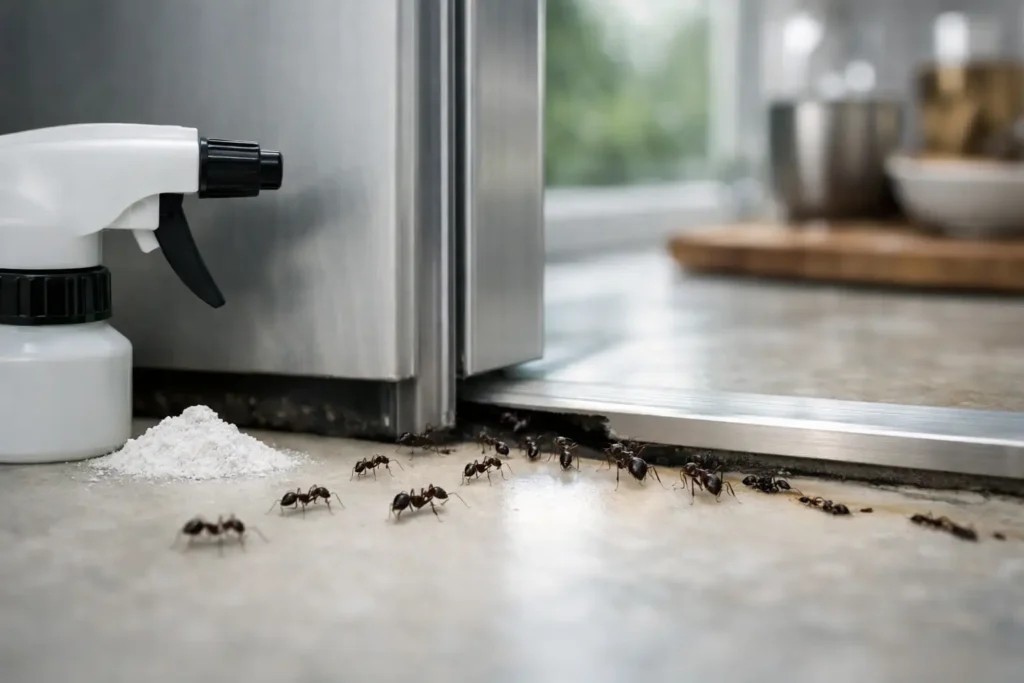
A clean counter can look perfectly safe at breakfast and have an ant trail running across it by dinner. That frustrating pattern leads many Florida property owners to ask, why do ants return indoors even after the visible ants are gone? Usually, the answer is not that the first treatment failed. It is that the conditions that attracted the colony – or its access to them – are still present.
Ants are persistent for a reason. A few workers can locate food, water, or shelter, leave a chemical trail for the rest of the colony, and turn a small opening near a window, pipe, or door into a regular route. Getting lasting control means addressing the entire pattern, not just the ants you see.
Why do ants return indoors after you remove them?
The ants traveling through your kitchen, break room, bathroom, or storage area are workers. They are looking for resources on behalf of a larger colony that may be outdoors, inside a wall void, under flooring, or near the building foundation. Killing or wiping up those workers can stop activity temporarily, but it may not affect the colony behind them.
When the food source, moisture source, or entry point remains available, new workers may follow the same path. In some cases, another nearby colony finds the same opportunity. Florida’s long warm seasons and humidity create ideal conditions for recurring ant pressure, especially after heavy rain, landscaping changes, or a sudden dry spell.
A return visit from ants does not always mean your property is dirty. Even well-kept homes, restaurants, medical offices, and retail spaces have crumbs, drains, utility penetrations, and tiny gaps around doors. Ants need very little to establish a trail.
Food is often the first reason ants come back
Ants are drawn to more than obvious spills. A drop of juice beneath a refrigerator, grease around a stove, pet food left in a bowl overnight, or residue on a recycling bin can be enough to support repeated activity. Some species favor sweets, while others are more interested in protein, oils, or moisture. That is why a trail may appear in a pantry one week and near a trash area the next.
For homes, focus on the small, repeated food sources that are easy to overlook. Wipe counters and table edges, sweep beneath appliances, rinse cans and bottles before recycling, and store dry goods in sealed containers. Pet feeding areas deserve the same attention, particularly if food remains out for long periods.
In commercial settings, the issue can be more complicated. A restaurant may have floor drains, grease areas, deliveries, and waste handling zones. A healthcare or education facility may have break rooms used throughout the day. A property manager may be dealing with shared dumpsters or residents storing food near patios. The right fix depends on where ants are feeding and how they are moving through the property.
Water and humidity can keep a trail active
Ants need moisture, and Florida buildings provide plenty of places to find it. A slow leak beneath a sink, condensation around an air-conditioning line, a damp cabinet, or water collecting near a foundation can make an indoor route especially attractive.
Bathrooms, laundry rooms, kitchens, utility closets, and mechanical areas are common trouble spots. If ants repeatedly show up near a sink or along baseboards, check for dripping connections, wet wood, damaged caulk, or poor drainage outside. Repairing a moisture issue is not only good maintenance. It removes one of the reasons ants keep checking the same area.
Outdoor moisture matters, too. Mulch piled against exterior walls, clogged gutters, leaking irrigation heads, and standing water around walkways can support ant activity close to the building. The closer the colony is to the structure, the easier it is for workers to find a way inside.
Tiny openings give ants a reliable route
Ants can enter through gaps most people would never notice. Common access points include worn door sweeps, loose window screens, cracks along utility lines, gaps around plumbing, damaged weatherstripping, and openings where siding or exterior trim meets the foundation.
The challenge is that ants rarely use only one route. If you seal a visible crack but leave another gap around a pipe or door frame, workers may simply reroute. That does not mean sealing is pointless. It means exclusion works best when it is thorough and combined with colony control.
Walk the exterior with an eye for openings at ground level and around kitchens, bathrooms, utility rooms, and trash storage areas. Indoors, watch where the trail begins and disappears. Avoid spraying directly into every crack without a plan. Some products can scatter ants and make their activity harder to track, while leaving the main colony active.
Weather changes can send ants indoors
Florida weather often explains why ants seem to appear without warning. Heavy rain can flood or disturb nests, pushing workers toward drier, protected spaces. Extended heat and dry weather can make indoor water sources more appealing. After a landscaping project, construction work, or soil disruption, colonies may also shift their foraging routes.
This is why ant activity may rise around seasonal weather events even when your cleaning routine has not changed. It also explains why prevention should extend beyond the kitchen. A protected exterior perimeter, managed vegetation, good drainage, and sealed entry points reduce the chances that weather-driven ant movement ends at your baseboards.
The colony may not have been fully addressed
Many store-bought sprays provide a quick knockdown of visible workers. That can be useful for immediate relief, but it is not always a complete solution. If the treatment does not reach or affect the colony, new workers can replace the ones removed.
Ant control also depends on correct identification. Different ant species nest and forage differently. A method that works well for one may be less effective for another, especially when there are multiple colonies around a building. Treating the wrong area, using too much repellent product, or placing products where ants are not actively foraging can delay real results.
For recurring activity, professional inspection adds value because it connects the indoor trail to the likely nesting and entry areas. A technician can identify contributing conditions, choose an appropriate treatment approach, and monitor whether activity is truly declining rather than merely moving.
What to do when ants keep returning
Start by observing before you clean up every sign. Note where the ants are entering, what time they are most active, and what they seem interested in. This information can reveal whether the issue is tied to food, a plumbing area, exterior vegetation, or a specific gap.
Then remove accessible food and moisture sources, repair leaks, empty trash regularly, and keep vegetation and mulch from pressing directly against exterior walls. Seal obvious gaps after you have identified the activity route. If you are using a product, follow the label exactly and keep children and pets away from treated areas as directed.
Call for professional help when trails return after repeated cleaning or DIY treatment, ants are appearing in several rooms, activity is growing quickly, or the problem affects a business environment. Food service, healthcare, hospitality, and multi-unit properties need a response that considers sanitation standards, occupant safety, and the risk of ants spreading through connected spaces.
Florida Bug Control provides ant services built around the conditions that cause repeat activity, with practical recommendations and return visits when needed to get the issue resolved. Fast action matters, but lasting control comes from finding out what keeps drawing ants back.
When ants return, treat it as useful information: they have found a resource or route worth revisiting. Remove that advantage, address the colony properly, and your indoor space becomes much less inviting to the next line of workers.