
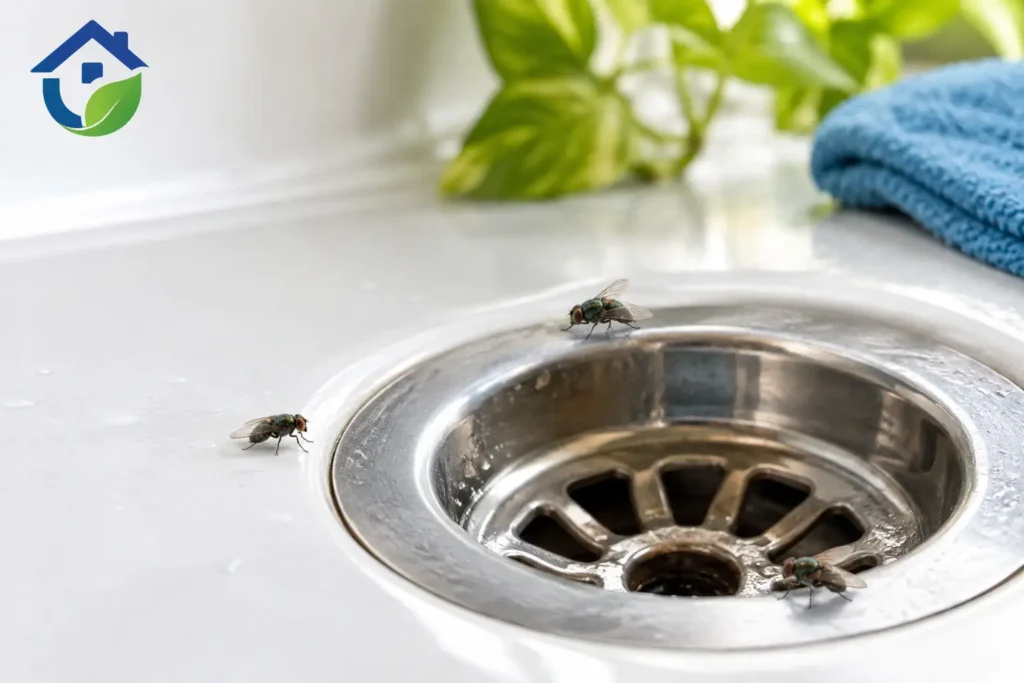
A few tiny flies hovering around a bathroom sink or floor drain can seem like a minor annoyance. But if you are asking, why are flies near drains, the answer is usually that something inside or around the drain is giving them moisture, food, and a place to reproduce. In Florida’s warm, humid conditions, that small issue can become a persistent fly problem quickly.
The good news is that flies near drains are usually manageable once the breeding source is identified. The key is not just killing the adult flies you see. It is removing the damp organic buildup that is supporting the next generation.
Why Are Flies Near Drains in the First Place?
Most flies found resting on sink walls, shower tile, or near floor drains are drain flies, also called moth flies. They are small, fuzzy-looking insects with broad wings that often sit still on nearby surfaces. Their weak, fluttering flight makes them easy to recognize.
Drain flies are attracted to the slimy film that develops in wet drain lines. Hair, soap residue, body oils, toothpaste, food particles, grease, and other organic material can collect along the inside of a pipe. That buildup is not always visible from the drain opening, but it can provide an ideal place for flies to lay eggs.
A clean-looking sink is not necessarily a clean drain. Pouring water down the drain may rinse the center of the pipe while leaving the sticky buildup attached to the sides. That is why flies can keep returning after a quick rinse or a single cleaning attempt.
Not every small fly near a drain is a drain fly, though. Fruit flies may gather around kitchen drains when food residue is present. Phorid flies, sometimes called humpbacked flies, can point to a deeper sanitation, plumbing, or drainage problem. Proper identification matters because the best solution depends on where the flies are breeding.
The Conditions That Turn a Drain Into a Fly Source
Drains are appealing to flies because they combine the two things pests need most: moisture and organic matter. A frequently used shower drain, kitchen sink, utility sink, garbage disposal, or commercial floor drain can hold enough residue to support larvae.
In homes, the usual trouble spots are bathroom sinks, shower drains, laundry rooms, and kitchen drains. Guest bathrooms can be a surprise source because the plumbing may sit unused for long periods. When a drain dries out, the water seal in the trap can evaporate, allowing odors and pests to move more freely through the pipe.
In restaurants, healthcare facilities, schools, apartment buildings, and other commercial properties, floor drains deserve special attention. Mop water, food debris, grease, and moisture create a favorable environment, especially where drains are not scrubbed on a regular schedule. A few flies in a back room can become a sanitation concern and an unwelcome sight for employees, guests, or inspectors.
Leaky pipes and slow drains can add to the problem. If water is collecting under a cabinet, behind a wall, or beneath flooring, flies may be breeding somewhere other than the drain itself. In those cases, surface cleaning alone will not solve the issue.
How to Tell Whether the Drain Is Actually the Source
Before treating, confirm the source. Seeing flies near a drain is a strong clue, but adult flies may rest in one area after emerging somewhere else nearby.
One simple check is to loosely cover the drain opening with clear tape overnight, sticky side facing down into the drain without sealing it completely. If flies appear on the underside by morning, the drain is likely involved. You can also watch where flies gather at night or early in the morning, when they are often resting near their breeding site.
Check every potential drain, not only the one where you first noticed activity. This includes sink overflows, garbage disposals, refrigerator drip pans, condensate lines, utility drains, and seldom-used floor drains. In commercial settings, inspect grease-handling areas, mop sinks, dishwashing stations, and drain channels as well.
If flies persist after several days of careful drain cleaning, the source may be a plumbing leak, damaged pipe, sewage-related issue, or hidden moisture area. That is the point where a professional inspection can prevent wasted time and repeated treatments that only reduce the visible adults.
How to Get Rid of Flies Near Drains
The most effective approach is physical cleaning. The goal is to remove the film where eggs and larvae develop, not simply flush it farther down the line.
Start by removing the drain cover or stopper if possible. Use a stiff drain brush to scrub the inside walls of the drain, including the upper pipe and the underside of the cover. Pull out trapped hair and debris, then rinse thoroughly with hot water. For kitchen drains and garbage disposals, clean the splash guard and surrounding components where food residue can collect.
A drain-cleaning product designed to break down organic buildup may help after brushing. Follow the product label exactly, and never mix cleaning chemicals. Mixing products can create dangerous fumes or damage plumbing. Bleach alone is often disappointing because it may pass through the drain without removing the film flies use as a breeding surface.
Continue cleaning daily for at least several days if you have active fly activity. Adult drain flies can live long enough to make a problem appear ongoing even after larvae are removed. Consistent cleaning interrupts the life cycle and gives you a clearer picture of whether the drain was the true source.
For unused drains, run water regularly to restore the trap seal. In a seasonal home, vacant unit, or rarely used restroom, this small maintenance step can make a meaningful difference. Repair leaks, clear slow drainage, and keep the surrounding area dry whenever possible.
What Not to Do When You See Drain Flies
It is tempting to use an aerosol spray and consider the problem solved. Sprays may kill some adult flies, but they do not remove eggs or larvae from drain buildup. The same is true for sticky traps. They can help monitor activity, yet they do not address the source.
Avoid repeatedly pouring harsh chemicals into a drain without cleaning it first. Besides posing safety concerns, this approach may leave the organic film behind. It can also mask a plumbing problem that needs attention.
Do not ignore a sudden increase in flies, especially if they appear in areas with no obvious dirty drain. A growing number of phorid flies or other small flies can indicate a hidden moisture or drainage issue. For businesses that handle food or welcome customers, waiting can create bigger sanitation and reputation problems.
When Professional Fly Control Makes Sense
Call for professional help when flies keep returning after thorough cleaning, when multiple drains are involved, or when you suspect a leak or plumbing defect. An experienced pest professional can identify the fly species, inspect likely breeding areas, and recommend the right next step. Sometimes that means targeted treatment. Other times, the real solution is sanitation improvement or a plumbing repair.
Professional service is particularly valuable for multifamily properties and commercial facilities, where shared lines, floor drains, and high moisture areas can make the source difficult to isolate. Fast identification helps protect residents, staff, customers, and your operation.
Florida Bug Control helps homeowners and businesses address fly issues with a practical focus on the source, not just the insects in view. If pests come back, so do we – with service designed to keep working until the issue is resolved.
A drain fly problem does not always mean your space is dirty. It usually means moisture and organic residue have found a place to collect. Clean the drain thoroughly, watch for recurring activity, and act quickly if the flies do not let up. Early attention is the simplest way to keep a small drain issue from becoming a larger pest problem.