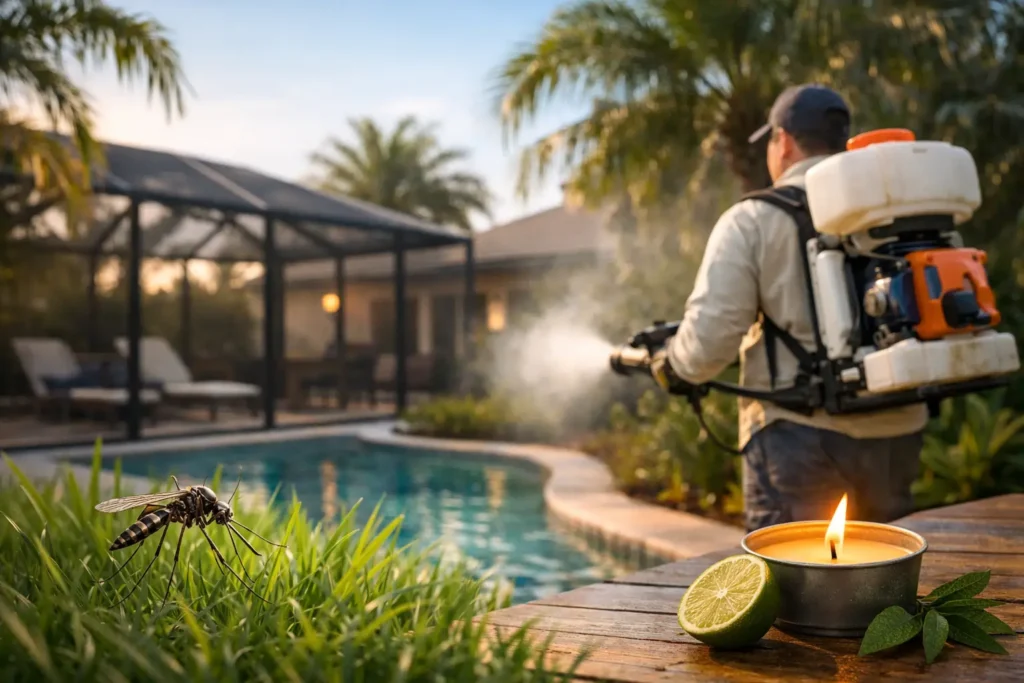
You usually notice the problem at the worst possible time – right when you step outside to grill, let the dog out, or watch the kids play before dark. In this state, mosquito control for Florida homes is not a once-a-summer chore. It is a real part of protecting your yard, your comfort, and in some cases, your health.
Florida gives mosquitoes exactly what they want: heat, humidity, rain, and plenty of standing water. That means the usual quick fixes often fall short. A citronella candle on the patio may help a little in a small area, but it will not solve a breeding issue in the yard. If you want fewer bites and longer-lasting relief, the right plan has to start with where mosquitoes live, breed, and rest.
Why mosquito pressure is different in Florida
In many parts of the country, mosquitoes are mostly a seasonal annoyance. In Florida, they can be a problem for much more of the year. Warm temperatures stretch the breeding season, and sudden rainstorms refill every low spot, clogged gutter, birdbath, and planter tray around a home.
That changes the way homeowners should think about control. If you only react after mosquitoes are swarming, you are already behind. Good control is preventive as much as it is reactive. It focuses on reducing breeding sites, limiting shady resting areas, and applying treatment where it will make a measurable difference.
This is also why results vary from one property to the next. A home with dense landscaping, poor drainage, and nearby water features will usually have heavier mosquito activity than a more open, dry lot. Neighborhood conditions matter too. If surrounding yards hold water or overgrown vegetation, your property can still feel the pressure even when you are doing many things right.
The biggest reason mosquitoes keep coming back
Most homeowners assume adult mosquitoes are the whole problem because those are the ones biting. The bigger issue is reproduction. Mosquitoes need only a small amount of standing water to lay eggs, and that water does not have to be obvious.
A bucket behind the shed, a clogged drain, a sagging tarp, a saucer under a flowerpot, or a child’s toy left out after rain can all become breeding spots. Even when the water looks minor, the mosquito cycle moves fast in warm weather. That is why a yard can seem manageable one week and miserable the next.
The takeaway is simple: if breeding sites stay in place, mosquito populations rebound. Spraying adults without addressing water sources can provide temporary relief, but it rarely gives lasting control.
Mosquito control for Florida homes starts with inspection
The most effective approach begins with a close look at the property. Not a quick glance from the patio – a real inspection of where water collects and where adult mosquitoes hide during the day.
Mosquitoes rest in cool, shaded, humid areas. That often means under decks, in dense shrubs, around groundcover, beneath palm fronds, and along fence lines where airflow is limited. If your yard has thick ornamental plants or areas that stay damp, those zones deserve attention.
The inspection should also include roof drainage, gutters, downspouts, decorative containers, outdoor furniture covers, and any spot where irrigation may be overwatering the landscape. In parts of Florida with frequent summer storms, these conditions can change quickly, so inspection is not a one-time task.
What homeowners can do right away
There is a lot you can do on your own to lower mosquito activity, and the best steps are usually practical rather than expensive. Dump standing water regularly, clean gutters, refresh birdbaths often, store containers upside down, and correct drainage issues where possible.
Yard maintenance matters more than many people realize. Trimming shrubs, reducing overgrowth, and opening up shaded areas can make the property less attractive to resting mosquitoes. If irrigation is running too often, dialing it back may also help by reducing excess moisture.
Screens on windows and doors should be in good condition, especially if you are dealing with mosquitoes around entry points. If people are getting bitten inside, the problem may not only be outdoors. Torn screens, gaps around doors, and frequent in-and-out traffic can all contribute.
Personal protection still has a place, especially during peak mosquito hours. Repellents and fans can help when you are outside, but they work best as support tools, not as the main strategy.
Where DIY mosquito control often falls short
Store-bought sprays and foggers can reduce activity for a short period, but their limitations show up fast in Florida conditions. Rain, heat, and dense vegetation can all shorten effectiveness. Coverage is another issue. If treatment misses key harborage areas, the surviving population stays active.
There is also the timing problem. Mosquito treatments tend to work best when applied with an understanding of mosquito behavior, property conditions, and the level of infestation. A weekend spray before a party may help for the event, but if the breeding cycle is not interrupted, the relief can be brief.
That does not mean every property needs the same service plan. A small yard with light mosquito pressure may need seasonal help and better source reduction. A larger property with heavy vegetation or recurring standing water may require more consistent treatment. The right answer depends on the site, not just the symptom.
Professional mosquito service and what it should include
Professional mosquito control for Florida homes should do more than spray and leave. It should start with identifying the source of the pressure, treating the areas where adult mosquitoes rest, and helping reduce the conditions that allow them to keep multiplying.
A solid service plan typically targets foliage, shaded structural areas, and other mosquito resting zones. In some cases, larval control may also be needed where standing water cannot be fully eliminated. That matters on properties with drainage concerns, water features, or environmental conditions that naturally hold moisture.
Just as important is follow-up. Mosquito control is not always a one-visit fix, especially during peak rainy periods. If activity returns quickly, the service provider should be prepared to reassess the property and adjust treatment. That accountability matters because mosquito pressure can shift with weather and season.
For families, pet owners, and property managers, safety is part of the conversation too. Treatments should be applied carefully and according to label requirements, with clear guidance on what to expect before and after service. Fast results matter, but so does doing the job responsibly.
Seasonal changes that affect mosquito activity
Florida mosquitoes do not follow a neat calendar, but weather patterns still shape what homeowners can expect. Summer rains often create the sharpest spikes because water accumulates faster than people can keep up with it. In coastal and South Florida communities, mosquito pressure can stay stubbornly high for long stretches.
Even in North Florida areas such as Tallahassee, Lake City, and Gainesville, mild stretches can extend mosquito activity beyond what homeowners expect from other states. A few cooler days may reduce the annoyance, but they do not always end the problem.
This is why recurring service often makes sense for many properties. It creates continuity during the months when mosquito populations are rebuilding again and again. One-time treatment can help in a pinch, but ongoing prevention usually provides more dependable relief.
Signs it is time to call an expert
If you are getting bitten every time you step outside, if guests notice the problem immediately, or if mosquitoes are showing up inside the home, the issue has likely moved past basic DIY control. The same is true if you are emptying water and maintaining the yard but still seeing strong activity.
Professional help is especially valuable when the source is not obvious. Some properties have hidden drainage issues, dense harborage zones, or recurring moisture problems that are easy to miss without experience. A trained eye can usually spot what is sustaining the infestation.
A responsive service matters too. Mosquitoes are not a pest most people want to “wait and see” on, particularly around children, pets, outdoor living areas, or rental properties where complaints add up fast. That is one reason many homeowners choose a company that offers clear communication, flexible service, and return visits if the problem persists.
Florida Bug Control works with exactly these kinds of conditions – fast-moving mosquito problems, recurring yard activity, and properties that need a practical plan instead of guesswork. The goal is simple: reduce the population, protect the space, and keep it under control.
The best mosquito plan is the one that matches your property and starts before the next hatch turns your backyard into a place nobody wants to use.