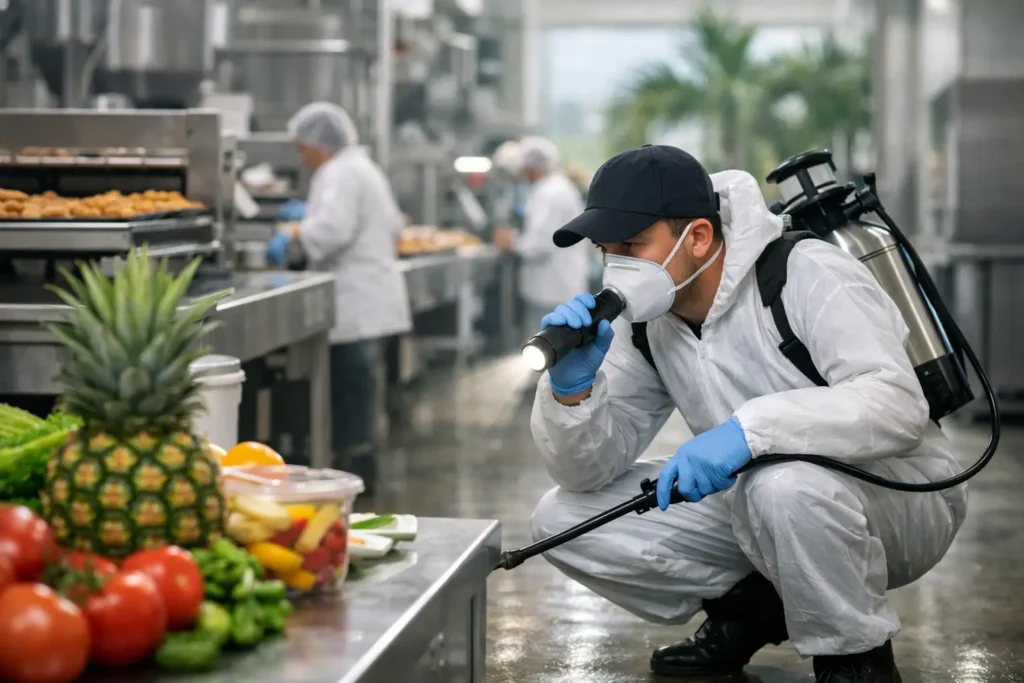
A single fly near a production line can turn into a rejected shipment, a failed audit, or a hard conversation with a major customer. That is why food manufacturing pest control Florida facilities rely on has to do more than kill bugs on sight. It has to protect product, support compliance, and hold up under the daily pressure of heat, moisture, traffic, and constant deliveries.
Florida puts food manufacturers in a tougher position than many other states. Warm temperatures extend pest activity, humidity supports breeding, and frequent storms can push insects and rodents indoors fast. Add open dock doors, ingredient storage, floor drains, packaging areas, and exterior dumpsters, and the risk points add up quickly. In a food plant, waiting until pests are visible is already too late.
What food manufacturing pest control in Florida really requires
A food manufacturing site is not the same as an office, warehouse, or retail building. The standard is higher because the consequences are higher. Pest activity can affect food safety programs, trigger customer complaints, disrupt production schedules, and create documentation problems during inspections.
That changes the job of pest control. The goal is not simply elimination. The goal is control that fits the environment – fast response for active issues, ongoing monitoring for early detection, and prevention measures that reduce repeat pressure without creating unnecessary disruption on the floor.
In practice, that means every service plan should account for how the facility actually runs. A bakery has different pressure points than a beverage plant. A dry goods processor faces different risks than a refrigerated facility. Even within the same category, the pattern of sanitation, shift changes, storage methods, and receiving procedures can change where pests show up first.
The pests Florida food plants deal with most often
Stored product insects, cockroaches, flies, ants, and rodents are usually at the center of concern, but each one behaves differently. That matters because the wrong response wastes time.
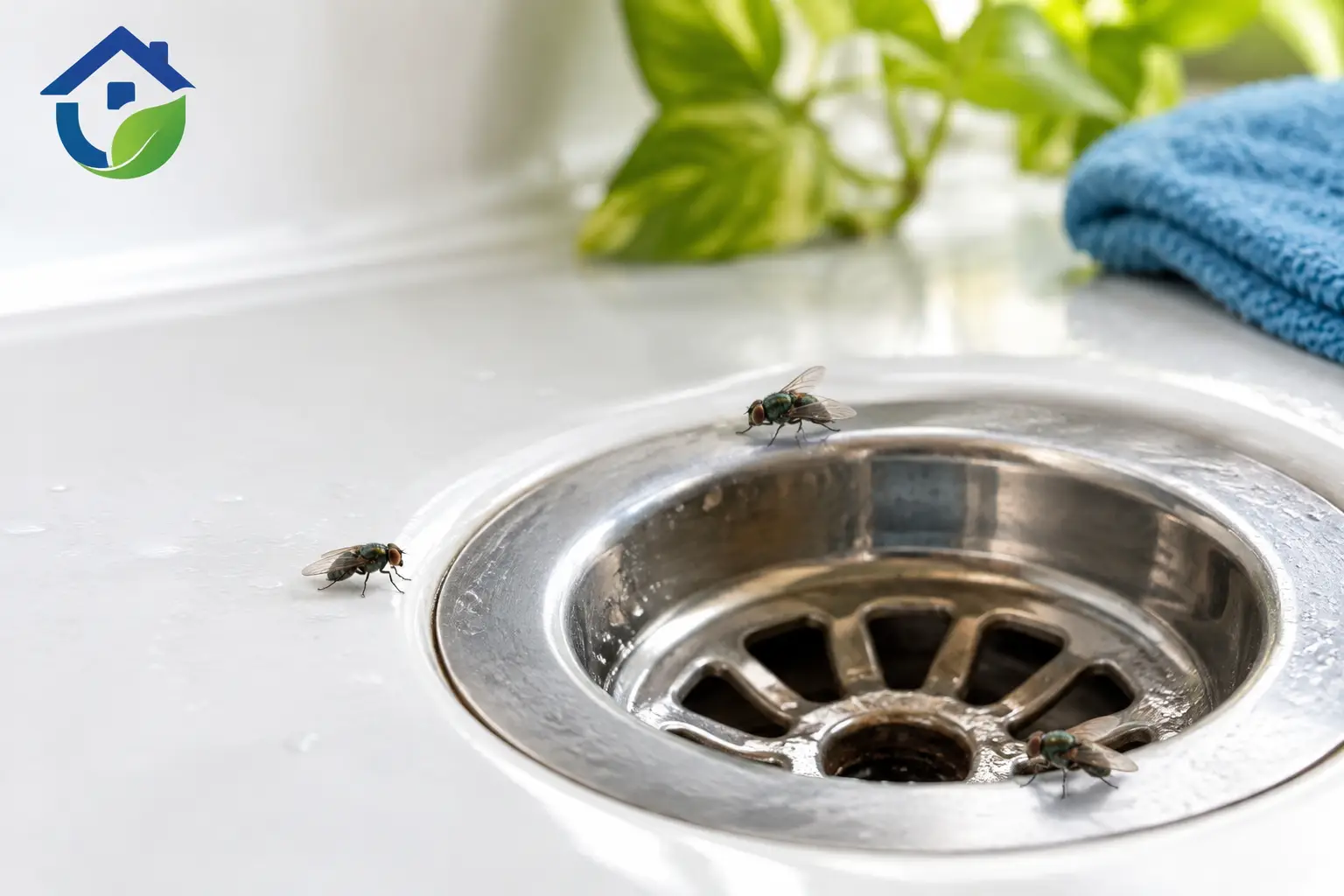
Flies often point to a moisture or waste issue, especially around drains, loading areas, or compactors. Cockroaches are drawn to warmth, hidden voids, and food residue, which can make equipment legs, wall penetrations, and break areas high-risk spots. Ants may seem minor at first, but in food spaces they create contamination concerns and can spread quickly once they find a reliable source. Rodents are a serious issue because they exploit structural gaps, follow utility lines, and can move between exterior and interior zones with very little warning.
Stored product pests create a different kind of problem. They can arrive inside ingredients, thrive in overlooked dust buildup, and remain active in processing or storage areas even when general sanitation looks good on the surface. Facilities sometimes assume a visible cleaning program is enough, but fine powder, grain dust, and residue inside voids or under equipment can support activity for weeks.
Why audits and pest control are tied together
Most food manufacturers are judged on more than whether pests are present. They are judged on whether the facility can prove it is actively managing risk. That means documentation, trend analysis, corrective actions, and site-specific recommendations matter almost as much as treatment itself.
An auditor will not be reassured by vague notes or a one-size-fits-all service ticket. They want to see that devices are placed with purpose, sightings are investigated, structural gaps are noted, and recurring issues lead to action. If rodents are repeatedly active near a receiving area, there should be a documented response. If drain flies keep appearing in a washdown area, there should be evidence that the source was investigated, not just sprayed around.
This is where a specialized commercial program matters. Food manufacturing pest control in Florida has to support the paper trail behind the service, because food safety teams, plant managers, and quality leaders all need defensible records.
Prevention beats emergency treatment, but both matter
There is a common mistake in food plants: treating pest control as either a sanitation problem or a pest control problem. It is both. If service providers are only reacting to sightings, the program stays behind the problem. If plant teams expect sanitation alone to solve every issue, hidden entry points and breeding areas get missed.
The strongest results come from combining exclusion, monitoring, sanitation support, and targeted treatment. Exclusion means sealing gaps around doors, utility penetrations, dock plates, and wall openings. Monitoring means checking the right devices in the right places and adjusting as conditions change. Sanitation support means identifying the exact residue, moisture, or clutter conditions supporting activity. Treatment means using the least disruptive method that still solves the issue quickly.
There are trade-offs, and that is where experience matters. Aggressive treatment is not always the best answer in a food environment, especially around sensitive production zones. But being too cautious with an active infestation can let it spread. A reliable program balances safety, speed, and practicality instead of leaning too hard in one direction.
The problem areas many facilities underestimate
Some of the biggest pest risks are not dramatic. They are routine. Floor drains, employee locker areas, under pallet racking, around compressed air lines, inside electrical chases, and behind rarely moved equipment can all become recurring hotspots.
Exterior conditions matter just as much. Overgrown vegetation, standing water, poorly managed dumpsters, damaged door sweeps, and nighttime lighting that attracts flying insects can increase pressure before pests ever reach the production floor. Florida weather adds another layer. Heavy rains can displace pests suddenly, while prolonged heat can increase activity around water sources inside the building.
Receiving and shipping areas deserve special attention because they create constant exposure. Ingredients, pallets, packaging, and returns all bring in risk. That does not mean every incoming load is a problem. It means the site needs an active inspection mindset instead of assuming anything arriving at the dock is clean.
What a strong service partner should actually deliver
For commercial clients, promises only matter if they hold up during real pressure. A strong provider should respond fast when activity is found, but speed alone is not enough. The service should also be consistent, documented, and practical for a working plant.
That includes clear communication with facility leadership, service records that are useful during audits, and recommendations that plant teams can act on. It also means knowing the difference between a one-time correction and a recurring vulnerability. If a site keeps seeing the same issue in the same area, the plan needs to change.
In a state like Florida, local pest pressure also matters. A provider working in places like Tampa, Miami, or Tallahassee is dealing with different building styles, weather patterns, and surrounding environments, but the common factor is year-round pest pressure. That calls for a partner that understands Florida conditions, not just generic commercial service.
Florida Bug Control approaches commercial pest management with that reality in mind – safe, fast, and guaranteed, with the responsiveness food facilities need when timing matters.
Signs your current pest program may be falling short
Sometimes the warning signs are obvious, like repeated sightings or failed inspections. More often, the trouble shows up in smaller ways first. Service reports stay generic. Recommendations are too broad to act on. Devices are being checked, but nothing is changing. The same issues keep returning near doors, drains, or storage zones.
Another warning sign is when plant teams stop viewing pest control records as useful. If documentation is just a formality, it will not help during an audit or an internal review. Good reporting should help a facility see patterns, prioritize fixes, and make better decisions over time.
A strong program should make the facility feel more in control, not less. If your team is constantly reacting, guessing at root causes, or chasing the same problem from month to month, the plan likely needs a closer look.
Building a better long-term defense
The best food manufacturing pest control Florida facilities use is never based on one treatment or one inspection. It is built on consistency. Facilities that stay ahead of pest pressure usually have a few things in common: they take small signs seriously, they correct structural and sanitation issues quickly, and they expect service records to tell a useful story.
That does not mean every site needs the same schedule or the same level of service. It depends on the product, the process, the building, and the pressure from the surrounding environment. But every food plant benefits from a program that is proactive, documented, and ready to respond when conditions change fast.
If you run a food manufacturing facility, pest control should not sit in the background until something goes wrong. It should be part of how you protect production, pass inspections, and keep confidence high from the floor to the front office. In Florida, that kind of protection is not extra – it is part of doing the job right.