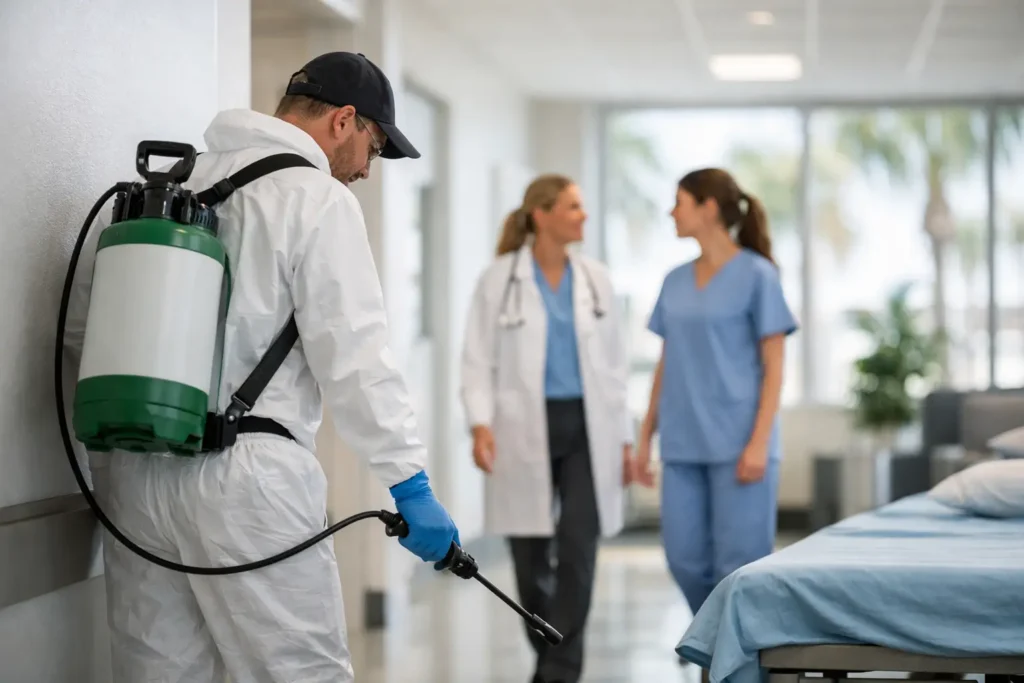
A single fruit fly near a nurses’ station or a cockroach sighting in a supply room can trigger far more than complaints. In healthcare settings, pest activity raises immediate concerns about sanitation, patient safety, inspections, and reputation. That is why healthcare facility pest control Florida is not just another maintenance task. It is part of protecting vulnerable people in places where there is very little room for error.
Florida facilities face a tougher pest environment than many other states. Heat, humidity, frequent storms, dense urban areas, and year-round pest pressure create conditions where insects and rodents can move fast if prevention slips. Hospitals, outpatient centers, urgent care clinics, rehabilitation facilities, surgical centers, and long-term care communities all deal with the same basic challenge – pests are drawn to food, moisture, clutter, and shelter, and healthcare buildings offer all four if they are not actively managed.
Why healthcare facilities need a different pest control standard
A healthcare property cannot be treated the same way as a typical office or retail space. The risk profile is different. Patients may have weakened immune systems. Medication storage areas, sterile processing zones, kitchens, laundry rooms, waste handling areas, and waiting rooms all have distinct exposure concerns. Pest control in these settings has to be precise, discreet, and built around safety first.
That changes how service should be planned. A treatment approach that works well in a warehouse may not be appropriate near patient rooms or treatment areas. Timing matters. Product selection matters. Communication with staff matters. So does documentation. Facility leaders need a provider that understands not only how to eliminate pests, but how to do it without disrupting care delivery.
The other difference is accountability. In healthcare, a pest issue is rarely isolated to one room. If flies are appearing in a breakroom, the source may be a drain, a loading area, a trash handling process, or a door seal failure somewhere else in the building. If rodents show up in a storage area, the real issue may involve exterior access points, landscape conditions, delivery routines, or sanitation gaps. Quick treatment helps, but long-term control depends on finding and fixing the reason pests were able to settle in.
The pests that create the biggest problems in Florida healthcare buildings
Florida facilities typically deal with a short list of repeat offenders, but each one brings different risks.
Cockroaches are a major concern because they can contaminate surfaces and hide deep inside wall voids, kitchens, utility chases, and equipment areas. In a busy healthcare environment, even one sighting can signal a broader issue because roaches tend to stay hidden until populations grow.
Rodents create another level of urgency. They damage materials, contaminate supplies, and move through ceilings, mechanical spaces, and receiving areas with surprising speed. In older buildings or large campuses, exclusion is just as important as trapping and monitoring.
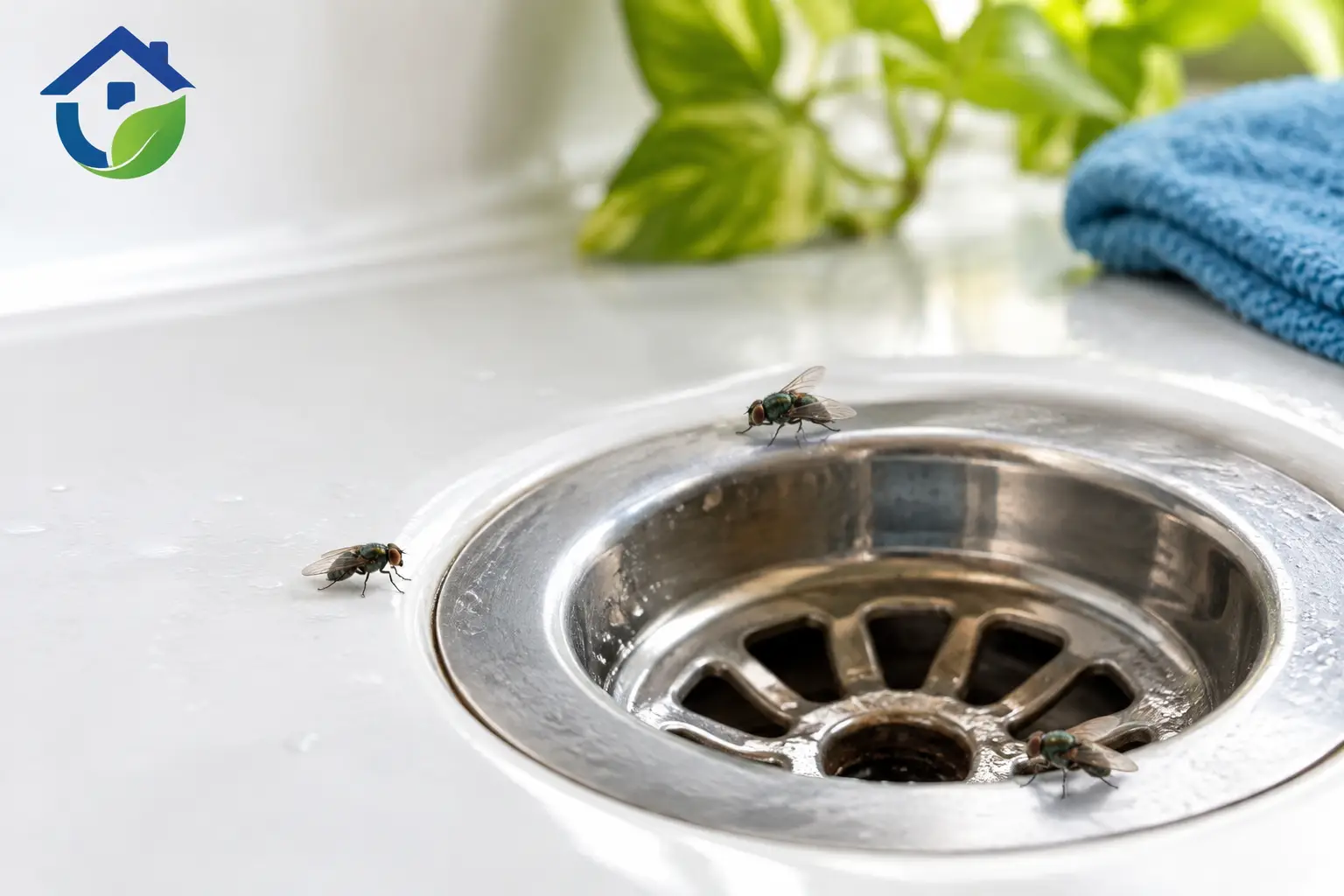
Flies may look minor compared to rodents, but in healthcare settings they can quickly become a serious sanitation concern. Drain flies, fruit flies, and house flies are often linked to moisture, organic buildup, food handling areas, or waste storage practices. If they are present, there is usually a correctable condition feeding the problem.
Ants are common throughout Florida and often enter in search of moisture or food. Some species are mostly a nuisance. Others can spread through a property quickly and become difficult to contain if early signs are ignored.
Bed bugs can also enter through patient belongings, waiting area furniture, staff items, or transportation between facilities. They are not tied to cleanliness, which makes them especially challenging in healthcare environments where constant traffic is unavoidable.
What good healthcare facility pest control in Florida looks like
Effective healthcare facility pest control in Florida is built around prevention first, targeted treatment second. That order matters.
The strongest programs begin with inspection. Not a quick glance, but a systematic review of exterior entry points, waste areas, kitchens, drains, utility spaces, linen handling zones, breakrooms, and any location where moisture or food residue can build up. In healthcare, inspections should also account for how people actually use the building. A spotless exam room does not offset a poorly managed loading dock or a housekeeping closet with constant moisture.
After inspection comes a facility-specific plan. A good provider should not hand every healthcare account the same service schedule and the same recommendations. A surgery center has different needs than a nursing facility. A small clinic has different traffic patterns than a hospital campus. The treatment plan should reflect those realities, including when service is performed, where monitoring devices are placed, and how issues are reported.
Documentation is another non-negotiable piece. Facility managers often need clear service records, findings, corrective recommendations, and follow-up actions. That is not paperwork for the sake of paperwork. It helps support inspections, internal quality control, and communication between environmental services, operations, and pest management teams.
Prevention is where most facilities win or lose
Most serious pest problems do not start with a treatment failure. They start with a prevention gap.
In healthcare buildings, the biggest issues often come from door sweeps that no longer seal properly, cluttered storage areas, standing water around drains or HVAC systems, unmanaged trash flow, and food residue in breakrooms or staff stations. Receiving areas are another common weak point. Deliveries bring cardboard, pallets, and frequent door openings, all of which create opportunity for pests.
That does not mean staff should be expected to solve everything alone. It means pest control works best as part of a bigger prevention process. Housekeeping, maintenance, dietary teams, and facility leadership all affect pest pressure. A provider should be able to flag the conditions they see and explain what needs to change in plain language.
There is also a trade-off to manage. Healthcare leaders want the lowest possible pest activity, but they also need minimal disruption to patients and staff. The answer is not overapplication. It is smart scheduling, careful product placement, close monitoring, and faster response when early warning signs appear.
How to choose a pest control partner for a healthcare property
Speed matters, but speed by itself is not enough. If a provider can respond quickly but cannot work safely in sensitive environments, the facility still takes on risk. The right partner should be able to do both.
Look for a company that understands Florida pest pressure specifically. Year-round warm weather changes service needs. So do coastal humidity, storm runoff, and dense building clusters in cities like Miami, Tampa, and Clearwater. Local experience helps because pest behavior in Florida is rarely seasonal in the way it is elsewhere.
It also helps to work with a provider that offers flexible service rather than forcing facilities into a rigid model that does not fit their operations. Some properties need recurring service with regular inspections and documentation. Others may need urgent response first, followed by a prevention plan once the immediate issue is contained. It depends on the building, the pest, and the level of risk.
Communication style matters more than many buyers expect. Healthcare administrators and facility managers do not need vague updates. They need direct answers. What was found, where it was found, what was done, what needs correction, and when follow-up should happen. Clear communication saves time and reduces internal friction.
Why fast response matters in patient-facing environments
In many commercial buildings, a minor pest issue can be addressed on the next routine visit. In healthcare, waiting can be expensive.
A sighting in a patient area, kitchen, or medication-adjacent space can escalate quickly because staff need answers right away. Delays create stress for employees, concern for patients and families, and unnecessary exposure during inspections or audits. Fast response helps contain the problem early, before it spreads or becomes harder to trace.
That is especially true in Florida, where pest populations can rebound quickly after rain, heat, or changes in building use. A facility may look fine one week and experience sudden pressure the next because of weather shifts, construction activity, or sanitation changes. Responsive service is not a luxury in that environment. It is part of staying in control.
For healthcare operators, the best pest control relationship is one that feels steady and dependable. Problems are handled quickly. Recommendations are practical. Follow-up is consistent. If pests come back, service comes back too.
Florida Bug Control serves healthcare and other complex commercial properties with that same expectation in mind – safe, fast, and guaranteed service backed by real accountability.
Healthcare buildings carry enough pressure already. Pest control should lower that pressure, not add to it. The right plan protects patients, supports staff, and gives facility leaders one less problem to chase.