A pest problem rarely announces itself all at once. More often, the first clues are easy to overlook: a faint scratching sound after dark, tiny dark specks near a cabinet hinge, or a musty odor in a room that was just cleaned. Knowing the top signs of hidden infestations can help you act before a small issue becomes a larger disruption to your home, family, tenants, customers, or operations.
Florida properties face pest pressure year-round. Heat, humidity, frequent rain, dense landscaping, and indoor air conditioning give pests plenty of reasons to move between outdoor areas and protected interior spaces. The key is recognizing patterns, not waiting for a dramatic sighting.
Top Signs of Hidden Infestations You Should Not Ignore
Droppings in quiet or protected areas
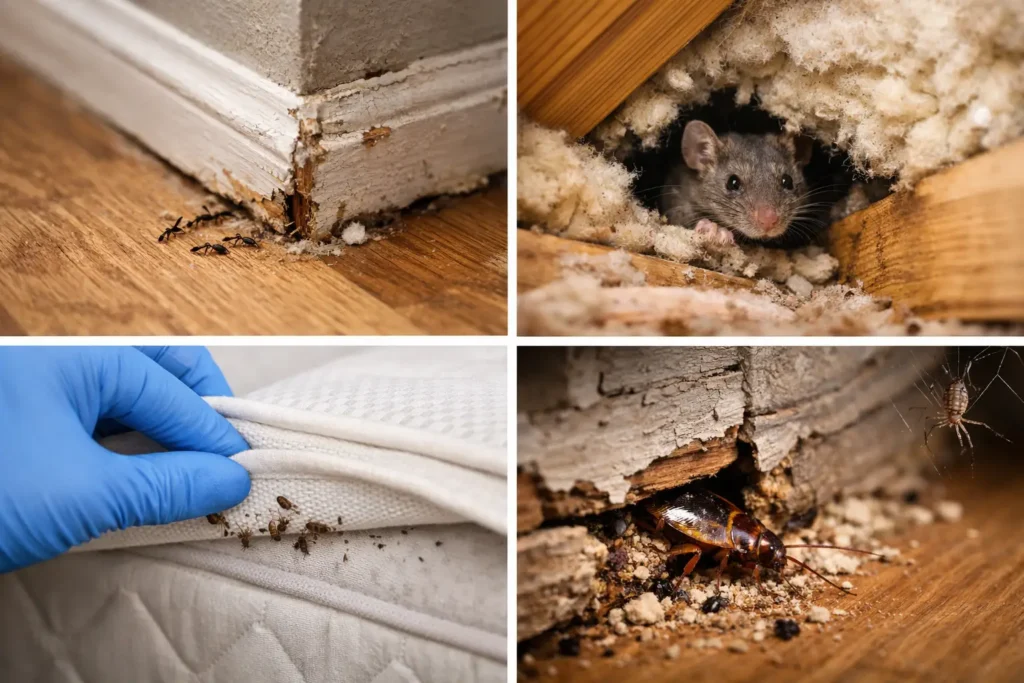
Droppings are one of the clearest signs that pests are active nearby, even when you never see the animal or insect itself. Look along baseboards, behind appliances, inside lower cabinets, in pantries, beneath sinks, around water heaters, and in garage corners. Rodent droppings are usually dark, pellet-like, and concentrated along travel routes. Cockroach droppings may look like black pepper, coffee grounds, or small dark smears, depending on the species and surface.
One or two old droppings do not always confirm a current infestation. Fresh droppings tend to look darker and may have a slightly moist appearance. Repeated droppings in the same place, especially after cleaning, are a stronger warning that activity is ongoing.
For restaurants, healthcare facilities, apartment communities, and food-related businesses, even a small amount of evidence deserves immediate attention. The visible mess is only part of the concern. It can point to contamination risks and an entry point that needs to be found.
Strange odors that cleaning does not fix
A persistent odor can reveal an infestation behind walls, under flooring, inside cabinets, or in a ceiling void. Rodents may leave a stale, musky smell in enclosed spaces. Cockroaches can produce an oily or musty odor that becomes more noticeable as populations grow. Dead pests or nesting materials can also create a sharp odor that seems to have no obvious source.
Do not assume an unexplained smell is only a plumbing or cleaning issue, particularly if it returns after you have cleaned the room thoroughly. Notice where the odor is strongest and whether it is more noticeable at certain times of day. That information can help a pest professional narrow down possible hiding areas.
Sounds in walls, ceilings, or attic spaces
Scratching, light scurrying, squeaking, or gnawing sounds after sunset may indicate rodents moving through a wall, attic, crawl space, or ceiling. Activity often becomes easier to hear at night because the building is quieter and many pests are more active after dark.
Not every sound means there is an infestation. Pipes can shift, air conditioning systems can cycle, and branches can brush against exterior walls during storms. But recurring sounds from the same area, especially paired with droppings, damaged materials, or odors, should be inspected quickly. Rodents can damage insulation, stored belongings, and wiring, so waiting for a visual confirmation is not always the safest choice.
Grease marks, rub marks, and worn pathways
Rodents tend to use the same routes repeatedly. As they travel along walls, pipes, beams, and the edges of cabinets, oils from their fur can leave dark rub marks. You may notice greasy streaks near a small gap behind a refrigerator, along garage walls, or around utility penetrations.
Insects can leave pathways too. Ant trails may appear along counters, window sills, baseboards, and exterior entry points, often leading toward water or food. A trail that appears and disappears is still worth investigating. Some species forage in cycles, and wiping away the visible line will not address the colony or the condition drawing them inside.
Damage that seems small but keeps growing
Hidden pests often leave evidence through damage before they appear in plain view. Check dry goods, pet food bags, cardboard storage boxes, paper products, insulation, and fabric for chewing, holes, shredded material, or unexplained disturbance. Rodents commonly use soft material for nesting, while pantry pests may leave webbing, larvae, or tiny holes in food packaging.
Pay close attention to places that are rarely moved. The back of a pantry shelf, the garage storage rack, a linen closet, or the cabinet beneath the sink can provide shelter with very little human traffic. If damage returns after you remove affected items, the source has not been solved.
Shed skins, egg cases, and insect fragments
Pests grow, reproduce, and leave behind evidence as they do. Shed skins, egg cases, wings, dead insects near window sills, and small fragments in cupboards can all signal a hidden population. Cockroach egg cases are often brown and capsule-shaped. Bed bugs can leave pale shed skins and small rust-colored spotting around mattress seams, headboards, upholstered furniture, and nearby cracks.
Seeing one insect does not always mean there is an infestation. Florida homes and businesses can occasionally have a pest wander in from outdoors. The concern rises when you find multiple life stages, repeated evidence in the same area, or signs in protected spaces where pests are likely breeding or nesting.
Why Pest Sightings Often Happen Late
Many pests are built to stay out of sight. They use wall voids, appliance motors, plumbing openings, attic insulation, cluttered storage areas, and narrow cracks around cabinets as shelter. By the time pests are seen during the day, activity may already be established.
That does not mean every hidden infestation is severe. Early action can make treatment simpler and reduce the chance of damage or repeat activity. The trade-off is that guessing at a pest based on one clue can lead to the wrong fix. A sweet bait may not solve a moisture-driven problem. Sealing a gap without addressing activity inside can trap pests in another area. Accurate identification matters.
Moisture and food sources create repeat problems
Pests do not need a dirty building to become a problem. A clean home can still have a leaking pipe, condensation around an AC unit, a pet food bowl left overnight, or a small opening at a utility line. In commercial settings, delivery doors, floor drains, dumpsters, break rooms, and storage areas can create similar opportunities.
Start by correcting obvious conditions. Repair leaks, keep food in sealed containers, remove cardboard clutter when possible, and close gaps around doors and pipes. These steps reduce pressure, but they may not remove a pest population that is already active. When evidence continues, professional service can identify the pest, locate likely harborages, and recommend a targeted plan.
When to Call for Pest Control
Call promptly if you find fresh droppings, hear recurring wall noises, see pests repeatedly, notice bites associated with sleeping or resting areas, or discover damage to food, wiring, insulation, or inventory. Businesses should also act quickly when pest evidence appears in customer-facing spaces, food storage, patient areas, classrooms, or production environments.
Avoid relying on heavy use of store-bought sprays as a first response to an unknown infestation. Spraying visible pests may offer short-term relief, but it can miss nesting sites and may cause certain pests to scatter into new hiding places. It can also create unnecessary exposure concerns around children, pets, employees, customers, or sensitive equipment.
A trained technician can assess the evidence, determine what is active, and build treatment around the property’s needs. Florida Bug Control provides safe, fast, and guaranteed pest management, with return visits available if pests come back. That accountability matters when the problem is happening behind a wall, above a ceiling, or beneath equipment where a quick surface treatment cannot reach.
Check the Spaces Pests Prefer Most
You do not need to take apart your home or facility to spot early evidence. Focus on the spaces that combine cover, moisture, and limited activity: under sinks, behind large appliances, inside pantry corners, around exterior doors, in garages, near trash areas, and around attic or crawl-space access points. Use a flashlight and look for changes, not just live pests.
For rental properties and commercial sites, encourage staff or occupants to report evidence early rather than waiting until it becomes embarrassing or disruptive. A clear report about where the evidence was found, when it appeared, and whether it has returned can speed up inspection and treatment.
A hidden pest problem is easier to handle when the first clue gets attention. If something in your property looks, sounds, or smells out of place, trust the pattern and have it checked before pests get more comfortable.