A single guest complaint can turn a quiet occupancy week into a reputation problem by noon. That is why bed bug treatment Florida hotels rely on has to be fast, discreet, and thorough from the first room inspection to the final follow-up.
Florida hotels face a different level of pressure with bed bugs. High guest turnover, year-round travel, shared laundry movement, upholstered furnishings, and frequent housekeeping access points all create the kind of environment where bed bugs can spread before anyone sees the full picture. By the time a front desk team hears, “I woke up with bites,” the issue may already involve more than one room.
Why bed bug treatment Florida hotels need is different
Treating a bed bug issue in a hotel is not the same as treating one in a single-family home. In hospitality, every decision has an operational cost. Taking too many rooms offline hurts revenue. Moving too slowly risks guest complaints, chargebacks, bad reviews, and wider spread into adjacent rooms.
That is why the right approach starts with containment and accuracy, not guesswork. Bed bugs do not stay neatly on the mattress. In hotel settings, they can hide along headboards, box springs, luggage racks, upholstered seating, baseboards, wall voids, and even behind picture frames. If treatment only focuses on the most obvious surfaces, the infestation often returns.
Florida properties also deal with constant travel volume. In busy destinations like Miami, Tampa, and Clearwater, hotels may cycle guests through rooms almost every day. That turnover increases the chance of repeated introductions, even after a successful service. The goal is not just elimination in the affected room. It is building a process that helps prevent the next incident from turning into another outbreak.
What an effective hotel bed bug response should look like
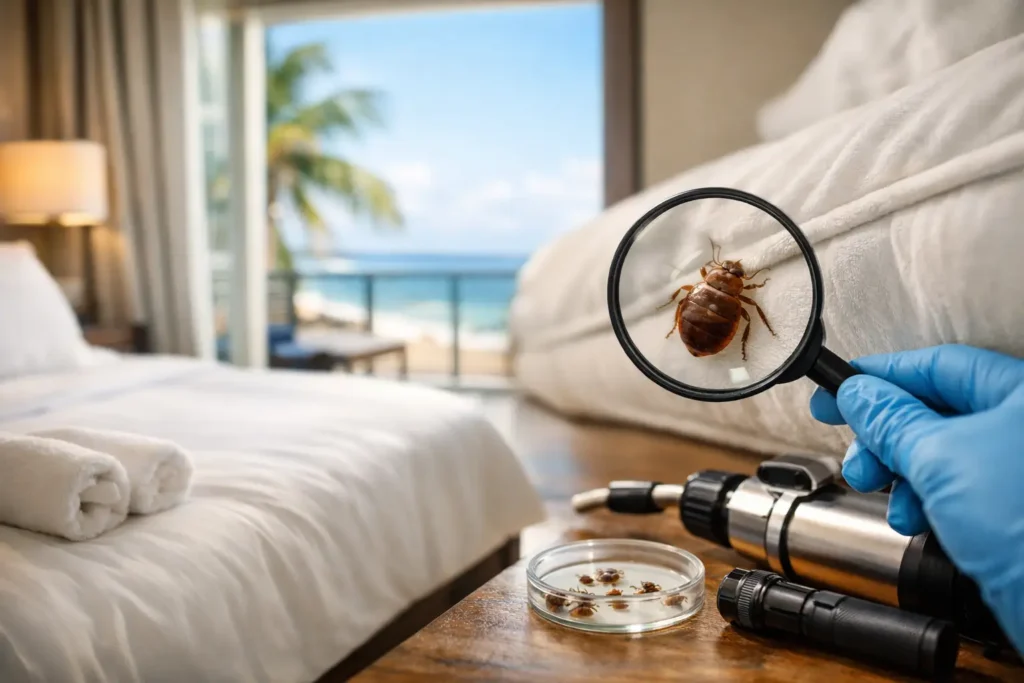
Speed matters, but bed bug work should never be rushed in a way that skips inspection. A solid response begins with a detailed room assessment and extends beyond the room where the complaint started. Nearby rooms, especially those beside, above, and below the affected space, often need inspection as well.
From there, treatment should be targeted to the actual harborages and travel paths. Bed bugs are resilient. Eggs can survive a first pass if treatment is incomplete, and staff may assume the problem is solved because activity drops for a few days. That false sense of relief is one reason poorly handled infestations come back.
A professional plan usually includes direct treatment of known hiding areas, recommendations for room preparation, monitoring, and scheduled follow-up visits. In hospitality settings, discretion also matters. Service should protect guests and staff while limiting disruption to daily operations.
Why DIY bed bug treatment usually costs hotels more
When a hotel tries to handle bed bugs with store-bought sprays, the result is often scattered activity rather than true control. Bed bugs may move deeper into furniture, wall voids, or adjacent rooms. Housekeeping teams may also apply products inconsistently, which creates safety concerns and makes later professional treatment more complicated.
There is also the issue of documentation and accountability. Hotels need a provider that can identify the scope of the problem, explain what was found, recommend next steps clearly, and return if activity persists. In commercial environments, confidence matters. So does having a service partner that responds quickly and stands behind the work.
The cheapest first step is not always the least expensive path. If a partial treatment leads to additional room closures, refunded stays, or online reputation damage, the real cost climbs fast.
How hotels can reduce downtime during bed bug treatment
There is no one-size-fits-all answer because the extent of activity, room layout, occupancy pressure, and furnishing types all matter. Still, the best outcomes usually come from acting early and limiting spread before it becomes a floor-wide issue.
Hotels should isolate the reported room quickly, avoid moving linens or soft goods through common areas without proper handling, and pause unnecessary transfers of furniture between rooms. Staff should also know not to relocate guests into neighboring rooms until those spaces are assessed. A quick room swap can solve one customer service problem while creating two more.
The provider’s inspection findings should guide which rooms come offline and for how long. Overreacting can mean unnecessary revenue loss. Underreacting can mean repeated service calls and wider exposure. The balance comes from experience.
Staff training is part of treatment success
Even the best treatment plan can be undermined if hotel staff are not trained to spot signs early. Housekeeping teams are often the first line of defense because they see mattress seams, headboards, and upholstered furniture up close. But they need practical guidance on what to look for – live bugs, shed skins, small dark spotting, and guest reports that match bed bug activity.
Front desk and management staff also need a response protocol. That includes how to document complaints, how to avoid making assumptions before inspection, and how to escalate the issue immediately. A calm, informed response protects the guest experience and helps the pest control team work from better information.
Bed bug treatment Florida hotels should expect from a commercial provider
Hotels need more than a one-time visit. They need a commercial pest partner that understands urgency, privacy, and follow-through. In practice, that means responsive scheduling, clear communication with management, and treatment plans built around hospitality realities.
A strong service provider should be able to inspect affected and surrounding rooms, explain the likely spread pattern, and recommend practical next steps without overcomplicating the process. They should also be prepared to return if needed. Bed bug work is one of those services where follow-up is not a bonus. It is part of doing the job right.
This is especially important for multi-room properties, extended-stay hotels, boutique hotels with upholstered decor, and busy beachfront or urban locations where luggage traffic is constant. The more movement a property has, the more discipline it needs in both treatment and prevention.
Prevention is not perfect, but it can lower risk
No hotel can guarantee that bed bugs will never be introduced. Guests bring luggage from airports, cruise terminals, rideshares, and other lodging properties every day. What hotels can do is reduce the chance that one introduction becomes an established infestation.
That starts with routine inspections in higher-risk room types and a clear internal reporting chain. It also helps to keep encasements, housekeeping checks, and vendor communication consistent. If management only acts when a guest posts a complaint, the property is always playing catch-up.
For many hotels, ongoing pest management support makes more sense than waiting for emergency calls. It creates continuity, gives staff a known contact when issues appear, and shortens the time between first report and professional action.
What to ask before hiring a hotel bed bug specialist
The right questions are simple. How quickly can they respond? Do they have experience with hotels and other commercial facilities? Will they inspect surrounding rooms? What does follow-up look like? If activity returns, what happens next?
Those questions matter because bed bug control is rarely just about the initial application. Hotels need accountability. They need a provider that can move fast, treat safely, and keep showing up until the problem is resolved. That kind of service protects occupancy, staff confidence, and guest trust.
For Florida properties, local knowledge matters too. Hotels across the state deal with different travel patterns, room volumes, and operational demands, whether they serve business travelers in Tallahassee or vacation traffic in Miami Beach. A provider that works in Florida every day understands how fast an isolated complaint can turn into a larger business issue if the response is slow or incomplete.
When hotels need bed bug treatment, they do not need vague advice. They need a plan, a fast start, and the confidence that if pests come back, so does the service team. That is the standard Florida Bug Control is built to meet, and it is the kind of support that helps a hotel protect both its rooms and its reputation.
The best time to address bed bugs is before a second guest reports them.