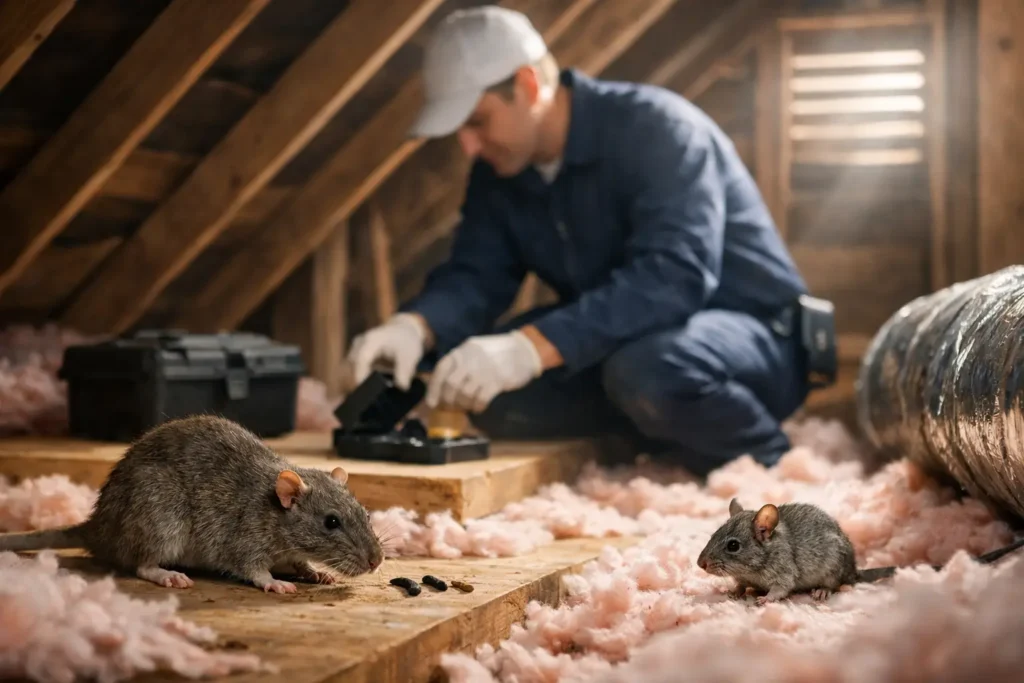
You usually do not hear attic rodents at noon. You hear them when the house finally goes quiet – a scratch above the bedroom, a quick run across insulation, a soft gnawing sound near the eaves. In Florida, that noise is often the first sign you need rodent control in florida attic spaces before a small problem turns into damaged wiring, contaminated insulation, and repeated infestations.
Florida attics are attractive to rodents for the same reasons they frustrate homeowners. They stay warm, they stay dark, and they are usually full of hidden entry points around rooflines, vents, plumbing penetrations, and soffits. Add frequent rain, dense landscaping, and year-round food sources outside, and rodents have every reason to move in.
Why attic rodent problems get worse fast in Florida
Florida does not give pests much of an off-season. Rodents can stay active all year, which means they keep nesting, feeding, and expanding their territory long after many homeowners expect activity to slow down. An attic becomes a safe staging area where they can stay out of sight while still moving into walls, garages, and living spaces.
The bigger issue is what they leave behind. Rodent droppings, urine, nesting debris, and chewed materials build up quickly in enclosed attic spaces. Insulation gets compressed and contaminated. Electrical wires can be damaged. Air quality can suffer when particles circulate through the home. If the infestation goes on long enough, you are not just dealing with noise anymore. You are dealing with health concerns, property damage, and a cleanup problem that usually costs more than early intervention.
Common signs you need rodent control in a Florida attic
Some signs are obvious, and some are easy to dismiss until the activity increases. The most common one is nighttime noise. Scratching, scampering, and chewing sounds above ceilings or inside walls often point to active rodents using the attic as a nesting area.
You may also notice droppings near attic access points, in the garage, or along baseboards where rodents travel for food and water. A strong, stale odor is another red flag, especially if it gets worse in warm or humid weather. In more established infestations, you might find shredded insulation, gnawed boxes, damaged ductwork, or greasy rub marks along beams and openings.
Outside the home, the warning signs are just as important. Overhanging tree limbs, thick vegetation touching the structure, gaps around soffits, damaged vent screens, and openings around utility lines can all become entry routes. In Florida homes, those gaps may look minor from the ground and still be large enough for rodents to exploit.
Why DIY attic rodent removal often falls short
A trap from the hardware store can catch one rodent. It usually does not solve the actual infestation.
That is because attic rodent problems are rarely about a single animal wandering in by accident. More often, the attic offers shelter, nesting material, and repeat access. If you trap a few rodents but leave entry points open, new rodents can move in just as quickly. If you block holes before confirming activity patterns, you may trap rodents inside walls or inaccessible parts of the attic.
There is also the cleanup side. Disturbing droppings, nesting material, or contaminated insulation without the right precautions can spread particles into the air. Homeowners trying to move fast sometimes focus only on removal and miss the sanitation and exclusion work that actually keeps the problem from returning.
DIY can help with monitoring, and some homeowners use it as a first response. But when the sounds continue, the smell gets stronger, or the signs spread beyond one section of the house, professional service is usually the safer and more reliable next step.
What effective rodent control in florida attic spaces should include
Real attic rodent control is not one service. It is a sequence.
The first step is inspection. A technician needs to identify what kind of rodent activity is present, where it is happening, how the rodents are getting in, and how widespread the problem has become. In Florida, that inspection matters because homes vary so much by age, construction style, roof design, and surrounding landscape. A concrete block home in Miami may have different vulnerability points than a wood-framed home in Tallahassee or Lake City.
The second step is removal. This may include strategic trapping and targeted control methods based on the structure and the level of activity. Speed matters here, but so does placement. Rodents do not move randomly. They follow edges, travel routes, and sheltered pathways. Good control work accounts for behavior, not just bait placement.
The third step is exclusion. This is where many infestations are either solved or guaranteed to repeat. Entry points around vents, roof returns, eaves, utility openings, and trim lines need to be identified and sealed correctly. Exclusion work has to be durable and appropriate for Florida weather. A quick patch that fails after the next storm is not a fix.
The fourth step is sanitation and damage assessment. Not every attic needs full restoration, but many need at least some cleanup, contaminated material removal, or recommendations for insulation replacement. If rodents have been active for a while, ignoring that damage can leave odor and contamination behind even after the animals are gone.
The attic risks homeowners underestimate
Most people think of rodents as a nuisance first. In an attic, the bigger concern is often what you cannot see.
Chewed wiring is one of the most serious risks because it can affect lighting, HVAC components, alarms, and other systems running through the attic. Damaged insulation can reduce energy efficiency and make rooms harder to cool, which matters even more during a Florida summer. Rodent waste can also affect indoor air quality, especially in homes where ductwork runs through the attic or where gaps allow particles to move into living areas.
For families with children, older adults, or anyone with allergies or respiratory sensitivities, attic infestations are not something to let sit for weeks while hoping the problem burns out on its own. It usually does not.
Prevention matters as much as removal
Once rodents get into an attic, the house has already told them yes at least once. Prevention is the work of changing that answer.
That may mean trimming tree branches away from the roofline, reducing clutter in the garage, sealing food sources, and correcting exterior gaps before they become entry points. It can also mean regular inspections, especially for homes that back up to wooded lots, canals, open fields, or older neighborhoods where pest pressure tends to be higher.
For property managers and commercial facilities, prevention is even more important because one attic or roof void issue can affect multiple units, tenants, or operating areas. A delayed response can quickly become a sanitation complaint, a maintenance problem, or a disruption to normal operations.
When to call for professional help
If you hear activity more than once, see droppings, notice odors, or find signs of chewing, it is time to act. Waiting tends to help rodents, not homeowners.
Professional help becomes especially important when the attic is hard to access, the infestation appears widespread, or there are signs that rodents have moved into wall voids and other hidden sections of the structure. The same goes for homes where previous DIY efforts have reduced activity but not stopped it. That pattern usually means the source of the problem is still in place.
A qualified pest control provider should be able to move quickly, explain what they found in plain language, and outline what happens next without guesswork. That includes identifying the rodent pressure, treating the active problem, and helping prevent a repeat issue. For homeowners in Florida, speed matters, but so does follow-through. If pests come back, service should not stop at the first visit.
Florida Bug Control approaches attic rodent issues with that full-picture mindset – inspection, control, exclusion, and practical prevention built around how pests behave in Florida homes.
What to do while you wait for service
Keep attic access closed and avoid disturbing droppings or nesting material. Do not sweep or vacuum contaminated debris dry. If you can do so safely, move stored items away from obvious activity zones and keep pets and children out of the area.
Outside, walk the perimeter and make note of visible gaps, damaged screens, or branches touching the roof. That information can help speed up the inspection. You do not need to solve the problem before calling. You just need to keep it from getting worse.
The right response to attic rodents is not panic. It is fast, informed action. When you stop the entry, remove the activity, and deal with the mess they leave behind, your attic goes back to what it should be – part of the house you do not have to think about.