A few flies circling the kitchen may look like a small annoyance, but they are usually telling you something useful: there is a food source, moisture source, breeding site, or entry point nearby. In Florida’s warm, humid climate, these conditions can support fly activity almost year-round. Knowing how to reduce indoor flies starts with identifying what is attracting them instead of relying on a spray can alone.
Flies move quickly from garbage, drains, pet waste, and outdoor breeding areas to countertops and food-prep surfaces. That makes prompt control about more than comfort. The goal is to remove the conditions flies need, stop new ones from entering, and get professional help when the source is hidden or persistent.
Start by Identifying the Type of Fly
Not every small flying insect in your home is the same, and the right solution depends on what you are seeing. Large gray house flies often point to garbage, decaying organic material, or an opening that lets outdoor flies inside. Small tan flies hovering around fruit, recycling, and sticky spills are usually fruit flies. Tiny fuzzy flies resting near sinks, tubs, or floor drains are commonly drain flies.
Small dark flies around houseplants can be fungus gnats, which breed in consistently damp potting soil. Phorid flies, another small hump-backed species, can signal a more serious moisture or plumbing issue, particularly when they appear in bathrooms, kitchens, laundry rooms, or near slab foundations.
You do not need to identify every species perfectly to begin, but the location matters. Flies gathered near one drain, one trash area, or one window are giving you a clue. Treating only the adult flies may provide a brief improvement, but it will not stop the next generation if the breeding source remains in place.
How to Reduce Indoor Flies by Removing Food Sources
Flies need surprisingly little to thrive. A few drops of juice under a trash bin, residue in a recycling container, or an overripe banana on the counter can be enough to keep them around. Make food cleanup part of your daily routine during active fly problems.
Keep ripe produce in the refrigerator when possible, especially after you have noticed fruit flies. Wipe counters, stovetops, and dining tables after meals, paying close attention to sugary drinks, crumbs, grease, and pet-food residue. Do not leave dirty dishes overnight, and rinse cans, bottles, and food containers before placing them in recycling.
Garbage deserves extra attention. Use a trash can with a tight-fitting lid, bag the waste securely, and take it outside often. Clean the inside and outside of the container regularly because spills under the liner can become a hidden fly attractant. Outdoor garbage cans should also be kept closed and positioned away from doors when practical.
Pet areas are another common oversight. Pick up pet waste from the yard promptly, wash food bowls daily, and avoid leaving wet or uneaten pet food out for long periods. For homes with litter boxes, frequent scooping and careful cleanup around the box can make a noticeable difference.
Clean Drains, Disposals, and Other Damp Areas
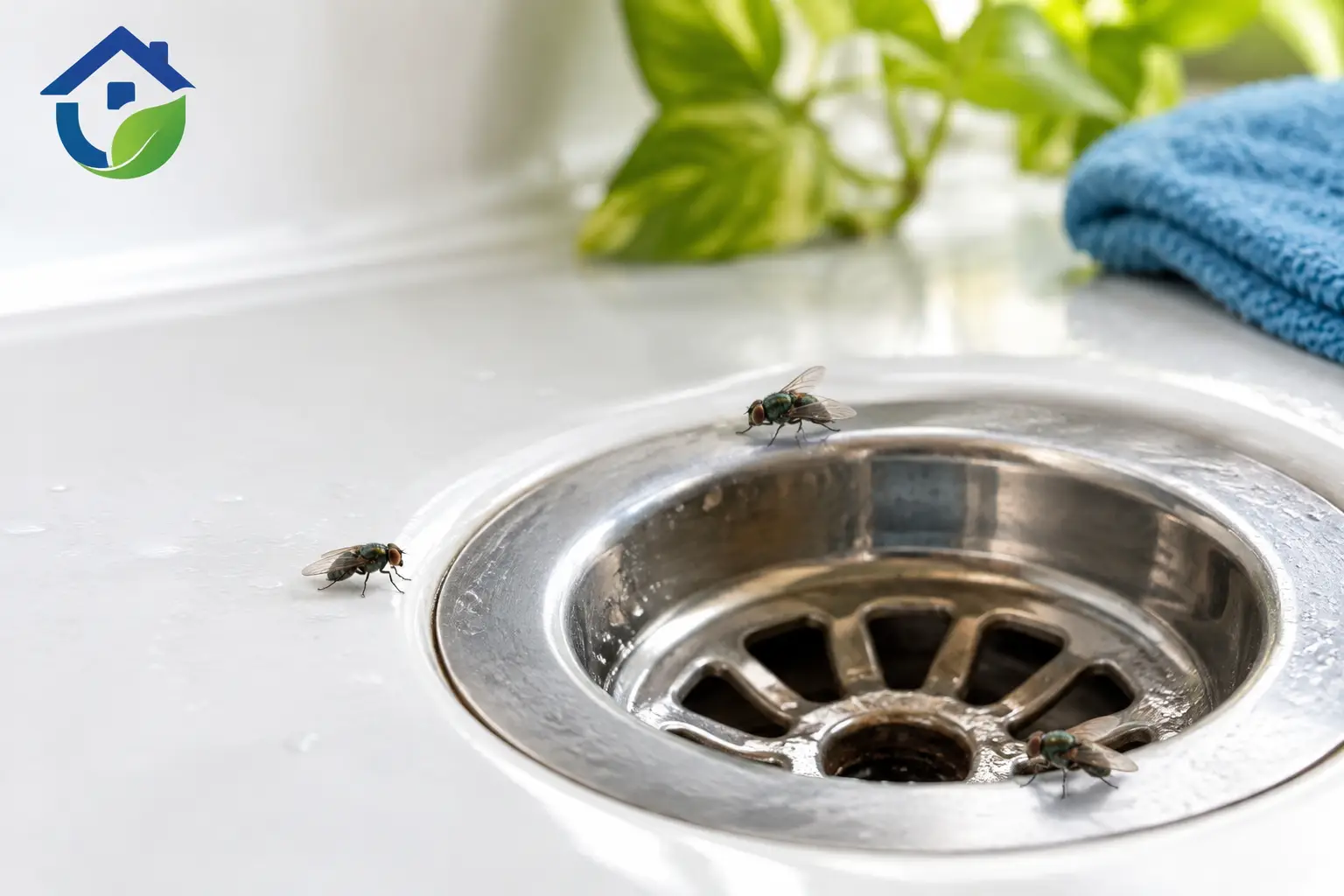
Drain flies do not usually come from the open water in a drain. They breed in the organic film that builds up inside pipes, traps, and overflow openings. Pouring a chemical product down the drain may not remove that buildup, particularly if the product simply passes through the pipe.
Instead, physically clean the drain opening and accessible pipe walls with a stiff brush. Remove the stopper or cover, scrub away sludge, and rinse thoroughly. Kitchen sinks, bathroom sinks, shower drains, floor drains, garbage disposals, and laundry drains all deserve inspection. Clean the drain overflow channel in bathroom sinks as well, since it can hold buildup that is easy to miss.
Keep seldom-used drains from drying out by running water into them periodically. If a drain smells foul, backs up, or repeatedly attracts flies after thorough cleaning, there may be a plumbing concern beyond surface buildup. This is especially true with phorid flies, which can be associated with damaged drain lines, leaks, or moisture below a structure. A pest professional can help identify fly activity, but plumbing repairs may be necessary to solve the underlying problem.
Stop Flies From Getting Inside
Florida homes are often opened and closed frequently, especially during busy family routines, deliveries, and outdoor entertaining. That gives flies plenty of opportunity to enter. Check window screens, patio screens, weatherstripping, door sweeps, and gaps around utility lines. Repair torn screens and make sure exterior doors close tightly.
Pay attention to garage doors and service entrances. A garage that stays open for extended periods can become a direct path for flies, particularly when trash cans, pet supplies, or recycling are stored nearby. Keeping waste containers clean and closed in those spaces reduces the chance that flies will gather there before moving indoors.
Outdoor lighting can also affect where insects congregate after dark. While lights do not create a fly infestation on their own, bright fixtures near entry doors may draw insects toward the areas where they can eventually get inside. If possible, place brighter lights farther from doors or use fixtures designed to limit insect attraction.
Be Careful With DIY Fly Control Products
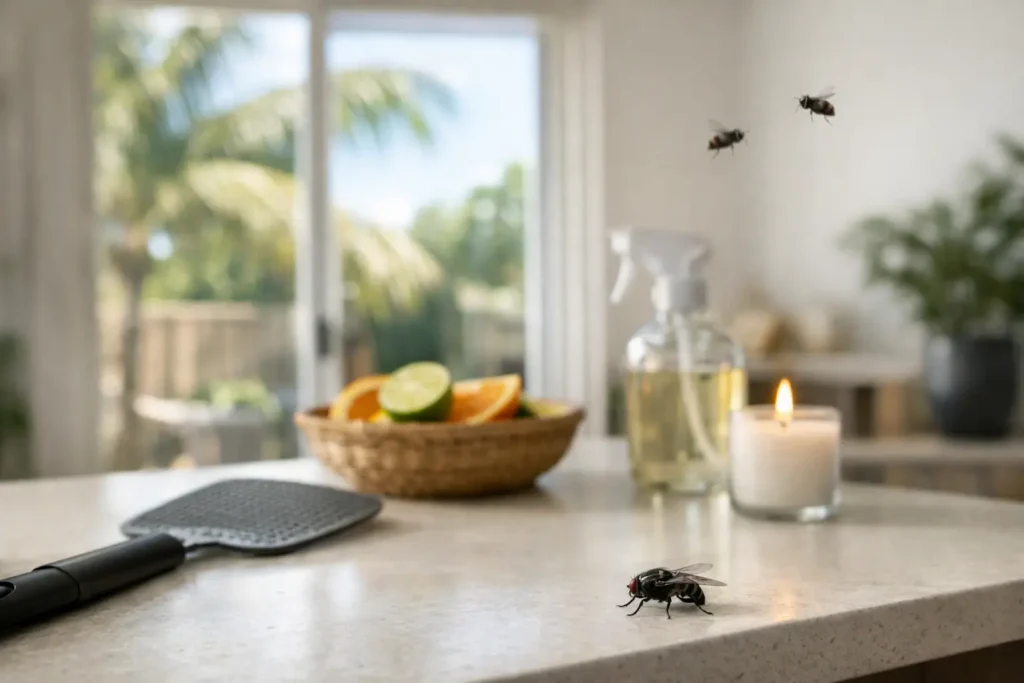
Sticky traps, fly ribbons, and plug-in light traps can help monitor activity and catch some adult flies. They are most useful when placed near the area where flies are active, but not directly above food-prep surfaces. For fruit flies, a simple vinegar-based trap can catch adults while you remove the fruit, residue, and recycling that attracted them.
Aerosol sprays may kill flies you can see, but they do not reach eggs and larvae in drains, trash, soil, or hidden organic material. Overusing sprays indoors can also be frustrating and unnecessary, especially around children, pets, food, and sensitive areas. Read every product label carefully and use only as directed.
The better trade-off is usually targeted cleanup plus exclusion. If traps are filling up day after day despite sanitation efforts, do not assume you need more traps. Persistent captures often mean a breeding site has not been found yet.
Watch for Hidden Fly Sources
Some indoor fly problems begin in places homeowners rarely inspect. Check beneath appliances, behind trash cans, inside recycling bins, around refrigerator drip pans, and in mop buckets. A forgotten potato, a spilled bag of onions, or food debris under a stove can support a surprisingly large number of flies.
For large flies that suddenly appear in a particular room, consider whether an animal may be trapped in a wall void, attic, chimney, or crawl space. This situation often produces a sudden increase in flies rather than a few occasional visitors. Avoid sealing an active opening until the source has been addressed, since that can push flies into living areas.
Commercial properties face added pressure because food storage, employee break rooms, loading areas, floor drains, and dumpsters create multiple potential sources. Restaurants, healthcare facilities, retail spaces, and offices need consistent sanitation and monitoring, not a one-time response. A documented fly-management plan helps protect customers, employees, and operations.
When to Call a Fly Control Professional
Call for professional help when flies keep returning after cleanup, when you cannot locate the source, or when activity is widespread. You should also act quickly if flies are appearing around drains with persistent odors, if large flies are emerging suddenly, or if a business environment needs immediate, dependable control.
A trained technician can identify the likely fly species, inspect the property for breeding conditions and entry points, and recommend a treatment plan that addresses the source. At Florida Bug Control, we focus on safe, fast, and guaranteed service, with return visits available until the problem is resolved.
The fastest way to make a home feel comfortable again is to act on the first signs of fly activity. Clean the source, dry the moisture, close the gaps, and do not let a few flies become the clue you ignored.